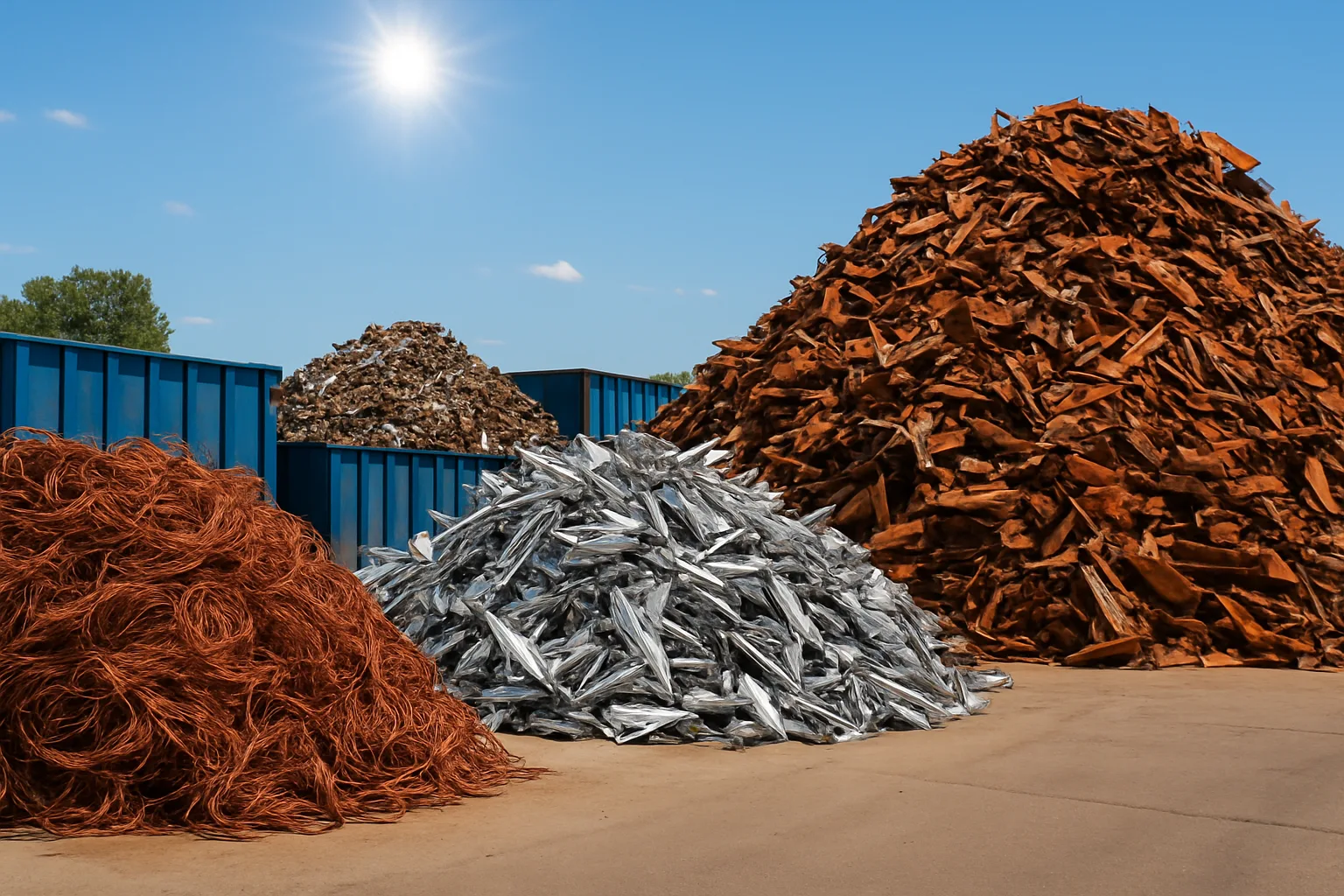
The steel scrap price today isn't what it was six months ago — and if you're still pricing loads the same way you were last spring, you're leaving money on the table. Canadian scrap markets in August 2026 are moving fast, shaped by global steel demand, shifting trade flows, and infrastructure spending that hasn't slowed down. Whether you run a yard in Gatineau or you're a collector trying to time your next load, understanding what's driving prices right now matters more than ever.
This guide breaks down the current market conditions affecting scrap metal prices today in Canada, what metals to watch, and how to position yourself to get fair value — not just a guess from one buyer on the phone.
What's Driving the Steel Scrap Price Today in Canada
Steel scrap is the backbone of the recycling market, and right now it's under pressure from two directions at once. On one side, North American electric arc furnace (EAF) mills are running hard to feed ongoing infrastructure and construction demand. On the other, global oversupply — particularly from export-heavy markets — is keeping a ceiling on how high domestic prices can climb.
For Canadian sellers, that means the steel scrap price today is competitive but volatile. Shredded, busheling, and HMS (heavy melting steel) grades are all trading in ranges that shift week to week. Timing matters. So does knowing what you actually have and documenting it properly before you take an offer.
A few specific forces shaping the Canadian market right now:
- Infrastructure spending: Federal and provincial construction programs are keeping domestic steel demand elevated, which supports scrap absorption by Canadian mills.
- Rail and logistics costs: Moving loads from inland yards to port or mill is not cheap. Transportation costs are eating into margins for sellers who don't negotiate freight terms carefully.
- Currency effect: A fluctuating CAD/USD exchange rate changes the math on export pricing almost daily. Cross-border sales aren't always better — you have to run the numbers.
- Mill inventory cycles: When mills are flush with inventory, they back off on bids. When they're lean, they compete aggressively. Right now, inventory levels vary significantly by region.
If you want to check today's Canadian scrap metal prices before you call a buyer, that's the right move. One data point before the conversation is worth more than none.
Copper and Aluminum Scrap Price Trends to Watch in August 2026
Steel gets most of the headlines, but non-ferrous metals are where the real margin variation lives. The copper scrap price in Canada has been elevated through most of 2026, driven by continued demand from electrical infrastructure, EV production supply chains, and data centre buildouts. Bare bright, #1 copper, and insulated wire all trade at different grades — and buyers know this even when they act like they don't.
Don't let a buyer blend your grades without your knowledge. Bare bright is not the same as #2 copper wire. The spread between those two grades can be significant per pound, and if you're handing over a mixed load without documentation, you're trusting the buyer's scale and their judgment on grading. That's a bad position to be in.
Aluminum scrap pricing is also worth watching closely right now. Cast aluminum, sheet, and extrusions all have different demand profiles. Auto-sourced cast aluminum (especially from engine blocks and transmission cases) is seeing solid demand from secondary smelters. Extrusions and sheet are moving, but price sensitivity is higher. If you're sitting on a mixed aluminum load, sort before you sell — the extra work pays off.
To find current Canadian scrap metal prices across ferrous and non-ferrous grades, check the latest data before you accept any offer. A quick reference point before negotiating is not optional — it's standard practice for anyone serious about getting fair value.
The Gatineau Scrap Market: Local Conditions and What Sellers Should Know
Gatineau sits in a unique spot — right across the Ottawa River from the federal capital, in Quebec's Outaouais region. That proximity to Ottawa creates real demand for construction and demolition scrap, electrical scrap, and industrial surplus. Government infrastructure projects on both sides of the river generate consistent material flow.
But Gatineau also faces the classic mid-market challenge: you're not in Montreal, so you don't have the same buyer density or mill proximity. That means your negotiating leverage depends heavily on whether you have one buyer calling you back or multiple buyers competing for your load. In a thin market, a single buyer sets the price. Competition is what creates real price discovery.
Quebec's scrap infrastructure has matured, but Gatineau-area sellers still report inconsistency in what local buyers will pay on a given week. That's not unique to the city — it's the reality for mid-market yards across the province. The answer isn't to complain about it. The answer is to put your inventory in front of more buyers.
That's exactly what a B2B scrap metal marketplace like SMASH lets you do — get competitive bids for your scrap in Canada without limiting yourself to whoever picks up the phone first. Vetted buyers, documented loads, and a competitive auction format. That's a different game than the one most Gatineau yards are still playing.
Why Documentation Is Your Biggest Competitive Advantage Right Now
This doesn't get talked about enough. The sellers who consistently get better prices aren't always the ones with the best material — they're the ones with the best documentation. Buyers pay more confidently when they know exactly what they're bidding on. Surprise deductions happen when loads aren't properly described, photographed, or graded upfront.
In the current market, where buyers are being more selective and mills are scrutinizing incoming loads more carefully, showing up with a vague description and a rough weight estimate puts you at a disadvantage. Here's what good documentation looks like:
- Photos: Clear images of the material, sorted by grade, from multiple angles. No mystery loads.
- Weights and estimates: Accurate scale tickets or reasonable estimates. Buyers discount heavily for uncertainty.
- Grade identification: Know your HMS 1 from HMS 2. Know your #1 copper from your #2. Label it correctly.
- Serial tracking for specific items: Catalytic converters, cores, and other high-value components benefit from serial tracking to verify grade and authenticity.
- Packing lists and BOLs: For larger loads, a proper bill of lading and packing list protects both sides of the transaction.
Platforms like SMASH build this documentation process into the listing workflow. That means by the time your load goes in front of buyers, you've already done the work that gives them confidence to bid higher. It's not magic — it's just removing the uncertainty that costs you money.
To stay current on how documentation standards are affecting pricing across Canadian markets, read the latest Canadian scrap metal market updates and see what's shifting in your region.
The Old Way vs. the SMASH Way: What Changes When Buyers Compete
Here's the honest version of how most scrap loads get sold in Canada today. The yard operator calls one or two buyers they know. The buyer makes an offer. The seller takes it or tries to negotiate. There's no real benchmark, no competing offer, and no way to know if the price is fair. The buyer knows this. You don't.
That's not a personal failing — it's a structural problem. One buyer means one price. And when that buyer knows you don't have alternatives, the price reflects that.
The SMASH scrap metal auction model flips this. You list your load with proper documentation. Vetted buyers — recycling yards, processors, mills, and traders across North America — see it and bid competitively. The market sets the price, not one buyer's mood on a Tuesday morning. More buyers means better price discovery. That's not a sales pitch — it's how competitive markets work.
And there are no subscription fees. SMASH wins when you win. That alignment matters. If your load doesn't sell at a price that makes sense, nobody benefits.
For sellers in Gatineau and across Quebec, this kind of access to a broader buyer pool is a real shift — especially for loads that don't have a natural local buyer. Specialty alloys, large industrial lots, or mixed non-ferrous loads often find better homes when the net is cast wider.
What to Watch in the Canadian Scrap Market Through the Rest of 2026
The second half of 2026 will be shaped by a few key variables. Pay attention to these if you want to time your loads well:
- Mill capacity utilization rates: When North American steel mills are running above 75-80% utilization, scrap demand is strong and bids improve. Watch for any announced maintenance shutdowns — they soften the market fast.
- Global trade policy shifts: Any changes to U.S. or Canadian tariff structures on steel and aluminum will ripple into scrap pricing. This has happened before and it will happen again.
- Seasonal construction slowdown: As fall approaches, construction activity typically dips, which can reduce the flow of demo and C&D scrap. Less supply isn't always good for sellers — it depends on whether mill demand drops proportionally.
- Non-ferrous demand from green economy sectors: EV production, grid upgrades, and renewable energy installations continue to support copper and aluminum demand. This is a structural trend, not a short-term blip.
- Scrap export windows: Watch for periods when the CAD weakens against the USD — those windows can make export pricing more attractive for Canadian sellers moving material south.
The scrap metal prices today Canada-wide are a moving target. The sellers who track these variables — even loosely — make better decisions than those who don't. You don't need to be an economist. You need to know the direction of travel.
Disclaimer: Scrap metal prices fluctuate daily based on global commodity markets, local supply and demand, and mill buying activity. Always check current rates before accepting an offer.
If you want to position yourself well for the rest of the year, start with the data. Check today's Canadian scrap metal prices at scrap-metal-prices.ca — it's a quick reference that costs you nothing and might change what you're willing to accept the next time a buyer calls.
Frequently Asked Questions
Q: What is the steel scrap price today in Canada?
Steel scrap prices in Canada vary by grade, region, and buyer. HMS (heavy melting steel), shredded, and busheling all trade at different rates, and prices shift week to week based on mill demand and global market conditions. Always check current rates through a reliable pricing reference before accepting an offer.
Q: How do I get a fair price for my scrap in Gatineau?
The best way to get fair value in Gatineau — or anywhere — is to put your load in front of multiple buyers. A platform like SMASH lets vetted buyers bid competitively on your documented load, which is a fundamentally different outcome than a single buyer making you a take-it-or-leave-it offer.
Q: What scrap metals are worth the most right now in Quebec?
Copper consistently leads in price per pound, followed by aluminum alloys and stainless steel. Within each metal, grade matters enormously — bare bright copper versus insulated wire, or cast aluminum versus mixed aluminum sheet, can represent significant price differences. Sort your material before you sell.
Q: How often do scrap metal prices change in Canada?
Prices can change daily, particularly for non-ferrous metals like copper, aluminum, and stainless steel, which track global commodity exchanges. Steel scrap prices tend to move on a weekly or monthly cycle tied to mill buying programs. Checking prices regularly is the only way to stay current.
Q: Is it worth sorting my scrap before selling in Gatineau?
Yes — almost always. Sorted, documented loads attract better bids because buyers have more confidence in what they're getting. Mixed or unsorted loads get priced conservatively because the buyer is absorbing the risk of unknown grades. A few hours of sorting can meaningfully change what a buyer is willing to pay.
Stay ahead of the market: follow SMASH on LinkedIn for ongoing scrap metal market insights, pricing trends, and industry updates across Canada.
```