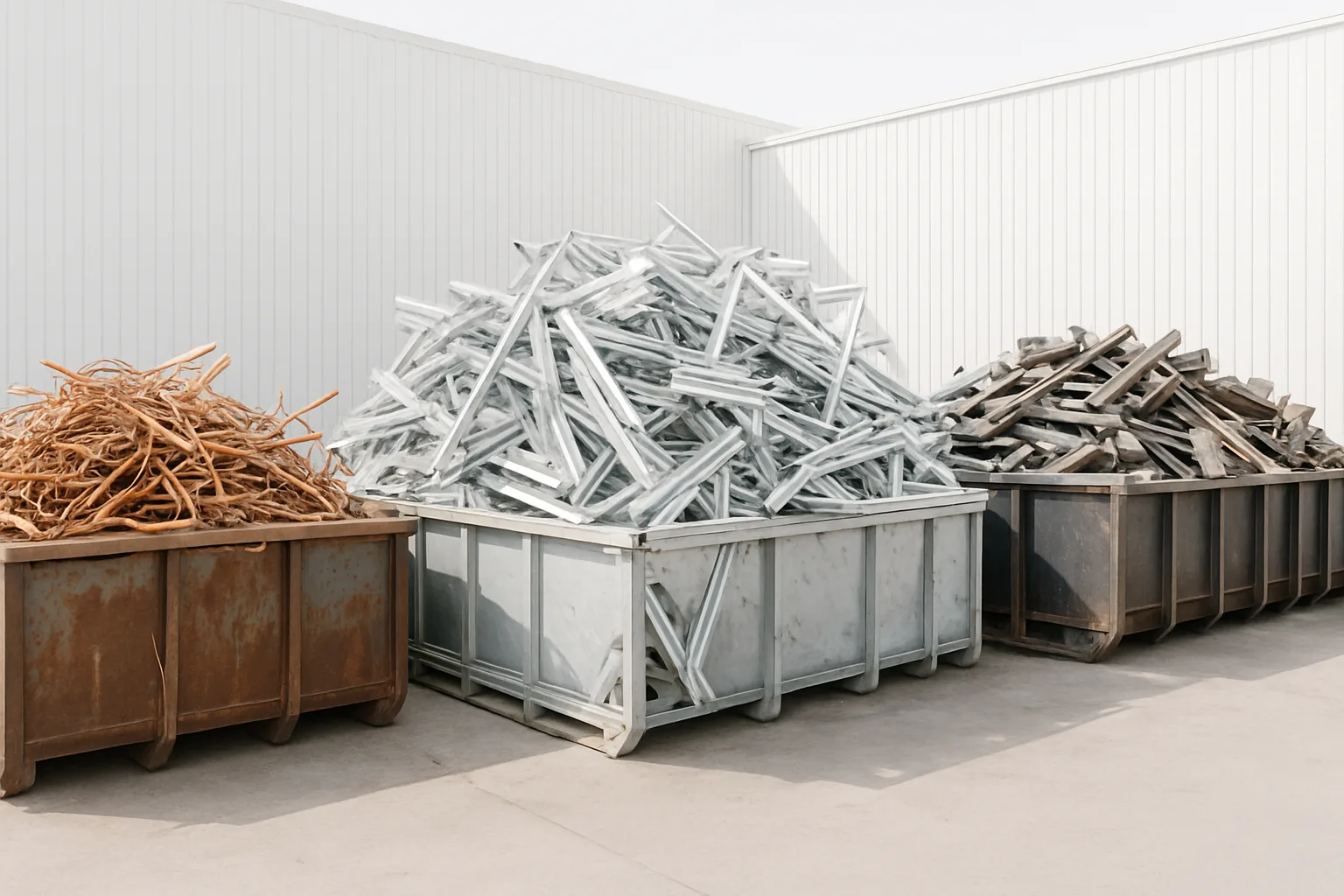
Ferrous vs. Non-Ferrous Scrap Metal: What Every Canadian Seller Needs to Know
Most people bring scrap to the yard and hope for a fair price. But if you don't know whether your metal is ferrous or non-ferrous, you're walking in blind — and that can cost you money. Understanding the difference between these two categories is the single most practical thing you can do before you sell.
Whether you're clearing out a garage in Winnipeg, hauling a load from a demolition site, or sorting through old appliances, this distinction determines how your scrap gets priced, processed, and purchased. Scrap metal prices today vary significantly between ferrous and non-ferrous materials — sometimes by a factor of ten or more.
The Core Difference: Iron Content
Ferrous metals contain iron. Non-ferrous metals don't. That's the short version.
The longer version matters for your wallet. Ferrous metals — steel, cast iron, wrought iron — are magnetic, dense, and found everywhere from old cars to appliances to structural beams. Non-ferrous metals — copper, aluminum, brass, stainless steel, lead, zinc — are generally lighter, more resistant to corrosion, and far more valuable per pound.
Here's a quick way to sort your pile before you haul:
- Grab a magnet. If it sticks, the metal is almost certainly ferrous.
- Check the weight. Ferrous loads are heavy. Non-ferrous materials like aluminum are noticeably lighter for their size.
- Look for corrosion. Iron-based metals rust orange-red. Non-ferrous metals like copper develop a green patina, aluminum turns dull grey, and brass tarnishes to a darker yellow-brown.
- Consider the source. Electrical wire, plumbing, radiators, and HVAC components are almost always non-ferrous. Old machinery frames, car bodies, and filing cabinets are usually ferrous.
Sorting before you arrive at the yard saves time and often gets you better prices. Yards pay more for clean, pre-sorted loads because they require less processing on their end.
Ferrous Scrap Metal Prices in Canada: What to Expect
Ferrous metals trade at lower per-pound prices than non-ferrous — but volume can make up for that. Steel and iron are the backbone of the recycling industry. Globally, more ferrous scrap gets recycled than all other materials combined.
In Manitoba, you'll find ferrous scrap coming from agricultural equipment, automotive frames, construction waste, and industrial machinery. Prices fluctuate with steel mill demand, export markets, and transportation costs. Right now, in August 2026, global steel demand continues to be shaped by infrastructure spending and manufacturing output — both of which affect what your local yard will pay per tonne for shredded steel or heavy melting steel (HMS).
Common ferrous categories and what they generally look like at the yard:
- #1 Heavy Melting Steel (HMS): Clean, thick steel with no attachments. Commands the best ferrous price.
- #2 HMS: Mixed steel, thinner gauges, may have some coatings. Lower grade, lower price.
- Cast Iron: Heavier, often from engine blocks or old stoves. Priced separately from steel.
- Shredded Steel: Already processed through a shredder — consistent grade, steady demand.
- Prepared vs. Unprepared: Cut-to-size loads get better prices than raw, tangled material.
To check today's Canadian scrap metal prices on ferrous materials, including HMS and cast iron, current market rates are updated regularly to reflect real yard conditions across Canada.
Non-Ferrous Scrap Metal Prices: Where the Real Value Lives
Non-ferrous metals are where experienced scrap sellers focus their attention — and for good reason. Copper, aluminum, brass, and other non-ferrous materials trade at prices that can be dramatically higher than ferrous scrap.
Copper, for example, is consistently one of the most valuable metals at any Canadian yard. It's used in electrical systems, plumbing, motors, and electronics. Prices track global commodity markets, and in 2026, demand from EV manufacturing, renewable energy infrastructure, and grid upgrades continues to support copper pricing at elevated levels relative to historical norms.
Key non-ferrous metals you might have in your pile:
- Copper: Bare bright, #1 copper, #2 copper, copper wire — each graded by purity and form. Bare bright commands top dollar.
- Aluminum: Cans, extrusions, cast aluminum, sheet — all priced differently. Clean, uncoated aluminum gets better rates.
- Brass: Common in plumbing fixtures, valves, and fittings. Yellow brass and red brass are priced separately.
- Stainless Steel: Technically iron-based but grouped with non-ferrous at many yards due to its nickel and chromium content driving higher value.
- Lead: Batteries, wheel weights, and old pipe. Handle carefully — proper disposal protocols apply.
- Zinc and Tin: Less common but worth separating if you have them in volume.
Aluminum scrap price Canada and copper scrap price Canada are two of the most searched pricing terms for good reason — these are the metals most residential and commercial sellers encounter. Find current Canadian scrap metal prices for copper and aluminum, updated regularly so you're never guessing at the yard.
Catalytic Converters: The Non-Ferrous Load That Plays by Different Rules
Catalytic converters deserve their own section because they don't fit neatly into standard ferrous or non-ferrous categories — and because they're one of the most misunderstood items in the scrap world.
Cats contain platinum group metals (PGMs): platinum, palladium, and rhodium. These are among the most valuable materials in the recycling stream. The steel shell of a cat is ferrous. The ceramic or metallic substrate inside is what holds the PGMs, and that's where the value is. Pricing is driven by global PGM commodity markets, which are notoriously volatile.
The old way to sell cats was to call one buyer, take a number, and hope it was fair. You had no idea if the price reflected the actual PGM content of your specific units. That's exactly the problem platforms like the SMASH Recycling auction platform are built to solve.
SMASH runs a competitive auction process for catalytic converters. Your load gets documented — serial numbers, photos, VIN lookups where applicable — and then multiple vetted buyers compete for it. That competition is how you find out what your cats are actually worth. No subscription fees. No guessing. If you're sitting on a load of cats in Winnipeg and you've only ever called one buyer, you may be leaving significant money on the table.
The catalytic converter auction model brings real price discovery to a market that has historically operated on information asymmetry — the buyer always knew more than the seller. That changes when buyers are competing against each other.
How to Recycle Scrap Metal the Right Way in Manitoba
Knowing your metals is step one. Getting the best return on them is step two. Here's a practical process for sellers in Manitoba:
- Sort before you haul. Separate ferrous from non-ferrous. Within non-ferrous, separate copper from aluminum from brass. Mixed loads get lower prices because the yard has to sort them.
- Clean your material where possible. Remove insulation from wire if you have volume. Take fittings off copper pipe. Strip non-metal attachments from aluminum. Clean material grades up, and better grades pay better.
- Weigh your load at home if you can. Knowing your approximate weight before you arrive helps you evaluate whether the price you're offered is fair.
- Check current prices before you go. Markets move. Copper prices can swing meaningfully week to week. Read the latest Canadian scrap metal market updates so you know what the market looks like before you commit to selling.
- For specialty loads — cats, cores, non-ferrous in volume — consider an auction. SMASH connects sellers to vetted buyers across North America. More competition means better price discovery. Winnipeg scrap metal services are available through the platform, making it straightforward for local sellers to access a competitive buyer pool beyond what's in their immediate area.
- Document your load. Photos, weights, and descriptions protect you and give buyers confidence. Buyers bid higher on documented loads because there are fewer unknowns.
Whether you're a first-time seller sorting through an estate or a yard operator moving consistent volume, these steps apply. The scrap metal recycling industry in Manitoba has real demand — both locally and through export markets. Your job is to make sure you're capturing your fair share of that value.
Why Scrap Metal Prices Today Vary So Much — and What Controls Them
Price volatility confuses a lot of sellers. You check a price one week and get a completely different number the next. That's not the yard being inconsistent — that's global commodity markets at work.
Ferrous prices track steel mill capacity, export demand (particularly from Asia), and domestic construction activity. When mills are running hot and demand is strong, HMS prices climb. When mills slow down or import competition increases, prices drop.
Non-ferrous prices track London Metal Exchange (LME) benchmarks for copper and aluminum, global manufacturing output, currency exchange rates (especially relevant for Canadian sellers trading in CAD against USD-benchmarked commodities), and supply chain dynamics. In 2026, the ongoing electrification of transportation and energy infrastructure continues to drive structural demand for copper and aluminum specifically.
PGM prices — relevant to catalytic converter sellers — are driven by automotive production, emissions regulations, and mining output from key producers in South Africa and Russia. These markets can move quickly on geopolitical news or regulatory changes.
The bottom line: no one can tell you with certainty what prices will do next week. But you can make smarter decisions by checking scrap metal prices Canada regularly, understanding what drives your specific metal category, and using competitive platforms like SMASH to let the market tell you what your load is worth instead of relying on a single offer.
If you're ready to sell — or just want to know where the market sits today — find current Canadian scrap metal prices and make sure you're going to the yard with real information, not a guess.
Frequently Asked Questions
Q: What is the easiest way to tell if scrap metal is ferrous or non-ferrous?
Use a magnet. Ferrous metals — steel, iron, cast iron — will stick to a magnet. Non-ferrous metals like copper, aluminum, brass, and stainless steel won't. It's not a perfect test (some stainless alloys can be slightly magnetic), but it works for the vast majority of common scrap materials.
Q: What are scrap metal prices today in Canada for copper and aluminum?
Prices fluctuate daily based on global commodity markets. Copper and aluminum are benchmarked to international exchanges and converted to CAD rates at Canadian yards. Always check current rates before you haul — visit scrap-metal-prices.ca for up-to-date Canadian pricing across major metal categories.
Q: Where can I sell scrap metal near me in Winnipeg?
Winnipeg has several local yards that accept both ferrous and non-ferrous scrap. For specialty loads — catalytic converters, large non-ferrous volumes, or industrial scrap — you can also access competitive auction pricing through SMASH, which connects Winnipeg sellers to vetted buyers across North America. Check out Winnipeg scrap metal services for local options.
Q: Do catalytic converters count as ferrous or non-ferrous scrap?
It's both. The outer shell is steel (ferrous), but the value comes from the platinum group metals inside the substrate, which are non-ferrous. Most yards price catalytic converters separately from standard ferrous or non-ferrous loads. For the best price discovery, a competitive auction format through a platform like SMASH gives you more transparent pricing than a single buyer quote.
Q: Does sorting my scrap metal before I sell it actually matter?
Yes — significantly. Mixed loads grade down because the yard has to do the sorting work. Separated, clean loads of copper, aluminum, or steel each get priced at their individual grades. A sorted load of #1 copper pays considerably more per pound than a mixed pile of copper, aluminum, and steel tangled together. The time spent sorting is almost always worth it.
The scrap metal market rewards preparation and information. Whether you're hauling a truck bed of steel from a Manitoba job site or a box of non-ferrous materials from a renovation project, knowing your metals means knowing your money. Check today's Canadian scrap metal prices at scrap-metal-prices.ca so you walk into every transaction with the numbers — not just a hope.
Follow SMASH on LinkedIn for ongoing scrap metal market updates, pricing insights, and industry news across North America.