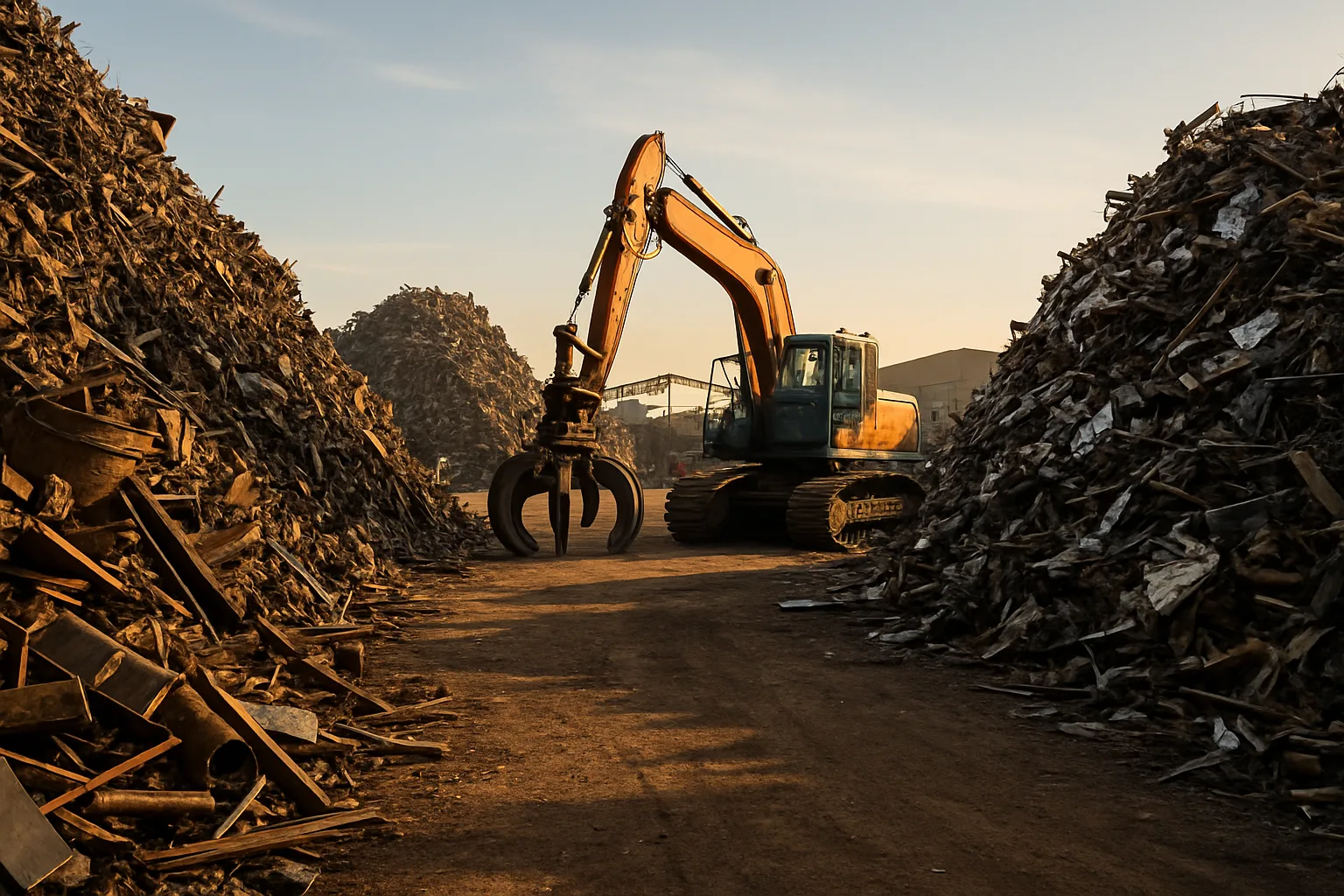
Most scrap yards pay very different rates depending on what you bring in — and the gap between the best and worst metals can be significant. If you're hauling loads without knowing which materials actually move the needle on your payout, you're leaving money on the table. That's especially true if you're trying to sell scrap metal in Sudbury, where knowing your metal types before you show up at the gate makes a real difference.
This guide breaks down the most profitable types of scrap metal to collect in 2026, ranked by return potential. Whether you're a seasoned yard operator or someone cleaning out a job site for the first time, understanding which metals command the best prices helps you work smarter — not just harder.
Disclaimer: Scrap metal prices fluctuate daily based on global commodity markets, local demand, and material grade. Always check today's Canadian scrap metal prices before making decisions about what to collect or sell.
Why Not All Scrap Metal Is Created Equal
Walk into any scrap yard and you'll notice something fast: there's a price board, and it's got a lot of different numbers on it. Iron sits at the bottom. Copper sits near the top. Everything else lands somewhere in between — and where your metal falls on that board determines your payout.
The value of any scrap metal comes down to a few key factors:
- Global commodity demand — metals tied to EV production, construction, and manufacturing swing hard
- Purity and grade — clean, uncontaminated metal always pays more than mixed or coated material
- Local market conditions — what buyers are short on in your region right now
- Volume — some yards offer better rates when you bring consistent, documented loads
Platforms like SMASH Recycling — where verified buyers bid on your metal take the guesswork out of that last point. Instead of calling one buyer and hoping for a fair number, you put your documented load in front of multiple vetted buyers. Competition does what it always does — it reveals the real market price.
The Most Profitable Scrap Metals to Collect in 2026
Here's the breakdown you actually came for. These metals are ranked by their general return potential. Exact scrap metal prices today will vary — but this order holds up consistently across North American markets.
1. Copper — The King of Non-Ferrous
Copper consistently sits at the top of every scrap price board. Bare bright copper — the clean, uncoated stuff — pays the most. #1 copper (clean pipe, no fittings) comes in just below that. #2 copper (mixed, with some oxidation or solder) pays less but is still one of the better returns in the yard.
Where does copper come from? Electrical wire, plumbing pipe, motor windings, transformers, and HVAC units. In Ontario's industrial and mining sectors — and Sudbury is no stranger to heavy industry — copper is a material worth going out of your way to separate and clean before you sell.
- Bare bright copper: highest grade, no insulation, no solder, bright in color
- #1 copper: clean pipe and wire, minimal oxidation
- #2 copper: mixed copper with some contamination, fittings allowed
- Insulated wire: paid based on copper recovery percentage — strip it if you can
2. Brass — Heavy and Valuable
Brass is a copper-zinc alloy, and it pays well because of that copper content. Yellow brass (plumbing fixtures, valves, fittings) and red brass (higher copper content, often from older plumbing) are both solid earners. The heavier the piece, the better your return per trip.
Brass is common in renovation teardowns, old plumbing jobs, and industrial equipment. If you're working in construction or doing estate cleanouts, brass is the material worth separating into its own bin. Don't mix it with steel fittings and lose money on dilution.
3. Aluminum — High Volume, Consistent Returns
Aluminum doesn't pay as much per pound as copper or brass, but it's everywhere. The aluminum scrap value per pound in Canada in 2026 depends heavily on grade — there's a significant difference between clean extrusion aluminum, cast aluminum, and painted or contaminated material.
The reason aluminum matters so much to collectors is volume. It's lightweight enough to collect in large quantities, and the aluminum scrap price today is strong enough that a full load adds up fast. Key sources include:
- Window and door frames (extrusion aluminum — one of the cleaner grades)
- Automotive wheels (cast aluminum, solid return)
- Siding and roofing material
- Beverage cans (low individual value, but collectible in bulk)
- Heat sinks and electronics housings
The aluminium scrap value also varies based on whether you're bringing in clean, separated material or a mixed load. Clean always pays more. A photo-documented load with grade separation gives buyers more confidence — and more confidence means stronger bids.
4. Stainless Steel — Niche But Rewarding
Stainless steel pays significantly more than regular steel because of its nickel and chromium content. It's also easy to identify with a magnet — stainless is non-magnetic (or weakly magnetic), while carbon steel sticks hard.
Good sources of stainless include restaurant equipment, food processing machinery, medical equipment, and industrial tanks. If you're near manufacturing facilities in Ontario, stainless steel scrap can show up in meaningful quantities. Keep it separate from your regular steel — mixing it in kills the value.
5. Lead — Dense and Underrated
Lead is heavy — that's the point. You're getting paid by weight, and lead delivers. Wheel weights, old batteries (lead-acid), roofing materials, and radiation shielding are common sources. Handling regulations apply, so know your local rules before moving large quantities.
Lead scrap isn't glamorous, but the payout per pound is consistently solid and most yards are willing buyers. Don't overlook it when it's sitting right in front of you.
6. Nickel and Specialty Alloys — High Value, Low Volume
Nickel-bearing alloys, Inconel, Monel, and similar specialty metals pay at the top end of any price board — but they're not common finds. If you're near aerospace, mining, or chemical processing operations, you might encounter them. When you do, verify the grade before selling and make sure you're dealing with a buyer who actually knows what they're looking at.
7. Steel and Iron — The Bread and Butter
Steel and iron sit at the bottom of the per-pound price chart, but don't dismiss them. Volume is where ferrous metals pay. A truck full of prepared steel still generates meaningful revenue, especially when fuel costs and time are accounted for. For yards in Sudbury and across Ontario processing large industrial demolition material, ferrous volume is the foundation of the business.
The key with steel is efficiency — the faster you can sort, prepare, and move it, the better your margin looks on low-per-pound material.
How to Maximize Your Payout When You Sell Scrap Metal in Sudbury
Collecting profitable metals is only half the equation. How you sell matters just as much. Here's what separates sellers who get top dollar from those who don't:
- Sort your material — mixed loads get valued at the lowest grade in the pile. Separation pays.
- Clean it where possible — stripped wire, de-plated material, and uncoated metals all get better prices.
- Document your loads — photos, weights, and grade breakdowns give buyers confidence, which drives up bids.
- Don't rely on one buyer — a single phone call is a single data point. More buyers means better price discovery.
- Time your sales — commodity markets move. Read the latest Canadian scrap metal market updates to understand when momentum is working in your favor.
For sellers running regular volume out of Sudbury, SMASH is built exactly for this situation. Documented loads go in front of vetted buyers in a competitive auction format. No subscriptions. No guessing. You only pay when the load sells — and competition is what moves prices in your direction.
Explore Sudbury scrap metal services to see how local sellers are connecting with competitive buyers through the platform.
What's Driving Scrap Metal Prices in Canada Right Now
In mid-2026, a few key forces are shaping scrap metal prices in Canada. The ongoing global push for EV manufacturing keeps copper and aluminum demand elevated — both metals are core components in vehicle production and battery infrastructure. Construction activity across Ontario is absorbing steel and aluminum. And global trade dynamics continue to create price swings that affect what your local yard will pay on any given week.
The copper scrap price in Canada has remained volatile but generally elevated, driven by infrastructure demand. Aluminum continues to perform well as a lightweight material with strong industrial and automotive applications. If you want to track these movements, find current Canadian scrap metal prices updated regularly so you're not making decisions on stale data.
For sellers in Sudbury specifically, the regional mining and industrial base means non-ferrous metals are a consistent opportunity — the supply is there if you know where to look.
Start Selling Smarter
The most profitable scrap metal collectors aren't just the ones who find the best material. They're the ones who sort it properly, document it, and sell it to competitive buyers. That combination is where real money gets made — and it's exactly what SMASH is built to support.
Stop guessing what your load is worth. When you're ready to move material, whether it's a load of clean copper wire or a mix of aluminum extrusion from a job site, knowing your metal and knowing your market is what separates a good sale from a great one. Take a look at what's moving right now and check today's Canadian scrap metal prices before your next run — current data makes for better decisions.
Frequently Asked Questions
Q: What is the most profitable scrap metal to collect in Sudbury?
Copper consistently delivers the highest return per pound at most yards, including those serving Sudbury. Bare bright and #1 copper lead the price board. Brass and aluminum are strong second and third choices based on availability and volume potential in the region.
Q: What is the aluminum scrap price today in Canada?
Aluminum scrap prices in Canada fluctuate based on global commodity markets and local buyer demand. Prices vary by grade — clean extrusion aluminum pays more than painted or contaminated material. Always check current rates before bringing in a load, as posted prices can change weekly or even daily.
Q: How do I get the best price when I sell scrap metal in Sudbury?
Sort your material by type and grade, clean it where possible, and document your load with photos and weights. Don't rely on a single buyer — platforms like SMASH put your documented load in front of multiple vetted buyers, which helps surface the actual market rate through competition.
Q: Does separating my scrap metal really make a difference in payout?
Yes — significantly. A mixed load gets priced at the lowest-value material in the pile. Separating copper from brass, or clean aluminum from painted material, means each grade gets evaluated on its own merits. The extra sorting time almost always pays off in a higher overall return.
Q: Where can I track current scrap metal prices in Ontario?
Scrap metal prices in Ontario and across Canada can shift daily based on commodity markets. Checking a dedicated pricing resource regularly is the best way to stay current. Market updates and trend tracking help you time your sales when conditions favour the seller.
Follow SMASH on LinkedIn for industry updates, scrap metal market insights, and platform news: linkedin.com/company/scrap-metal-auction-sales-hub.
```