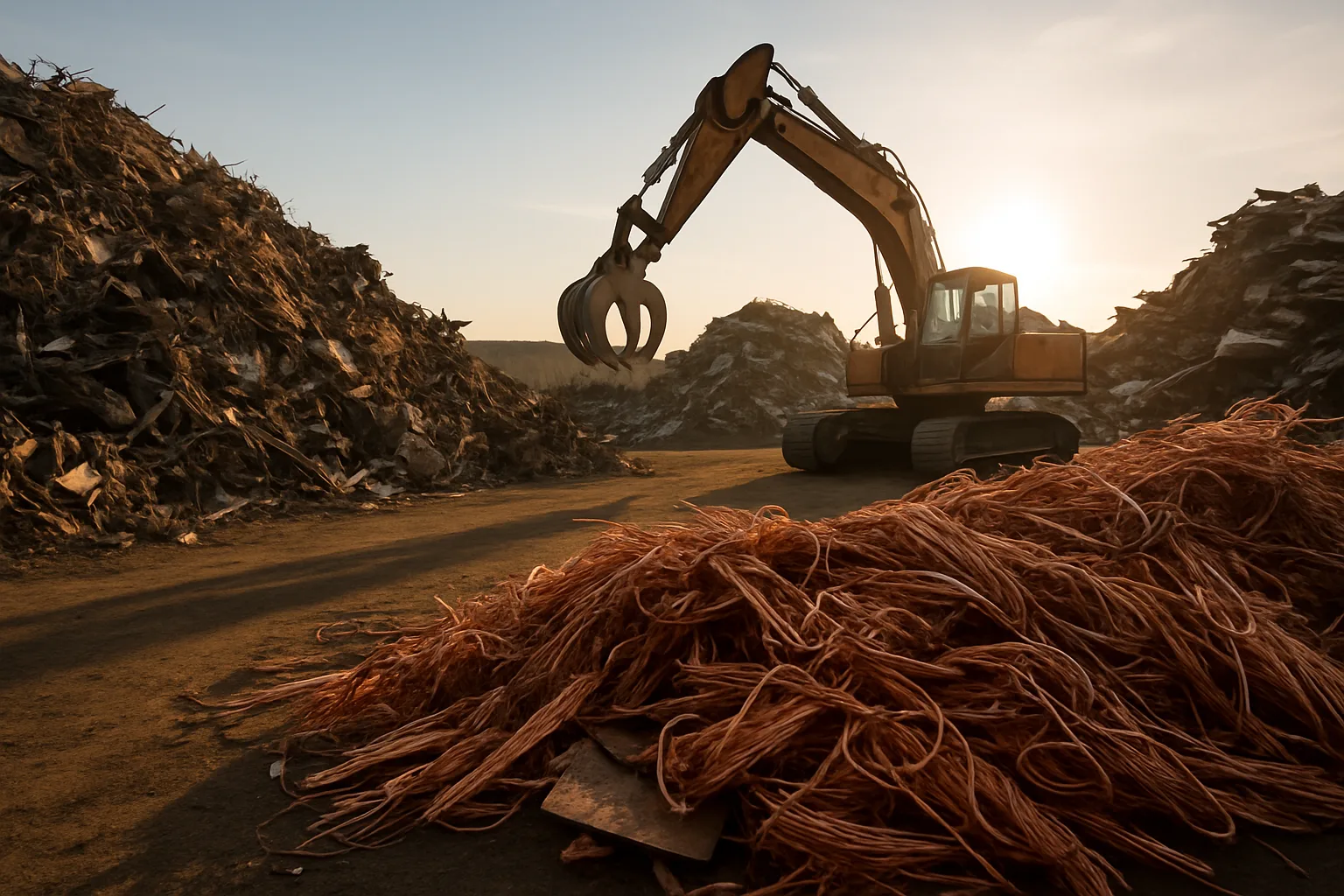
Most people leave money on the table at the scrap yard — not because they don't have valuable metal, but because they can't tell what they have. A pile of mixed metal looks like a pile of mixed metal until you know what to look for. Copper scrap prices in Richmond can vary dramatically from aluminum, brass, or steel — and yards pay you based on what the metal actually is, not what you think it might be.
This guide cuts through the confusion. Whether you're clearing out a renovation job, processing end-of-life equipment, or sorting a load before you haul it in, these identification techniques will save you time and put more money in your pocket.
Before we get into the tests, one thing matters: check today's Canadian scrap metal prices before you load your truck. Knowing current rates changes how you sort and prioritize your material.
Why Metal Identification Matters for Copper Scrap Prices in Richmond
Richmond yards see everything — stripped wire, HVAC coils, plumbing pipe, radiators, old appliances, and mixed demo loads. The difference between getting paid top dollar for bare bright copper versus receiving low-grade contaminated metal rates can be significant on a single load. That gap is real money, and it's yours to keep or give away depending on how well you sort.
Scrap metal prices in Richmond follow the same commodity markets as the rest of Canada, but local yard conditions, buyer competition, and material quality all affect what you actually get paid. A load of properly identified and sorted non-ferrous metal gives buyers more confidence — and confident buyers pay better prices.
Platforms like Canada's B2B scrap recycling marketplace SMASH exist precisely because documented, identified loads attract more competitive bids. When buyers know exactly what they're bidding on, competition increases. More competition means better price discovery for the seller.
The Magnet Test: Your First and Fastest Tool
Grab a strong magnet — a neodymium rare earth magnet works best, but even a fridge magnet will get you started. This single tool separates ferrous metals (iron and steel) from non-ferrous metals (copper, aluminum, brass, stainless, and others). That distinction alone is the most important cut you'll make in your sort.
If the magnet sticks hard: You've got ferrous metal — carbon steel or iron. These are your lowest-value scrap metals by weight. Don't mix them with your non-ferrous loads.
If the magnet doesn't stick at all: You're likely holding aluminum, copper, brass, or another non-ferrous metal. These are worth sorting further.
If the magnet sticks weakly or inconsistently: This can indicate stainless steel (many grades are weakly magnetic), cast iron, or contaminated material. Stainless is still worth separating — it has its own pricing category.
- Carbon steel: Strong magnet attraction, dull grey, heavy for its size
- Stainless steel: Weak or no attraction depending on grade, shiny silver finish, very hard to scratch
- Cast iron: Strong magnet attraction, rough grey surface, extremely heavy
- Copper: No magnet attraction, reddish-orange to dark brown if oxidized
- Aluminum: No magnet attraction, lightweight, silver-grey to dull white
- Brass: No magnet attraction, yellow-gold colour, heavier than aluminum
- Lead: No magnet attraction, very heavy for its size, dull blue-grey, soft
Visual Identification: Reading Colour, Weight, and Surface
Once the magnet tells you what something isn't, your eyes and hands tell you what it is. These visual cues take a few loads to internalize, but after that they become second nature. Richmond scrap collectors who sort regularly develop this instinct fast.
Here's how to read the most common metals visually:
Copper
Fresh copper is unmistakable — a warm reddish-orange colour that darkens to brown and eventually green with oxidation. Bare bright copper (the highest grade) is clean, uncoated, unalloyed wire or tubing with no solder. #1 copper has some oxidation or fittings but no insulation. #2 copper includes painted, coated, or corroded material. Knowing these grades is critical because copper scrap prices in Richmond differ significantly between them.
Aluminum
Lightweight is the tell. Aluminum weighs roughly one-third of steel at the same volume. It's silver-grey, often with a matte or slightly chalky surface when oxidized. Aluminum cans, extrusions, cast engine parts, wheels, and sheet stock all have distinct sub-grades with different aluminium scrap values. Cast aluminum (engine blocks, transmission housings) is worth less per pound than clean extrusion or sheet. Wire contamination in aluminum loads drops the price fast.
Brass
Brass has a golden-yellow colour — not as red as copper, not as silver as aluminum. It's dense and heavy. You'll find it in valves, fittings, plumbing fixtures, shell casings, and musical instruments. Yellow brass is the standard grade. Red brass (plumber's brass) has more copper content and usually commands a premium. If it looks gold but isn't magnetic and scratches easily, it's probably brass.
Stainless Steel
Stainless looks like polished or brushed silver steel. It's non-magnetic in the 300 series (kitchen equipment, food-grade piping) but can be slightly magnetic in 400 series. It's hard to scratch and doesn't rust. Don't mix stainless with carbon steel — it has its own price category and contaminates ferrous loads.
Lead
Lead is unmistakably heavy for its size and surface area. It's a dull blue-grey and very soft — you can mark it with a fingernail. Common sources include old roofing flashing, wheel weights, and old plumbing pipe. Handle with appropriate safety awareness.
Scratch, Bend, and Chip Tests for Borderline Cases
Some metals fool you visually. A scratch test adds another layer of certainty when colour and magnet results leave room for doubt.
Scratch test basics: Use a file or a hard screwdriver tip on a non-visible area of the metal. The colour of the exposed material often reveals the base metal underneath coatings, paint, or oxidation.
- Copper scratches to reveal bright orange-red underneath even heavy oxidation
- Brass reveals yellow-gold when scratched through surface patina
- Chrome-plated steel reveals grey steel underneath the chrome layer
- Zinc die-cast scratches to a blue-grey with a slightly crystalline texture
Bend test: Aluminum bends and creases without springing back. Steel and stainless spring back under light bending. Copper is flexible and holds its bent shape. Lead bends easily and stays bent with minimal force.
Chip test for cast materials: Cast iron chips brittlely with a sharp tool. Cast aluminum produces silver-white shavings. Cast zinc (white metal, Zamak) is harder than aluminum and chips with a slightly different colour.
Good scrap metal inventory management starts with these tests at intake — before anything goes into a bin. Sort at the source, label your containers clearly, and you'll never have a buyer downgrade your load because of contamination.
How SMASH Helps You Get Paid for What You Actually Have
Knowing your metals is half the equation. The other half is making sure buyers know it too. This is where documentation becomes money.
When you list loads on SMASH, you can document your material with photos, weight estimates, and grade descriptions. Buyers bidding on a clearly described load of #1 copper wire or clean aluminum extrusion don't have to guess — so they bid with confidence instead of pricing in risk. That confidence shows up in your final sale price.
SMASH also gives sellers access to vetted buyers across North America. For Richmond scrap sellers, that means your sorted, identified load isn't competing for attention from just one buyer on the phone — it's in front of multiple buyers who each have a reason to bid competitively. To find current Canadian scrap metal prices before you list, check today's rates so you know what benchmark you're working from.
No subscription fees. SMASH only wins when the seller wins. That model keeps the platform honest.
For those managing larger volumes or recurring loads, proper metal identification feeds directly into better inventory records, cleaner BOLs, and faster settlement. The yards and collectors doing this consistently in British Columbia aren't leaving money behind — and they're building buyer relationships that pay dividends over time. Explore Richmond scrap metal services to understand how local sellers are approaching this.
Practical Sorting Workflow for Richmond Scrap Sellers
Here's a repeatable process you can use on every load before it leaves your yard or job site:
- Run the magnet. Pull all magnetic (ferrous) material into one pile immediately. Don't let it contaminate your non-ferrous.
- Sort by colour. Red-orange goes to copper. Yellow-gold goes to brass. Silver-grey and lightweight goes to aluminum. Heavy and dull-grey goes to lead or zinc assessment.
- Scratch borderline pieces. When colour isn't conclusive, scratch a hidden area and check the base colour.
- Grade your copper. Separate bare bright, #1, and #2. Strip insulated wire if the copper yield justifies it at current copper scrap prices in Richmond.
- Separate aluminum sub-grades. Wheels, extrusion, cast, and sheet all have different aluminium scrap values — don't mix them.
- Photograph your sorted loads. Even a quick cell phone photo of each bin or container before it moves gives you documentation and builds buyer trust.
- Check prices before you haul. Markets shift. What was worth hauling last week might not be today — or vice versa.
This workflow takes minutes once it's a habit. Yards across British Columbia that do this consistently report fewer disputes, faster transactions, and better repeat buyer relationships. You can also read the latest Canadian scrap metal market updates to stay on top of pricing shifts before you commit a load to market.
The old way — mixed bins, one phone call, one price, take it or leave it — costs you money on every load. Sorted, identified, documented material gives buyers the confidence to compete. That competition is where your price gets made.
Knowing your metals is a skill that pays you back every single time. Before your next haul, take five minutes with a magnet, check your colours, and sort before you move. Then check today's Canadian scrap metal prices at scrap-metal-prices.ca — because getting the identification right only matters if you're working from current market data.
Frequently Asked Questions
Q: How do I know if the copper I have qualifies for bare bright pricing in Richmond?
Bare bright copper must be clean, uncoated, unalloyed solid wire or tubing — no solder, no paint, no insulation, and no heavy oxidation. If your material has any of those, it grades down to #1 or #2 copper. Richmond yards apply these grades consistently, so sorting before you arrive protects your payout.
Q: What's the easiest way to tell aluminum from steel at a glance?
Pick it up. Aluminum is dramatically lighter than steel at the same size — roughly one-third the weight. If it's light and doesn't attract a magnet, it's almost certainly aluminum. Steel is heavy and sticks hard to a magnet.
Q: Do copper scrap prices in Richmond change frequently?
Yes. Copper prices follow global commodity markets and can shift daily. Local factors like buyer demand, load quality, and yard conditions also affect your final rate. Always check today's Canadian scrap metal prices before you haul so you're negotiating from current data, not last week's quote.
Q: Is it worth stripping insulation off copper wire before selling scrap metal near me?
It depends on the copper content and current copper scrap prices. Thick wire with high copper yield is usually worth stripping. Thin wire or low-grade insulated cable may not justify the labour. Check the spread between insulated wire and bare copper prices at your local Richmond yard before deciding.
Q: How does SMASH improve what I get for a sorted, identified load?
SMASH connects your documented load with vetted buyers across North America who bid competitively. When buyers see a clearly described, photo-documented load of sorted material, they bid with confidence instead of pricing in uncertainty. More competition between buyers generally produces better price discovery for the seller — and there are no subscription fees on the platform.
Disclaimer: Scrap metal prices fluctuate based on commodity markets, local yard conditions, and material grade. Always verify current rates directly with your yard or through scrap-metal-prices.ca before selling.
Stay sharp on market moves — follow SMASH on LinkedIn for scrap metal market insights and industry updates across Canada.
```