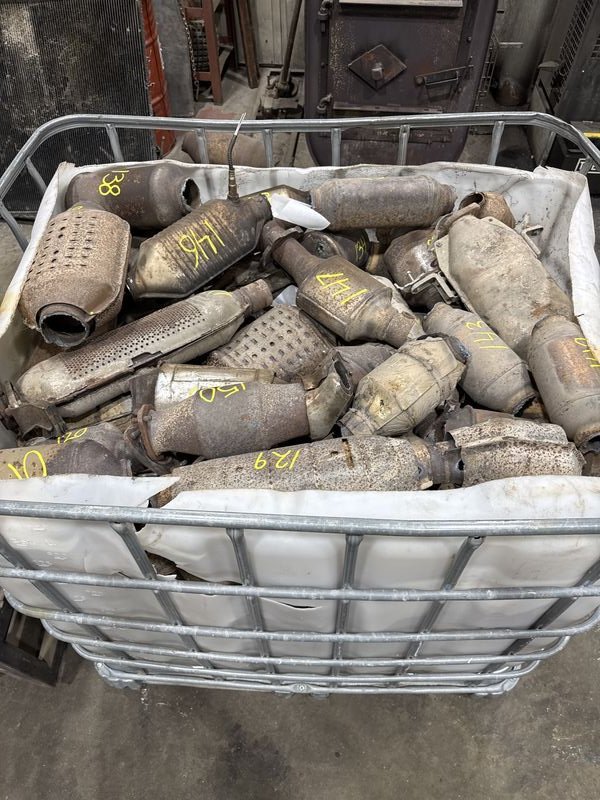
Most people have no idea what's inside a catalytic converter. They just know it's bolted under their vehicle — and that scrap yards want it badly. In St. John's and across Newfoundland and Labrador, "cats" have become one of the most discussed materials in the scrap recycling world, and for good reason. The metals inside them can be worth serious money. But the price you get quoted today might be completely different from what you'll hear next week. Here's why — and what you can do about it.
If you're looking to check today's Canadian scrap metal prices before you sell, that's the right instinct. Timing matters more with catalytic converters than with almost any other scrap material.
---What's Actually Inside a Catalytic Converter
A catalytic converter is an emissions control device. It converts toxic exhaust gases — carbon monoxide, hydrocarbons, nitrogen oxides — into less harmful compounds before they exit your tailpipe. It does this using a ceramic or metallic substrate coated with a thin layer of platinum group metals, commonly called PGMs.
Those PGMs are what make a catalytic converter valuable. The three main ones are:
- Platinum (Pt) — used broadly across converter types, including diesel vehicles
- Palladium (Pd) — dominant in gasoline-powered vehicles, historically the highest-value PGM in cats
- Rhodium (Rh) — present in smaller quantities but often the most expensive of the three per troy ounce
The actual weight of PGMs in a single converter is small — measured in grams, sometimes fractions of a gram. But multiply that by the spot price of these metals on global commodity markets, and you can see why a single cat can fetch anywhere from $20 to several hundred dollars depending on the type and current market conditions. Trucks and SUVs with larger engines tend to carry converters with more PGM loading. Older domestic trucks from the early 2000s, for example, are popular among scrap buyers for exactly this reason.
The steel shell and ceramic substrate also carry some value, but they're secondary. The PGMs are the story.
---Why Catalytic Converter Scrap Prices Vary So Widely
This is the question most sellers get frustrated by. You call one yard, get a number. You call another, get something completely different. You wait a week and the first yard gives you a third number. What's going on?
Several factors drive catalytic converter pricing — and most of them are outside your yard's control:
- Global PGM spot prices. Platinum, palladium, and rhodium trade on international commodity markets. Prices move daily based on industrial demand, mining output, geopolitical factors, and currency fluctuations. When palladium spikes, cat values go up. When rhodium crashes, they drop fast.
- The converter serial number or part number. Buyers use databases to look up what PGM content a specific converter is expected to contain. Two converters that look identical on the outside can have dramatically different assay values. This is why reputable platforms use serial tracking and photo documentation — it removes guesswork for both buyer and seller.
- The buyer's processing capacity and relationships. A local yard that sends cats to a secondary smelter gets a different return than a national consolidator with a direct refinery relationship. Their margin assumptions get built into your quote.
- Market liquidity and buyer competition. If only one buyer is making you an offer, you're not discovering the market — you're accepting whatever that buyer decides to offer. More competition leads to better price discovery.
- Regional demand fluctuations. isn't a monolithic market. Buyers in different regions — Ontario, Quebec, the Atlantic provinces — may have different pipeline economics. What drives pricing in Toronto doesn't always mirror what's happening in St. John's.
Understanding these factors won't eliminate price variance, but it will help you recognize a low offer when you see one. If a buyer can't explain how they're valuing your converters, that's a red flag.
---The Recycling Process: From Your Vehicle to the Refinery
Selling a catalytic converter isn't the end of the story — it's the beginning of a long processing chain. Here's what actually happens after you sell:
Step 1: Collection and identification. Yards collect converters and sort them by type — foil, bead, ceramic substrate — and by vehicle application. Each converter gets identified using its serial number or visual characteristics. High-quality yards photograph and document every unit. This matters for traceability and for settling disputes.
Step 2: Decanning. The steel shell gets cut away from the ceramic or metallic substrate inside. The steel goes to ferrous recycling. The substrate, which contains the PGMs, moves forward in the process.
Step 3: Sampling and assay. The substrate material is crushed and sampled. A representative sample gets sent to a lab for fire assay — a precise chemical process that determines the actual platinum, palladium, and rhodium content. This is the moment of truth. The assay result drives the final settlement value.
Step 4: Smelting and refining. The crushed material gets processed at a PGM refinery to extract and separate the individual metals. This is a capital-intensive industrial process. Only a handful of facilities in North America and Europe do it at scale.
Step 5: Settlement. The refinery settles with the processor based on the assay results and current spot prices. That settlement works its way back down the chain — the processor settles with the yard, the yard settles with you.
The entire chain from collection to final settlement can take weeks. This is why buyers build in a margin — they're carrying price risk during that processing window. It's also why transparency about the process matters when you're choosing who to sell to.
---Scrap Metal Recycling in Canada: What Atlantic Sellers Need to Know
For sellers in St. John's and across Newfoundland and Labrador, selling catalytic converters and other scrap materials comes with its own regional context. The Atlantic provinces have a smaller concentration of scrap buyers than Ontario or Quebec. That means less natural buyer competition — and historically, that's meant lower price discovery for sellers who rely on local relationships alone.
Scrap metal recycling Canada-wide has changed significantly with digital platforms that connect sellers to vetted buyers outside their immediate geography. You don't have to accept the price your nearest yard offers just because they're the only one in town. National buyer networks give sellers in St. John's access to competitive bids from buyers who actually want your material.
Platforms like SMASH — Canada's B2B scrap recycling marketplace — operate on exactly this model. Vetted buyers compete in an auction format. You get visibility into the market instead of a single take-it-or-leave-it number. If you're moving volume — whether that's catalytic converters, aluminum scrap, copper, or other non-ferrous materials — that kind of competition can make a meaningful difference in what you actually receive.
Before you sell, it pays to find current Canadian scrap metal prices so you know what benchmark you're working from. Walking into a negotiation without that reference point is like selling a car without knowing the book value.
---Aluminum Scrap Price Today and Other Metals: Context for Your Converter Sale
Catalytic converters don't exist in a vacuum. Most sellers moving cats are also dealing in other materials — aluminum scrap, copper wire, cast iron, mixed non-ferrous loads. Understanding how different metal prices move together helps you time your sales more strategically.
The aluminum scrap price today, for instance, is influenced by LME aluminum spot prices, domestic demand from automotive and construction sectors, and the spread between prime aluminum and secondary content. Copper follows a similar global commodity logic. When base metal prices are strong, yards tend to be more competitive across the board — including on cats. When markets soften, margins tighten and offers get more conservative.
Whether you're selling cats in St. John's or mixed loads across Newfoundland and Labrador, tracking metal price trends before you move material is basic homework. The sellers who do it consistently get better results than those who sell whenever it's convenient. You can read the latest Canadian scrap metal market updates to stay current on where prices are moving.
SMASH makes this kind of strategic selling easier by connecting you to buyers who are actively bidding on your material category. No cold calls. No guessing. Real competition, documented results.
---Regulation and Compliance: The Catalytic Converter Market in 2026
Theft of catalytic converters remains a concern across Canada. By 2026, most provinces have tightened regulations around the purchase and resale of converters at the secondary market level. Sellers should expect reputable buyers to require proof of ownership and documentation — VIN numbers, vehicle titles, or Bill of Sale records — before completing any transaction.
This isn't bureaucratic friction. It's market hygiene. Documentation protects legitimate sellers, keeps the channel clean for buyers, and supports the kind of traceability that serious recyclers have always relied on. If a buyer doesn't ask for documentation on your converters, that should give you pause.
Responsible platforms and yards have built documentation workflows into their processes — photo requirements, serial tracking, VIN lookup tools — that make compliance straightforward rather than burdensome. This is the direction the industry is moving, and it benefits honest sellers.
Regardless of where you're operating — from St. John's to Vancouver — staying compliant means keeping records, working with licensed buyers, and choosing platforms that take accountability seriously.
---Catalytic converter prices will keep moving. PGM markets don't sleep, and neither does buyer demand for quality material. The best thing you can do is stay informed, document your loads properly, and make sure you're not handing a single buyer a monopoly on your price. If you want to know what your material is worth right now, check today's Canadian scrap metal prices — get current rates at scrap-metal-prices.ca and use that information to negotiate from a position of knowledge, not guesswork.
Disclaimer: Scrap metal prices — including catalytic converter PGM values and aluminum scrap price today — fluctuate daily based on global commodity markets. Always verify current rates before selling.
---Frequently Asked Questions
Q: How much is a catalytic converter worth as scrap in Canada right now?
The value of a catalytic converter depends on its type, the vehicle it came from, and current PGM spot prices — which change daily. There's no single number that applies to all converters. Use a serial number lookup, get multiple quotes, and check current market rates before you sell. Prices for common aftermarket cats are generally lower than OEM units from larger-displacement vehicles.
Q: Where can I sell scrap metal in St. John's?
St. John's has local scrap yards that accept ferrous and non-ferrous materials, including catalytic converters. For higher-value loads or volume sellers, B2B platforms like SMASH connect you to vetted buyers across Canada, which can improve your price discovery beyond what a single local buyer offers. Always confirm documentation requirements before you drop off material.
Q: Why do scrap metal prices vary between buyers in Newfoundland and Labrador?
Buyers build different margin assumptions into their offers based on their processing costs, refinery relationships, and current inventory needs. The fewer buyers you approach, the more likely you are to accept a below-market offer. Getting multiple quotes — or using a competitive auction platform — gives you a clearer picture of what your material is actually worth.
Q: Do I need paperwork to sell a catalytic converter in Canada?
Yes — in most Canadian provinces, regulations now require sellers to provide proof of ownership when selling catalytic converters. This typically means a vehicle title, bill of sale, or VIN documentation. Reputable buyers will ask for this. If a buyer doesn't request documentation, treat that as a warning sign.
Q: How does SMASH help scrap sellers get better prices for their material?
SMASH operates as a B2B auction platform where vetted buyers compete for your loads. Instead of accepting a single buyer's offer, you get competitive bids — which can help reveal the actual market value of your material. There are no subscription fees; SMASH only earns when the sale goes through. It's built for yards and volume sellers, not one-off transactions.
---Stay ahead of the market — follow SMASH on LinkedIn for ongoing scrap metal market insights, industry news, and pricing updates across Canada.