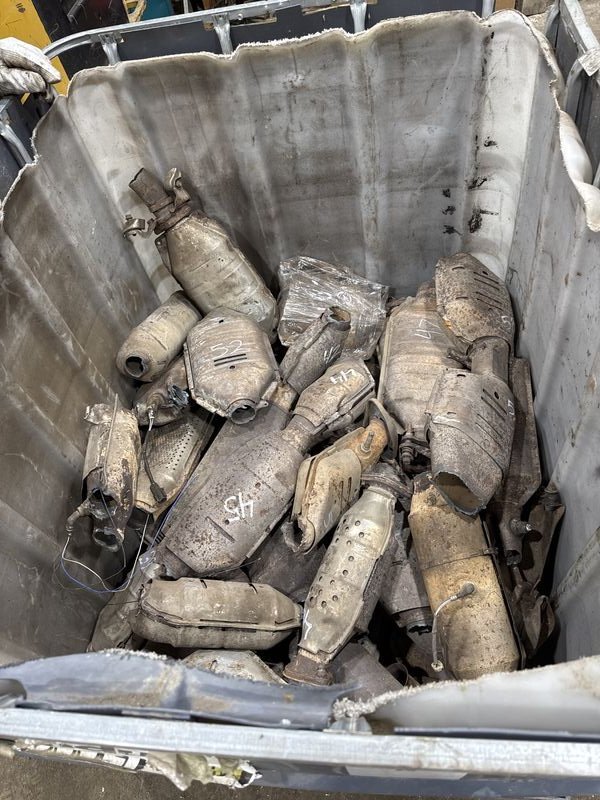
Most scrap metal sellers know what copper wire looks like. But hand a yard operator a catalytic converter and ask what it's worth — suddenly the room goes quiet. Copper scrap prices in Regina follow market logic that's easy to learn. Catalytic converter pricing? That's a different beast entirely, and it trips up sellers across Saskatchewan every single week.
Here's what you need to know about how catalytic converter recycling actually works, why prices swing so dramatically, and how to stop leaving money on the table when you bring one in.
What's Actually Inside a Catalytic Converter (And Why It Matters for Pricing)
A catalytic converter isn't just a chunk of metal. Inside the ceramic or metallic substrate, you'll find platinum group metals — platinum, palladium, and rhodium. These three elements do the emissions-cleaning work, and they're also the reason a single cat can be worth anywhere from $20 to several hundred dollars depending on the vehicle it came from.
The mix of PGMs inside varies significantly by vehicle make, model, engine size, and year. A cat from a late-model foreign nameplate with a larger engine typically holds more PGM content than one pulled from a small domestic economy car. That's why two converters sitting side by side can look almost identical and carry prices that are nowhere near each other. Weight alone tells you almost nothing.
- Platinum — found in most diesel and older gasoline converters
- Palladium — dominant in modern gasoline converters; prices have been volatile
- Rhodium — present in smaller amounts but historically the highest-value PGM per ounce
- Ceramic substrate — base material, adds weight but minimal value
- Steel shell — low-grade steel scrap value only
The market prices these metals daily on commodity exchanges, which means what your cat is worth today may not be what it's worth Thursday. Sellers who don't understand this get burned. Sellers who track it make smarter decisions about when to sell and when to hold.
How the Recycling Process Works From Your Yard to the Refinery
When a catalytic converter leaves your hands at a scrap yard, it doesn't get processed on-site. The converter gets sorted, identified, and eventually shipped to a specialized processor — often called an assayer or a refiner — who actually extracts the PGMs. This isn't a local operation. The refinery might be in another province or across the border entirely.
The typical process looks like this:
- Collection and sorting — Converters are sorted by type (foreign, domestic, diesel, aftermarket) because each category has a different average PGM yield
- Decanning — The steel shell is cut away and the ceramic substrate is removed
- Milling and sampling — The substrate is ground into powder and sampled to determine exact PGM content
- Smelting — The material is processed at extremely high heat to separate and concentrate the metals
- Refining — Pure platinum, palladium, and rhodium are extracted and sold into the commodity market
This multi-step chain is why the price your yard pays you isn't the same as the final commodity value. Every step in the chain has a cost, and those costs get worked backwards into the price you see at the counter. Understanding that chain helps you ask smarter questions — and compare what different buyers are actually offering.
Why Copper Scrap Prices in Regina and Cat Prices Are Both Hard to Pin Down
If you've been tracking copper scrap prices in Regina for any length of time, you already know the frustration. Prices shift with LME copper futures, local supply and demand, freight costs, and the mood of the market that week. Catalytic converter pricing adds another layer — PGM spot prices on top of base metal volatility.
For sellers in Regina and across Saskatchewan, this creates a real practical problem. You're not always sure if what the local buyer is quoting reflects today's market or last week's. A single buyer, a single phone call, and you have exactly one data point. That's not price discovery — that's guessing.
To check today's Canadian scrap metal prices and see where the market actually sits before you walk into a yard, you need access to live data. Saskatchewan sellers who walk in without doing their homework consistently get lower offers than those who come in knowing what the metal is trading for. This applies equally to copper wire, aluminum, and catalytic converters.
Platforms like SMASH let you compare scrap metal bids from Canadian buyers instead of relying on one phone call. That's the structural difference between the old way and actually getting the market price for your material.
What Drives Cat Prices Up — and What Sends Them Down
Catalytic converter prices are driven by a specific set of factors that most sellers don't track closely enough. If you're moving volume — whether you're a dismantler in Regina or a collector working Saskatchewan farm country — these variables directly affect your margin.
Factors that push prices higher:
- Palladium and rhodium spot prices rising on global commodity markets
- Tight supply of certain converter types due to lower vehicle scrap volumes
- Increased emissions regulations globally driving higher demand for refined PGMs
- Currency fluctuations that make CAD-denominated scrap more attractive to buyers
Factors that push prices lower:
- Palladium or rhodium spot price corrections (rhodium dropped dramatically in past cycles)
- Oversupply of a specific converter type flooding the market
- Regulatory crackdowns on converter theft reducing available supply chain activity
- Processor pricing adjustments based on refinery backlogs
None of this has anything to do with how heavy the converter is or how clean it looks. It's all about what's inside, what the refiners are currently paying, and what competition exists for your material. When you're dealing with a single buyer and no competitive pressure, you have zero leverage on any of these factors.
Scrap Metal Inventory Management: Why Tracking Your Cats Pays Off
Here's where most smaller yards and collectors lose real money: poor documentation. When it comes to scrap metal inventory management for catalytic converters specifically, the difference between vague records and detailed records can be significant at settlement time.
SMASH builds inventory documentation into the process — serial tracking, photo documentation, accurate categorization by converter type. That data matters because it's what allows buyers to bid confidently. A buyer looking at a well-documented lot of converters with photos, serial numbers, and type classifications will price more aggressively than one staring at a vague description of "mixed cats." Documented inventory gives buyers more confidence, and more confident buyers bid higher.
If you're holding any volume of catalytic converters right now, ask yourself:
- Do you know what vehicle each converter came from?
- Do you have photos showing the condition and any visible stamps or codes?
- Have you categorized your lot by foreign, domestic, diesel, or aftermarket?
- Do you have a paper trail that a buyer can trust?
If the answer to most of those is no, you're not in a strong negotiating position. You can read the latest Canadian scrap metal market updates to understand how documentation is increasingly influencing buyer behaviour across the country.
Getting the Best Price for Scrap Converters in Regina
The Regina scrap market has no shortage of buyers for catalytic converters — but not all of them are offering the same price, and very few of them will volunteer that information. Getting a better outcome requires a different approach than the old "call one buyer and take it or leave it" method.
Start by knowing your material. Identify your converters by type if possible. Look for any serial numbers or manufacturer codes on the body of the converter — these often correspond to published reference data that experienced buyers use to determine PGM content estimates. If you don't know the vehicle source, the converter's physical size, substrate type, and visible markings are your next best tools.
From there, create competition. Multiple buyers bidding on the same documented lot is how you find out what your material is actually worth. That's not a sales tactic — it's basic market mechanics. SMASH exists to create exactly that kind of competitive environment for scrap sellers. For Regina scrap metal services, the platform connects you with vetted buyers who are actively competing for your material, not just waiting for you to accept whatever they offer.
You can also find current Canadian scrap metal prices to benchmark where copper, aluminum, and specialty materials are trading before you make any decisions about when and where to sell.
No subscription fees. SMASH only wins when the seller wins. That's the model — and for sellers who've been working with a single buyer for years without questioning it, that difference is worth understanding.
Disclaimer: Scrap metal prices, including catalytic converter and copper scrap prices in Regina, fluctuate daily based on commodity markets, local supply, and buyer conditions. Always verify current rates before making selling decisions.
Frequently Asked Questions
Q: How are catalytic converter scrap prices calculated in Regina?
Catalytic converter prices are based on the estimated platinum group metal (PGM) content inside the converter — specifically platinum, palladium, and rhodium. Buyers use converter type, vehicle source, and current PGM spot prices to determine what they'll offer. Physical weight and appearance have almost no bearing on value.
Q: How do copper scrap prices in Regina compare to other Canadian cities?
Copper scrap prices across Canada generally track the London Metal Exchange (LME) copper price, but local premiums and discounts apply based on freight costs, buyer competition, and regional supply. Regina prices may differ from scrap metal prices in Ottawa or Vancouver. Checking a live Canadian pricing resource gives you the most accurate comparison.
Q: Why do catalytic converter prices change so frequently?
Because the value comes from PGMs — platinum, palladium, and rhodium — which trade on global commodity markets that move daily. A shift in palladium or rhodium spot prices can change what your converter is worth overnight. This is why tracking prices and selling strategically matters more for cats than for most other scrap materials.
Q: Does the condition of a catalytic converter affect its scrap price?
Condition matters less than most sellers expect. The PGM content inside is what drives value, and that content survives most damage short of complete destruction of the substrate. Converters that are cracked, rusted, or cut are typically still worth processing — though some buyers discount heavily damaged or "washed out" substrates that have visibly deteriorated internally.
Q: How can sellers in Saskatchewan get better prices for scrap catalytic converters?
The most effective approach is creating competition among buyers. Document your material well — photos, converter type, vehicle source if known — and present it to multiple buyers simultaneously rather than accepting the first offer. Platforms like SMASH connect Saskatchewan sellers with vetted buyers who compete for material, which is how you move from one price point to a market price.
---If you're sitting on a load of cats, copper wire, or mixed non-ferrous and you're not sure what any of it is worth today, that's the problem to solve first. Check today's Canadian scrap metal prices — get current rates and market data at scrap-metal-prices.ca before your next sale.
Follow SMASH on LinkedIn for ongoing scrap metal market insights, pricing trends, and industry updates across Canada.