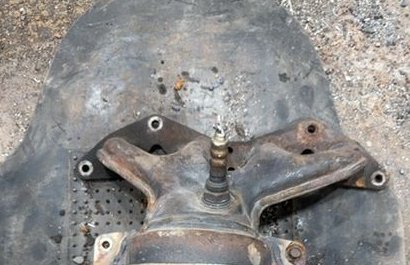
Why Your Catalytic Converter Might Be Worth More Than You Think — Or Less
Most scrap metal has a straightforward value. Copper is copper. Aluminum is aluminum. You weigh it, you get paid. Catalytic converters don't work that way. Two converters sitting side by side can have a price difference of hundreds of dollars — and most sellers have no idea why. If you're looking to sell scrap metal in Hamilton and you've got cats in your pile, you need to understand what's actually driving that number before you walk through the yard gate.
This week's market recap breaks down how catalytic converter recycling actually works, what makes prices swing so dramatically, and how to make sure you're not leaving money on the table when you sell.
What's Actually Inside a Catalytic Converter — and Why It Matters for Scrap Metal Prices in Canada
A catalytic converter isn't valuable because of its steel shell. It's valuable because of what's inside: a ceramic or metallic substrate coated with platinum group metals — platinum, palladium, and rhodium. These are among the most expensive metals on earth. Rhodium, in particular, has historically traded at multiples of gold. That's what drives the price.
The substrate gets loaded with PGMs during manufacturing to trigger the chemical reactions that reduce vehicle emissions. When the converter reaches end-of-life, those PGMs are still there — recoverable through a smelting and refining process. Recyclers and refiners extract the platinum, palladium, and rhodium, sell them into the commodity markets, and that downstream value is what gets reflected (partially) back to you when you sell.
Here's the critical part most sellers miss: the concentration and mix of PGMs varies significantly by vehicle make, model, engine type, and model year. A converter off a high-displacement truck engine might contain twice the PGM loading of one from a small economy car. Check today's Canadian scrap metal prices to get a baseline — but for cats specifically, the vehicle source matters as much as the commodity market.
How the Catalytic Converter Recycling Process Works — From Your Yard to the Refinery
Understanding the process helps explain the price chain. It's longer than most sellers realize, and every step involves a margin.
- Collection: Converters are pulled from end-of-life vehicles at auto wreckers, scrap yards, and dismantlers. In Hamilton and across Ontario, recycling operations process thousands of units per year from vehicles flowing through the region's auto sector.
- Identification and grading: Converters get identified by serial number, OEM markings, or vehicle application. This determines the estimated PGM content. High-quality serial tracking at this stage is what separates accurate pricing from guesswork.
- Decanning: The ceramic or metallic substrate is removed from the steel shell. The steel shell has scrap value too — it's typically stainless — but the core is what matters.
- Sampling and assay: Cores are crushed, blended, and sampled. A portion goes to a certified assay lab to determine the actual PGM content in the lot. This is where the real number comes from.
- Smelting and refining: Processed material goes to a PGM refiner. Recovery and refining takes time — weeks, sometimes longer. Refiners charge processing fees and take a cut of the recovered metals.
- Settlement: The seller (the recycling yard or aggregator) gets paid based on recovered PGM values minus fees. That settlement price flows back — in a compressed form — to the price quoted at your local yard.
That full chain means even when PGM spot prices are high, the price at the yard gate reflects risk, processing costs, and time-value. When prices are volatile — which they have been throughout 2026 — buyers at the yard level price in uncertainty. That uncertainty is part of why a cat's quoted price can feel disconnected from what you read about PGM markets online.
Why Catalytic Converter Prices Vary So Much — The Key Drivers in 2026
The price spread on cats isn't random. There are predictable factors behind it. Knowing them helps you sell smarter.
1. PGM commodity prices. Platinum, palladium, and rhodium trade on international markets and move daily. Palladium has seen significant volatility over the past several years as EV adoption and supply chain shifts create demand uncertainty. Rhodium, once the highest-valued of the three, has pulled back considerably from its peak years. In 2026, the relative weighting of these metals means the same converter that was highly valued two years ago may be priced differently today. Read the latest Canadian scrap metal market updates to stay current on how PGM trends are affecting scrap valuations.
2. Vehicle application and serial number. A pre-OBD-II converter from a 1990s vehicle has a completely different PGM loading than one from a 2018 diesel truck. Buyers who use serial lookups — rather than eyeballing — give you a more accurate number. If your buyer can't tell you which vehicle the quoted price is based on, that's a red flag.
3. Condition of the substrate. Cracked, melted, or rattling substrates have lower PGM recovery. A converter that's been driven with a failing engine, overheated repeatedly, or physically damaged can lose significant substrate material. Buyers discount accordingly.
4. Volume and relationships. A yard moving a hundred cats a week has more leverage with refiners than one moving five. That volume discount flows into what they can offer you. This is one reason platforms that aggregate seller supply — like SMASH Recycling — can improve the pricing environment for individual yards and collectors.
5. Currency. For Canadian sellers, the CAD/USD exchange rate matters. PGMs price in USD. When the Canadian dollar is weak, the same USD-denominated commodity value translates to higher CAD payouts. When the loonie strengthens, that buffer shrinks. It's one more variable that makes cat pricing feel unpredictable from week to week.
Selling Cats in Hamilton — What Local Sellers Need to Know
Hamilton has a strong industrial recycling base. The city's manufacturing history means there's no shortage of scrap moving through the region, and Hamilton scrap metal services are well-established for both ferrous and non-ferrous material. But catalytic converters exist in a different category than your standard aluminum or copper load.
Not every yard in Hamilton handles cats the same way. Some quote flat rates by converter type. Others use serial-based pricing. A few work with dedicated cat buyers or aggregate and ship to specialized processors. The difference in approach can mean a meaningful price gap for the same unit — which is exactly why shopping your load makes sense rather than defaulting to whoever you know.
Documentation matters more with cats than almost any other scrap category. Regulatory requirements around catalytic converter sales have tightened across Ontario in recent years, with sellers typically required to provide proof of ownership or vehicle source, photo documentation, and government-issued ID. This isn't unique to Hamilton — it reflects province-wide compliance requirements designed to address theft. Come prepared. Yards that take documentation seriously are operating above board, which is where you want to be.
If you're working with volume — pulling cats from an automotive operation, a wrecker, or a dismantling business — competitive bidding is worth exploring. The one-phone-call approach leaves price discovery entirely in the buyer's hands. Platforms that put your inventory in front of multiple vetted buyers give you a clearer picture of actual market value. That's the core idea behind SMASH: more competition, more transparency, better price discovery for sellers.
How Cats Fit Into a Broader Scrap Metal Strategy — Aluminum, Copper, and Mixed Loads
Catalytic converters rarely come alone. End-of-life vehicles also yield copper wiring, aluminum from engine components and wheels, stainless steel exhaust, and ferrous material from the body and frame. If you're selling scrap metal in Hamilton from an automotive source, understanding how to break out and value each material stream separately is what separates a serious recycler from someone leaving money behind.
Aluminum scrap price today remains a meaningful factor for automotive dismantlers. Late-model vehicles are increasingly aluminum-intensive — hoods, engine blocks, transmission cases, suspension components. Non-ferrous recovery from a single vehicle can be substantial if you're separating materials rather than selling everything as mixed scrap at a lower blended rate.
Copper from automotive wiring harnesses is another category worth pulling separately. It's time-consuming to strip, but the spread between insulated wire and bare bright copper is significant enough to justify the labor if you're moving volume. Find current Canadian scrap metal prices by material to understand where the value sits in any given load.
The fundamentals of scrap metal recycling in Canada haven't changed: separation, documentation, and competition among buyers are the three levers that put more money in your pocket. Whether you're dealing in cats, cores, aluminum, or mixed ferrous, those principles apply.
Frequently Asked Questions
Q: How do I know if I'm getting a fair price for my catalytic converters in Hamilton?
The best approach is to get quotes from more than one buyer. Serial-based pricing — where the buyer identifies your specific converter by its OEM markings — gives you a more accurate number than flat-rate offers. If a buyer can't explain how they arrived at their price, that's worth questioning. Competitive platforms like SMASH let you put your inventory in front of multiple vetted buyers instead of relying on a single quote.
Q: What documentation do I need to sell catalytic converters in Ontario?
Ontario regulations generally require sellers to provide government-issued ID, proof of vehicle ownership or source documentation, and may require photo documentation of the material. Requirements can vary by yard, but any legitimate buyer will ask for this information. Come prepared — it protects you and the buyer.
Q: Why are catalytic converter prices so different from yard to yard?
Different yards use different pricing methods — flat rates, serial lookups, or direct connections with processors — and each carries a different margin. Volume, buyer relationships, and how quickly a yard can move material to a refiner all affect what they can offer you. That's why getting multiple quotes matters more with cats than with standard ferrous or aluminum.
Q: Can I sell scrap metal near me in Hamilton on a weekend?
Many Hamilton-area scrap yards operate Monday through Saturday, with limited or no Sunday hours. Hours vary by location, so it's worth calling ahead or checking current listings. Planning your haul for a weekday often means shorter wait times and more flexibility on grading.
Q: Does the exchange rate affect what I get paid for scrap metal in Canada?
Yes — particularly for PGM-bearing material like catalytic converters, which are priced against USD-denominated commodity markets. A weaker Canadian dollar generally means higher CAD payouts for the same metal content. Copper and aluminum are also internationally priced, so the CAD/USD rate is always a background factor in Canadian scrap metal prices.
Catalytic converter pricing isn't magic — it's chemistry, logistics, and commodity markets stacked on top of each other. The sellers who understand the chain get better outcomes than those who just take whatever number they're handed. If you're moving cats or mixed automotive scrap in Hamilton, do the work: separate your materials, document your loads, and get more than one number. That's where the margin lives.
When you're ready to move your material, check today's Canadian scrap metal prices and get current rates at scrap-metal-prices.ca — then put that data to work before you sell.
Disclaimer: Scrap metal prices fluctuate daily based on commodity markets, exchange rates, and local yard conditions. Always confirm current rates directly with your buyer before selling.
Follow SMASH on LinkedIn for weekly scrap metal market insights, pricing trends, and industry updates across Canada.