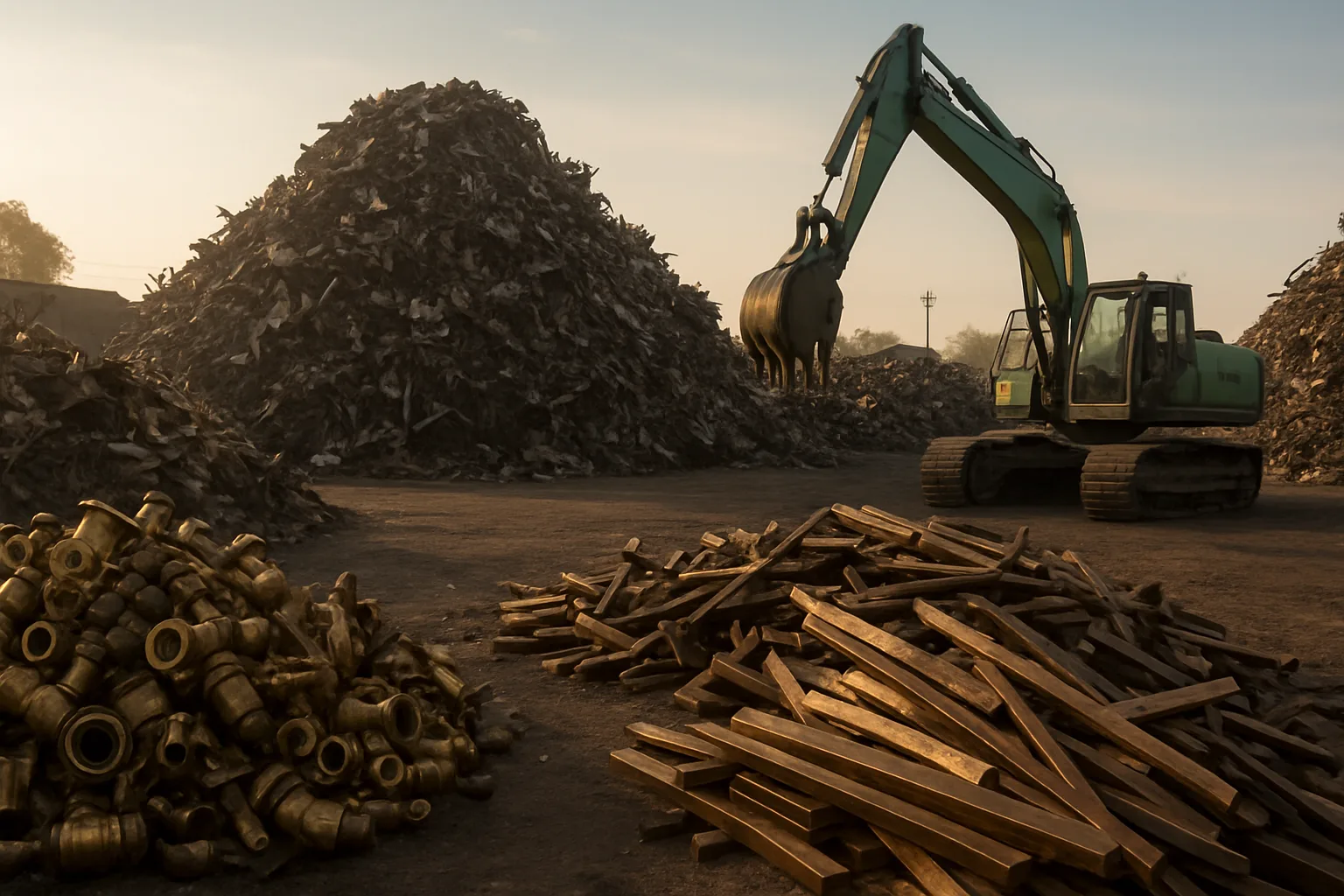
Brass vs. Bronze Scrap: What's the Difference and What's It Worth in Canada?
Most people lump brass and bronze together. That's a mistake that costs money. These are two distinct alloys with different compositions, different scrap values, and very different sources — and if you're selling into a B2B scrap metal marketplace, knowing which one you have changes everything about how you price it and where you sell it.
Brass is a copper-zinc alloy. Bronze is typically copper-tin, though modern bronze can include aluminum, manganese, or silicon depending on the application. Both are non-ferrous, both are valuable, and both are showing up in yards across British Columbia right now as construction activity, industrial cleanouts, and equipment salvage continue to generate material.
This guide breaks down where to find each one, what they're realistically worth, and how to make sure you're not leaving money on the table when you go to sell.
Brass Scrap: What It Is and Where It Comes From
Brass is one of the most commonly recycled non-ferrous metals in North America. Its yellow-gold color makes it easy to identify, and its uses are everywhere — plumbing, electrical, manufacturing, and decorative hardware. The scrap value tracks closely with copper prices, since copper typically makes up 60–90% of the alloy depending on the grade.
Common sources of brass scrap include:
- Plumbing fittings and valves — Ball valves, gate valves, compression fittings, and pipe connectors. These come out of residential and commercial demolition constantly.
- Electrical components — Terminal blocks, connectors, switch housings, and bus bars often contain significant brass content.
- Ammunition casings — Spent shell casings are a well-known brass source, though local regulations apply to how these are handled and sold.
- Plumbing fixtures — Faucet bodies, shower heads, and water meter housings are commonly brass-bodied with chrome or nickel plating.
- Musical instruments — Old trumpets, trombones, and horns are nearly pure brass. If it's too beat-up to sell, it's still worth good money as scrap.
- Industrial equipment — Bushings, bearings, gears, and pump impellers from manufacturing facilities often contain high-grade brass or bronze.
In Kelowna and the broader Okanagan region, residential renovation activity and commercial buildouts regularly generate plumbing brass. Agriculture and food processing equipment in the area also produces brass valves and fittings that yard operators see come through regularly.
Bronze Scrap: Harder to Find, But Often Worth More
Bronze tends to be denser and harder than brass. It has a darker, reddish-brown tone — though this can vary significantly based on alloy composition. Because of its strength and corrosion resistance, bronze is used in marine hardware, heavy industrial applications, and precision machined parts. That industrial pedigree means it's often found in larger, heavier pieces with serious scrap weight behind them.
Where to source bronze scrap:
- Marine hardware — Propellers, shafts, cleats, through-hulls, and seacocks. If you're near a marina or boat salvage operation, this is a reliable source.
- Bearings and bushings — Heavy equipment, conveyor systems, and mining machinery use bronze bearings extensively. These are dense, heavy, and command strong scrap prices.
- Statues and architectural elements — Public art, plaques, and decorative building hardware are sometimes bronze. Legitimate salvage from demolition projects is a real source.
- Pump and valve bodies — Water treatment, pulp and paper, and oil and gas infrastructure use bronze for its corrosion resistance.
- Electrical contacts and switchgear — Phosphor bronze specifically shows up in precision electrical components.
In British Columbia, mining and forestry industries generate substantial bronze scrap from equipment teardowns. Yards in Kelowna that service those sectors see material that flat-out doesn't show up in urban-only markets.
The challenge with bronze is sorting it accurately. Mixing bronze grades — or mistakenly mixing bronze with red brass — affects your payout. A magnet won't help here. You need either a visual assessment from experience or a handheld XRF analyzer to confirm alloy composition on high-value loads.
What Brass and Bronze Scrap Are Worth in Canada Right Now
Scrap prices for brass and bronze in Canada fluctuate with London Metal Exchange (LME) copper prices, the CAD/USD exchange rate, and local supply-demand conditions. As of June 2026, copper prices remain elevated relative to the five-year average, which is pushing non-ferrous values up across the board — including brass and bronze.
General pricing tiers to understand (note: actual prices vary by yard, grade, and market conditions — always check today's Canadian scrap metal prices before you sell):
- Yellow brass (plumbing fittings, hardware) — Typically the most common grade. Priced lower than red brass due to higher zinc content.
- Red brass / semi-red brass — Higher copper content, higher value. Plumbing valve bodies and water meter housings often qualify here.
- Bronze — Generally prices near or above red brass depending on alloy. Phosphor bronze and silicon bronze can command premiums.
- Dirty brass (attached steel, rubber, or plastic) — Expect a significant discount. Clean your material if you want top dollar.
- Brass turnings — Machined chips from manufacturing. Usually priced at a discount to clean brass due to cutting fluid contamination.
The difference between "clean" and "dirty" brass can represent a 20–30% swing in payout. That's not a rounding error — that's real money on a full load. If you're aggregating material before selling, cleaning it is almost always worth the labor. To find current Canadian scrap metal prices across grades and regions, use a live pricing tool rather than guessing.
How a B2B Scrap Metal Marketplace Changes the Game for Non-Ferrous Sellers
Here's where most yards and collectors leave money behind. You call one buyer, get one number, and take it or leave it. You have no idea if that number is fair, high, or low relative to the market. You're negotiating blind against someone who prices non-ferrous material every single day.
That's exactly what a B2B scrap metal marketplace like SMASH is designed to fix. Instead of one phone call to one buyer, you put your load in front of vetted buyers who compete for it. Competition reveals the market. When multiple buyers are bidding on the same documented load of red brass or phosphor bronze bearings, you find out what it's actually worth — not what one buyer decided to tell you.
SMASH also supports photo documentation and serial/grade tracking, which matters for non-ferrous loads where grade verification directly impacts price. A well-documented lot — with photos, weights, and grade notes — gives buyers confidence to bid aggressively. Undocumented "mystery loads" get discounted bids because buyers are pricing in their own risk. If you're selling Kelowna scrap metal services, getting that documentation right before your load goes to market is one of the simplest ways to improve your outcome.
Platforms like SMASH don't charge subscription fees. You only pay when you sell. That structure keeps the incentives aligned — SMASH only wins when the seller wins. You can get competitive bids for your scrap in Canada without committing to a monthly bill or locking into a single buyer relationship.
Practical Tips for Sorting and Selling Brass and Bronze Scrap
Getting better prices starts before you walk into a yard or list a load on a platform. How you sort, store, and document your material directly affects what buyers are willing to pay.
- Sort by color and weight. Yellow brass, red brass, and bronze look different. Keep them separate. Mixing grades forces buyers to average down — you lose money on the higher-grade material.
- Remove steel and iron attachments. Screws, bolts, steel fittings, and iron inserts all count as contamination. Pull them out. Clean material prices better.
- Know what you have before you sell. If you're moving volume, a handheld XRF analyzer pays for itself fast. For smaller loads, a knowledgeable yard operator can help you identify grades.
- Weigh before you go. Know your approximate weight ahead of time. It prevents surprises at the scale and gives you a baseline for evaluating bids.
- Document with photos. If you're selling through a marketplace, photos matter. Shoot multiple angles, include a reference object for scale, and capture any identifying markings on industrial parts.
- Track market timing. Copper-linked prices move. If you're sitting on a significant load and prices are trending up, waiting a few days can make a difference. Read the latest Canadian scrap metal market updates to stay current on where prices are heading.
For yards in Kelowna, seasonal construction and agriculture equipment turnover creates predictable non-ferrous supply cycles. Understanding when your material is hitting the market — and when buyer demand is strongest — gives you a real edge on timing your sales.
Frequently Asked Questions
Q: How do I tell brass and bronze apart without a testing tool?
Color is the starting point — brass tends to be more yellow-gold, while bronze is typically darker and more reddish-brown. Bronze is also usually denser and harder. However, for high-value loads or unusual alloys, visual identification isn't reliable enough. An XRF analyzer gives you a definitive alloy breakdown in seconds.
Q: Does a B2B scrap metal marketplace work for smaller loads of brass or bronze?
Yes — but load size and documentation matter. Well-documented loads of any size attract competitive bids. Platforms like SMASH are built for commercial sellers, including recycling yards and industrial operations moving regular volumes of non-ferrous material. If you're moving a significant quantity of clean red brass or bronze bearings, a marketplace will typically outperform a single-buyer phone call.
Q: Where can I sell brass and bronze scrap in Kelowna?
Local scrap yards in Kelowna accept brass and bronze, and pricing varies by yard and market conditions. For larger lots or commercial volumes, using a B2B scrap metal marketplace like SMASH puts your material in front of multiple vetted buyers simultaneously — which typically produces better price discovery than a single local transaction. Contact jeff@smashscrap.com if you're looking to sell volume.
Q: How much does contamination affect my payout on brass scrap?
Significantly. A load of dirty brass — with attached steel fittings, rubber seals, or plastic inserts — can be discounted heavily compared to clean material. Buyers price contamination risk into their bids. Removing contaminants before you sell is almost always worth the effort, especially on red brass and bronze where the base price is already strong.
Q: Do Canadian scrap metal prices for brass and bronze differ from U.S. prices?
Yes. Canadian prices are quoted in CAD and influenced by the CAD/USD exchange rate, local demand, and regional supply. The underlying benchmark is LME copper (quoted in USD), but your actual payout in a Canadian yard is affected by the exchange rate and local market conditions. Always compare apples to apples — CAD price per pound or kilogram from a Canadian buyer against current Canadian benchmarks.
Brass and bronze are two of the better-paying non-ferrous metals you'll encounter in scrap recycling — but only if you know what you have, how to sort it, and where to sell it. If you're holding material and wondering whether your current buyer is giving you a fair number, the answer is simple: get more bids. Before you sell your next load, check today's Canadian scrap metal prices — get current rates at scrap-metal-prices.ca to benchmark what you should be getting.
Follow SMASH on LinkedIn for ongoing scrap metal market insights, pricing trends, and industry updates across North America.