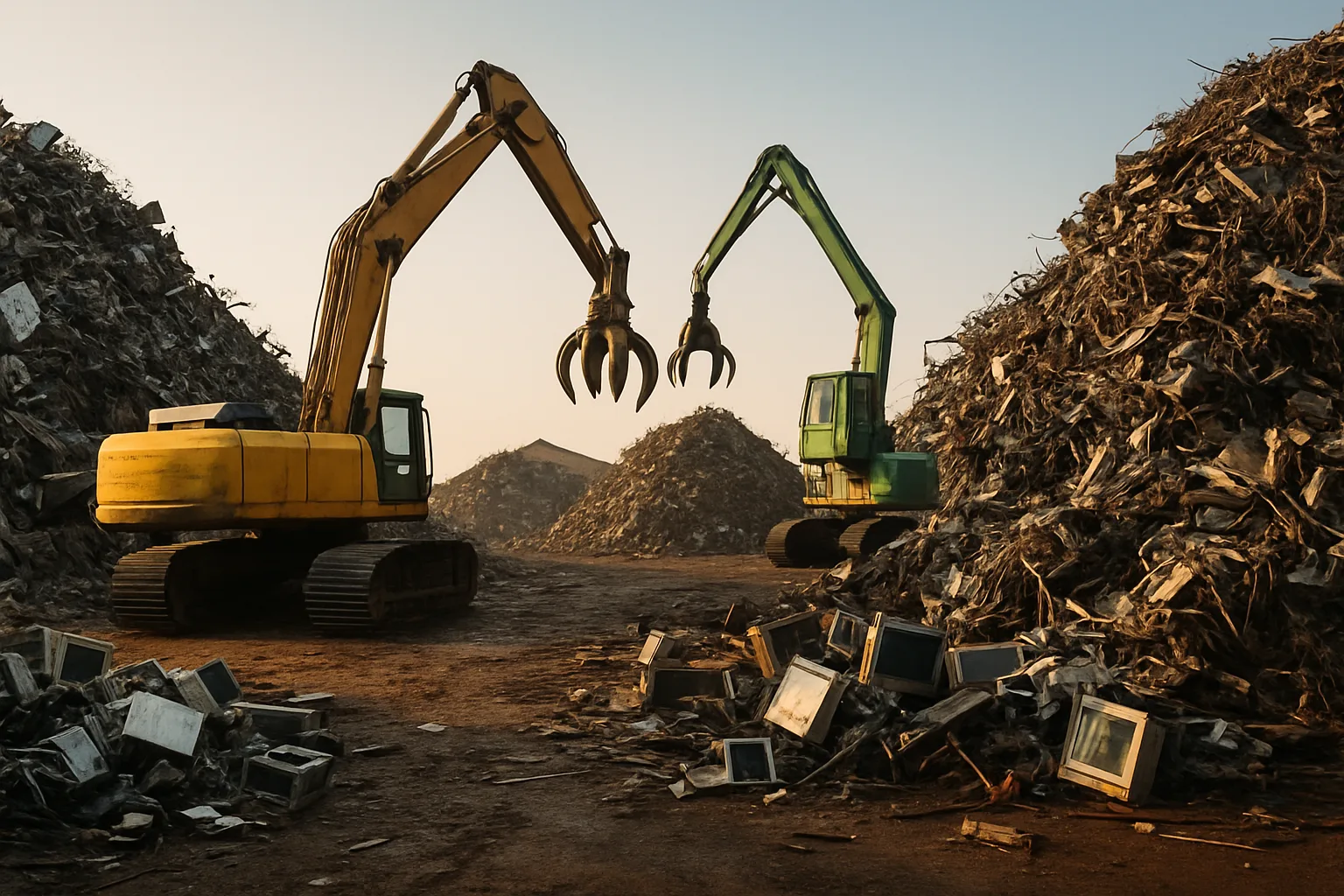
E-Waste Is a Gold Mine — Literally. Here's What Your Old Electronics Are Worth in 2026
Most people don't realize that the smartphone sitting in their junk drawer contains more gold per kilogram than a gold ore deposit. E-waste — discarded electronics — is one of the fastest-growing and most undervalued scrap streams in Canada right now. And in 2026, with precious metal prices holding strong and North American recyclers pushing harder on sustainable sourcing, the window to cash in on electronics scrap is wide open.
If you're tracking the aluminum scrap price today or watching copper markets, you need to add e-waste to your radar. Old laptops, circuit boards, server racks, and even household appliances carry recoverable metals — aluminum, copper, gold, silver, and palladium — that have real dollar value. The challenge is knowing what you have, where to take it, and how to make sure you're not leaving money on the table.
What Metals Are Actually Inside Your Old Electronics?
E-waste isn't one thing. It's a category that covers everything from desktop computers and televisions to industrial control boards and telecommunications equipment. Each device type carries a different metals profile, and that profile determines what it's worth at the yard.
Here's a rough breakdown of recoverable metals by device type:
- Smartphones and tablets: Gold, silver, palladium, copper, cobalt (battery), aluminum housing
- Desktop computers and servers: Copper wiring, aluminum chassis, gold-plated CPU contacts, circuit board silver
- Flat-screen monitors and TVs: Copper, aluminum frames, some indium in older LCD panels
- Printed circuit boards (PCBs): The highest-value item — gold fingers, silver solder points, palladium capacitors
- Hard drives and power supplies: Aluminum, copper, steel, rare earth magnets
- Industrial electronics and telecom gear: High-grade copper, silver relay contacts, gold plating
Aluminum shows up in nearly every category — frames, heatsinks, chassis panels. That makes the aluminum scrap price today directly relevant to how much your e-waste haul is worth per pound. When aluminum is strong, even the lower-grade electronic frames carry better per-unit value. Right now, aluminum recovery from e-waste is a meaningful revenue stream for recyclers processing volume.
E-Waste Regulations in Canada: What's Changed in 2026
Canada has tightened its rules around e-waste handling and export significantly over the past few years. In 2026, provincial take-back programs and extended producer responsibility (EPR) frameworks are more robust than ever — but they don't eliminate the market for scrap yards and private collectors. They change how material moves.
In Nova Scotia, the Electronic Products Recycling Association (EPRA) program governs residential e-waste drop-off. But for commercial and industrial volumes — think server farms, office equipment liquidations, or decommissioned telecom gear — the path to maximum recovery value runs through certified scrap processors, not just drop-off bins. That's where knowing your options matters most.
Key points for 2026 compliance in Canada:
- Data destruction is mandatory before disposal. You can't hand a functioning hard drive with unwiped data to a scrap yard. Document your destruction or use a certified processor.
- Hazardous material separation is required. Batteries, CRT monitors, and fluorescent backlights need to be separated before standard scrap processing.
- Export restrictions on unprocessed e-waste have tightened. Canada's alignment with updated Basel Convention amendments means raw e-waste can't be casually shipped offshore. It needs to be processed domestically or exported under specific certification.
- Weight documentation and chain-of-custody records are expected. If you're moving commercial volumes, having your paperwork in order protects you.
None of this makes e-waste harder to sell — it makes documentation and buyer vetting more important. Platforms like Canada's B2B scrap recycling marketplace SMASH give sellers the structure to move material with proper documentation, vetted buyers, and a clear audit trail.
Best Scrap Metal Prices in Halifax: Where E-Waste Fits Into the Local Market
Halifax has a solid scrap metal ecosystem — multiple yards, active industrial sources, and a port that supports regional material flow. If you're searching for the best scrap metal prices Halifax has to offer, you already know that rates vary significantly from one buyer to the next. That's especially true for e-waste, where the complexity of material grading means a single buyer's price can be far off market.
For Halifax scrap metal services, the standard path is to call around or show up at a yard and take whatever number they give you. That works fine for a small bag of aluminum cans. It doesn't work when you're moving a pallet of circuit boards, a decommissioned server rack, or a mixed lot of copper-bearing electronics. Those loads deserve competitive pricing — not a single take-it-or-leave-it quote from one buyer who knows you have no other immediate options.
The best scrap metal prices Nova Scotia sellers can achieve on e-waste come from the same place they always do: competition. When multiple buyers see the same documented load and bid against each other, you find out what the market actually pays. Without that competition, you're guessing — and the buyer knows it.
To check today's Canadian scrap metal prices before you walk into any yard, make sure you're not leaving significant value behind on higher-grade material like circuit boards or copper-heavy components.
How to Maximize Recovery Value on Your E-Waste Loads
Processing e-waste for maximum value isn't complicated, but it does require some basic sorting discipline. The difference between tossing a mixed load in a bin and presenting a sorted, documented pallet can be substantial — especially on precious-metal-bearing material.
Here's how serious sellers approach it:
- Sort by material grade before pricing. Don't mix high-grade circuit boards with steel chassis scrap. Grade separation maximizes what each component returns.
- Pull copper wiring separately. Insulated wire, bare bright copper, and copper-bearing PCB connectors all grade differently. Keep them separate.
- Document weights and item counts. A packing list with actual weights gives buyers confidence and reduces disputes. This matters especially for loads moving through an auction or tender process.
- Photograph your material. Buyers bidding remotely need to see what they're buying. Clean, well-lit photos of sorted material generate better offers than vague descriptions.
- Know your aluminum content. Heatsinks, chassis panels, and frames — weigh them separately if possible. When the aluminum scrap price today is favorable, that separated weight earns more than aluminum buried in a mixed lot.
SMASH gives sellers the tools to do this properly — inventory listing, photo documentation, serial tracking for higher-value items, and a vetted buyer pool that actually competes for your load. No subscription fees. The model is simple: competition can help reveal the market, and more buyers means better price discovery. You only pay when you sell.
Catalytic Converters and Precious Metal Recovery: The E-Waste Connection
E-waste and catalytic converters don't usually show up in the same conversation, but they share something critical: both contain recoverable precious metals — palladium, platinum, rhodium — and both are chronically underpriced when sellers deal with a single buyer and no market visibility.
If you're looking to sell catalytic converters online, the same logic applies as it does for circuit boards. A single cold call to one buyer gives you one data point. An auction with multiple vetted buyers gives you the market. Precious metals are volatile — palladium and rhodium prices can shift meaningfully week to week — which makes real-time price discovery even more important.
The trend in 2026 is toward more transparency in precious metal recovery, not less. Buyers who once relied on seller ignorance to pad margins are dealing with a more informed seller base. Read the latest Canadian scrap metal market updates to stay current on precious metal pricing trends that affect both catalytic converter values and e-waste recovery rates.
Finding a Scrap Yard That Handles E-Waste Properly
Not every yard near you is equipped to handle e-waste at a commercial scale. When you search for a scrap yard near me open or a scrap yard downtown, you'll find yards that accept basic ferrous and non-ferrous material — but e-waste processing requires specialized handling, and not every operation has it.
What to look for in a yard that handles electronics scrap:
- Certification under provincial e-waste programs (Nova Scotia's EPRA-aligned processors)
- Ability to provide weight documentation and a receipt
- Separation of hazardous components (batteries, CRTs)
- Clear pricing on circuit boards, insulated wire, and aluminum electronics scrap
- Data destruction certificates if required
For commercial volumes — anything over a few hundred pounds — you shouldn't be relying on a walk-in yard quote as your only option. Use a platform that connects you to multiple qualified buyers, gives you documentation tools, and lets the market set the price. Find current Canadian scrap metal prices across material grades before you commit to any buyer, and go into the conversation knowing what your load is worth.
E-waste is a legitimate, growing revenue stream for scrap sellers across Nova Scotia and across Canada. The metals are real, the demand is real, and the pricing upside from competitive selling is real. Don't let it default to whoever answered the phone first.
If you want to stay ahead of where the market is moving, follow SMASH on LinkedIn for ongoing scrap metal market insights and industry updates.
Frequently Asked Questions
Q: What is the aluminum scrap price today in Halifax?
Aluminum prices fluctuate based on global commodity markets, local demand, and material grade. The best way to get an accurate current rate is to check live pricing at scrap-metal-prices.ca before heading to any yard. Prices for aluminum in electronics — heatsinks, chassis panels — typically grade slightly differently than clean extrusion or cast aluminum, so ask your buyer to specify the grade they're pricing.
Q: Can I sell circuit boards and e-waste at a regular scrap yard in Halifax?
Some Halifax yards accept circuit boards and electronics scrap, but not all. Call ahead to confirm they handle e-waste and ask specifically how they price circuit boards — there's a significant difference between a yard that pays by the pound on a mixed electronics rate and one that grades boards by quality tier. For commercial volumes, consider a competitive auction platform to ensure you're getting market value.
Q: How do I get the best scrap metal prices in Nova Scotia for e-waste loads?
Sorting your material before pricing it is the single most effective way to improve your return. Separate circuit boards, copper wiring, aluminum frames, and steel components — don't mix them into a single lot. Then use a platform that exposes your sorted, documented load to multiple buyers simultaneously. Competition between buyers is how you find out what your load is actually worth.
Q: Is there a difference between residential e-waste drop-off and selling e-waste to a scrap yard?
Yes — residential drop-off programs (like Nova Scotia's EPRA take-back system) are designed for disposal, not value recovery. You typically receive nothing for material dropped off at those locations. Selling to a licensed scrap yard or through a B2B platform means you receive payment based on weight and material grade. For anything beyond a handful of old devices, the commercial scrap route almost always puts money in your pocket.
Q: Do I need paperwork to sell e-waste commercially in Canada in 2026?
For larger commercial volumes, yes. You should expect to provide a basic packing list or inventory, confirm that data-bearing devices have been properly wiped or destroyed, and ensure hazardous components (like lithium batteries) are separated and handled appropriately. Buyers on certified platforms will typically require weight documentation and may ask for a chain-of-custody record. Having this paperwork ready speeds up the transaction and protects you legally.
Stay on top of what your material is worth — check today's Canadian scrap metal prices and get current rates at scrap-metal-prices.ca before your next trip to the yard.
```