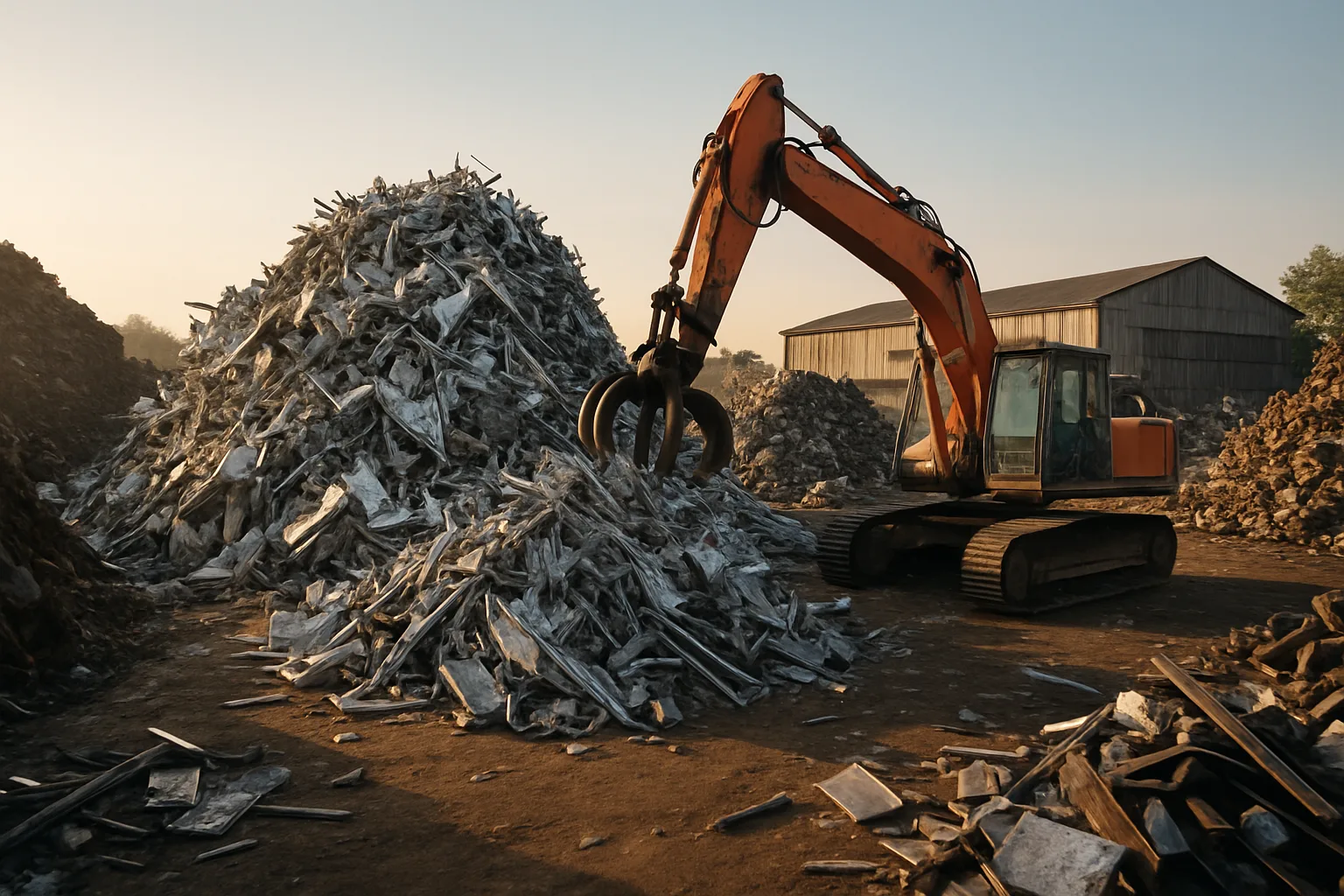
5 Scrap Metal Market Trends Shaping Prices in Mid-2026 — And What They Mean for Your Yard
The aluminum scrap price today isn't just a number on a board. It's the result of trade policy shifts, manufacturing slowdowns, energy costs, and a dozen other forces hitting the market at once. If you're selling scrap in Ontario right now and still relying on one buyer's quote, you're leaving real money on the table.
Here's what's actually moving the market in mid-2026 — and how to position yourself to get a better price on every load.
---1. Aluminum Is the Metal to Watch Right Now
Aluminum has been the most volatile of the common non-ferrous metals so far in 2026. Demand from EV manufacturing, packaging, and construction has stayed elevated, but so has energy cost pressure on primary smelters. That tug-of-war is keeping secondary aluminum — the kind you're selling — in strong demand.
When smelters face higher input costs, secondary scrap becomes more attractive. That's good news for yards sitting on clean aluminum, zorba, or mixed non-ferrous. But prices can swing fast. A shift in LME futures, a new trade tariff announcement, or a production cutback at a major mill can move the aluminum scrap price today by a meaningful margin in either direction within days.
What to watch:
- LME aluminum spot and 3-month futures
- U.S. and Canadian tariff announcements on aluminum imports
- EV production forecasts from major OEMs
- Energy prices in smelting regions (which affect primary production costs)
Before you move a load, check today's Canadian scrap metal prices so you're not walking into a negotiation blind.
---2. Copper Is Still King — But the Premium Is Narrowing
Copper remains the highest-value metal most scrap yards handle regularly. In 2026, global copper demand continues to be driven by grid infrastructure buildout, data center construction, and electrification. Canada is not immune to these forces — utility projects across Ontario alone are pulling significant amounts of copper into new installations, which eventually makes its way back into the scrap stream.
The issue right now is supply. More people know what copper is worth. Theft is up in some regions. Stripping and sorting operations have become more common. That means buyers are being more selective, and documentation matters more than it did a few years ago. Yards with clean, well-documented copper — supported by photos, weights, and proper BOLs — are consistently getting better offers than those showing up with mixed or unsorted material.
The copper scrap price in Canada has seen more stability than aluminum recently, but don't confuse stability with predictability. Mine output disruptions, currency shifts between CAD and USD, and changes in Chinese import demand can reset the market quickly.
If you're selling copper in Mississauga or anywhere in the 905 corridor, you already have access to multiple smelters and dealers. Use that. Don't settle for the first quote.
---3. Ferrous Is Grinding — But Not Dead
Steel and iron are the workhorses of the scrap market — high volume, lower margin. In mid-2026, ferrous prices are under pressure. Domestic steel mills have seen softer demand from the construction sector, which has pulled back due to elevated borrowing costs that haven't fully unwound. Export markets for Canadian ferrous have been complicated by shifting trade relationships and ocean freight costs.
That said, ferrous isn't going nowhere. Automotive shredder residue, plate and structural, and heavy melt are still moving. The margins are tighter, which means the difference between getting one quote and getting three quotes matters more on a ferrous load than it ever did on copper. Volume is where ferrous yards make money, and price per ton matters at scale.
Yards in Ontario moving high-volume ferrous should be especially focused on price discovery right now. Even a few dollars per ton improvement compounds fast across a full truckload.
To find current Canadian scrap metal prices on ferrous grades, check regularly — the spread between published prices and actual bid prices can be significant depending on your material and location.
---4. Electronics and Catalytic Converters: Documentation Is Now Non-Negotiable
Two categories that moved from "nice to track" to "you must track this" in recent years are e-scrap and catalytic converters. Regulatory scrutiny on cats has intensified across North America. In Ontario, documentation requirements for precious metal recovery — VIN numbers, serial tracking, photo records — are no longer optional for serious operators.
Buyers of cats and e-scrap are also more selective. The spread between documented and undocumented material has widened. If you can show a buyer exactly what you have — photos, weights, serial numbers, sourcing records — you command a better price. Full stop.
Platforms like SMASH have built these tools directly into their workflow. VIN lookup, serial tracking, photo documentation — all in one place before a load even goes to auction. That's not paperwork for the sake of it. That's how you get buyers to bid more confidently, which means better price discovery on your material.
For yards in Mississauga or Barrie handling cats regularly, this is the single biggest operational change worth making right now. Document everything. It pays.
---5. The Biggest Market Risk Right Now: Selling to One Buyer
This one isn't a commodity trend. It's a structural problem in how most scrap yards still operate — and it's costing sellers real money in 2026.
The old way: call your regular buyer, take their price, move on. It's fast. It's familiar. And it's leaving value on the table every single time.
Here's why: your regular buyer already knows you're not going anywhere. They have no incentive to give you their best number unless they think someone else might. Competition is the only mechanism that reveals true market price. Without it, you're guessing — and your buyer isn't.
This is exactly the problem SMASH was built to solve. Instead of one phone call to one buyer, your load goes to a pool of vetted buyers who bid competitively. You see the bids. You choose. No subscription. No guessing. More buyers means better price discovery — that's not a pitch, that's how markets work.
Whether you're selling non-ferrous out of Mississauga, ferrous in Barrie, or mixed loads anywhere in Ontario, the same principle applies: competition works in your favor. Get competitive bids for your scrap in Canada and see the difference for yourself.
Want to stay current on what's moving the market week to week? Read the latest Canadian scrap metal market updates and know what's actually happening before your next sale.
---How to Position Your Operation for Better Prices in the Second Half of 2026
Knowing the trends is step one. Acting on them is step two. Here's a practical checklist for the back half of 2026:
- Sort tighter. Mixed loads get mixed prices. Buyers pay a premium for clean, sorted material. The extra time upfront shows up in your final price.
- Document everything. Photos, weights, BOLs, VINs on cats — this is non-negotiable for getting full value. Buyers bid higher when they can see exactly what they're buying.
- Check prices before you sell. The aluminum scrap price today is not the same as it was last week. Check rates before you move material, not after.
- Get multiple bids. This is the single highest-leverage change most yards can make. One quote is not a market. Three quotes is closer.
- Track your grades. Know the difference between #1 copper and #2 copper, clean aluminum and painted aluminum, HMS 1 and HMS 2. These distinctions translate directly to dollars.
- Watch the LME and currency. The CAD/USD rate affects what Canadian buyers can pay for non-ferrous. When the loonie weakens, export-priced metals often get better local bids. Pay attention.
The yards making money in a volatile market aren't necessarily the ones with the most material. They're the ones with the best information and the willingness to let buyers compete for their loads.
If you're serious about improving your returns — whether you're running a full recycling yard or clearing out a commercial property — the best move you can make right now is simple: stop selling to one buyer without checking the market first. Platforms like SMASH exist precisely for this. No subscription, no guesswork, vetted buyers, competitive bids.
Check today's Canadian scrap metal prices at scrap-metal-prices.ca and go into your next sale knowing what the market actually looks like.
---Disclaimer: Scrap metal prices fluctuate based on global commodity markets, local demand, material grade, and other factors. All pricing information should be verified against current market rates before selling. The information in this article reflects general market conditions as of June 2026.
---Frequently Asked Questions
Q: What is the aluminum scrap price today in Canada?
Aluminum scrap prices in Canada vary by grade (clean sheet, cast, extrusions, painted) and fluctuate with LME spot prices and local buyer demand. The best way to get a current number is to check today's Canadian scrap metal prices directly — posted rates are updated regularly to reflect real market conditions.
Q: Where can I find the best scrap metal prices in Mississauga?
Mississauga has multiple scrap dealers and buyers operating in the area. The best way to get top dollar isn't just to find the nearest yard — it's to get competing bids. Platforms like SMASH connect sellers with vetted buyers across Ontario, so you're not locked into one local price.
Q: How do I sell scrap metal online in Canada?
Selling scrap metal online in Canada typically involves listing your material on a platform, documenting your load (photos, weights, grades), and receiving bids from buyers. SMASH offers an auction-style process for scrap sellers across Canada — no subscription required, and you only pay when you sell.
Q: Are scrap metal prices different in Barrie versus Mississauga?
Yes. Local buyer competition, transportation costs, and proximity to processing facilities all affect what buyers will pay in a specific area. Scrap metal prices in Barrie may differ from prices in Mississauga even on the same day for the same material. Checking multiple buyers — or using a platform that brings buyers to you — helps close that gap.
Q: What scrap metals are getting the best prices in Ontario right now?
Non-ferrous metals — particularly copper and clean aluminum — continue to command the strongest prices per pound in Ontario. Catalytic converters remain high-value but require proper documentation. Ferrous prices (steel, iron) are under more pressure in mid-2026 but still move in volume. Always verify current rates before selling.
---Stay ahead of market shifts — follow SMASH on LinkedIn for regular scrap metal market insights, price trend updates, and industry news across Canada.
```