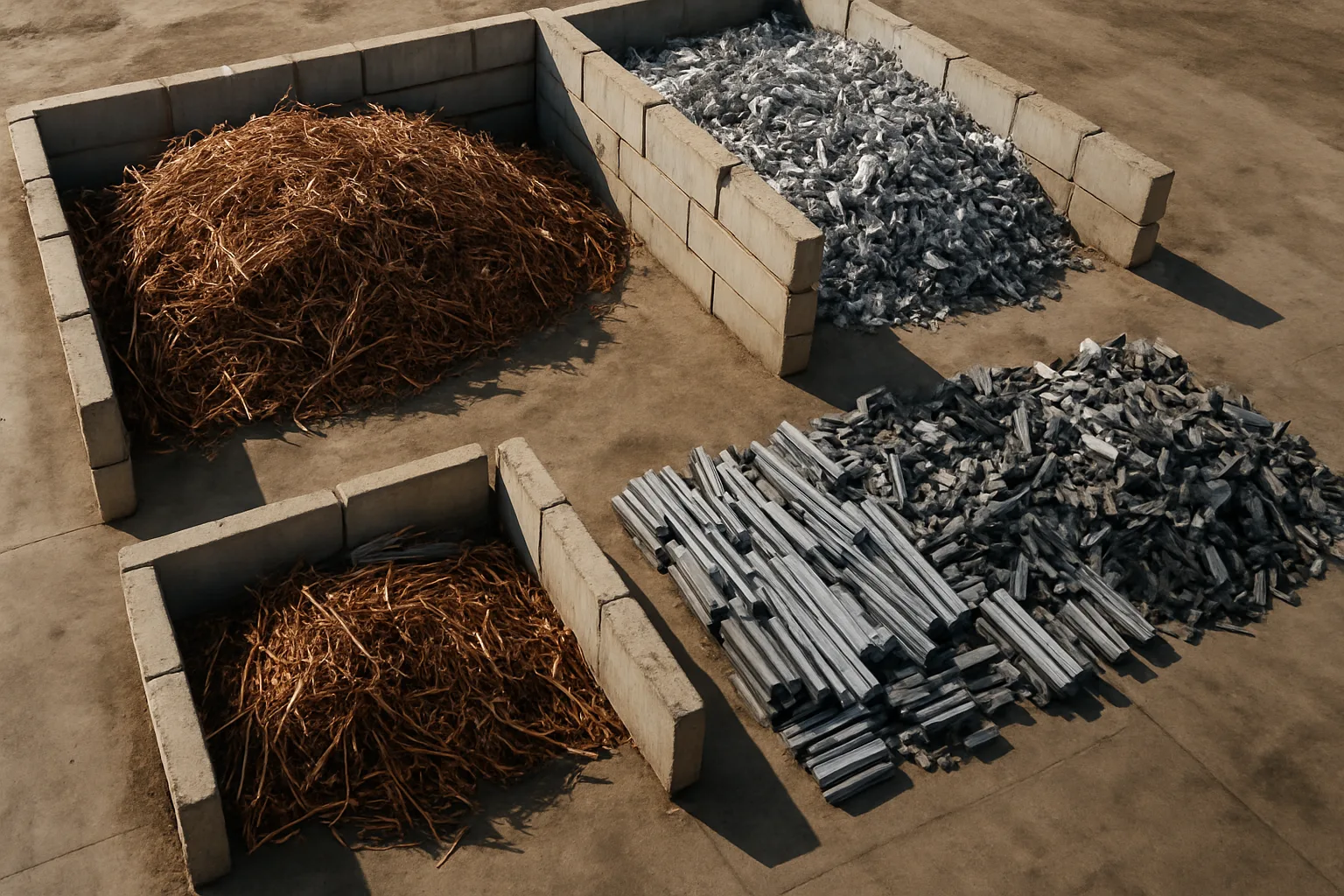
What Grade Is Your Stainless? The Answer Changes Everything at the Scale
Most scrap sellers know stainless steel is worth more than regular steel. What most don't know is that the grade of stainless you're selling can swing your payout by a significant margin — sometimes double or more per kilogram. If you're hauling mixed stainless to the yard without sorting it first, you're almost certainly leaving money on the table. Every. Single. Time.
Whether you're clearing out a restaurant kitchen in Dartmouth, breaking down industrial equipment across Nova Scotia, or running a recycling operation at scale, understanding stainless steel scrap grades is one of the fastest ways to improve your returns. This isn't theory. It's how the commodity market actually works — and how platforms like SMASH are helping sellers get better price discovery on every load.
Let's break it down. For sellers using a B2B scrap metal marketplace, knowing your grades isn't optional — it's the difference between a fair deal and a bad one.
The Three Stainless Steel Grades That Matter Most for Scrap Value
Stainless steel isn't one material. It's a family of alloys, and the nickel and molybdenum content in each grade is what drives scrap value. Buyers price stainless based on its alloy composition — specifically the nickel content — because that's what makes it valuable to remelters and mills.
Here are the grades you'll encounter most often in the scrap stream:
- 304 Stainless Steel — The most common grade. Contains approximately 8–10% nickel and 18% chromium. This is your restaurant equipment, food-grade tanks, sinks, and kitchen fixtures. It's the benchmark grade for stainless scrap pricing.
- 316 Stainless Steel — The premium grade. Contains 10–14% nickel plus molybdenum, which gives it corrosion resistance in marine and chemical environments. It consistently fetches a higher price per kilogram than 304. You'll find it in marine equipment, pharmaceutical machinery, and coastal industrial applications — relevant for yards working near the Atlantic.
- 430 Stainless Steel — A ferritic grade with no nickel. Used in appliances, auto trim, and decorative fixtures. It's magnetic, which makes it easy to identify on a sorting line, but it pays out significantly less than 304 or 316 because of that zero nickel content.
There are other grades — 201, 202, 309, 310, 321, 347 — but 304, 316, and 430 make up the bulk of what flows through most recycling yards. Getting these sorted and correctly identified before you sell is the single most important thing you can do to protect your margin.
How to Identify Stainless Steel Grades Before You Sell
You don't need a lab. You need a few reliable field methods and a basic understanding of what you're looking at. Misidentifying your material — or letting it go as mixed stainless — is one of the most common ways sellers underprice their loads.
Here are the practical ways yards and collectors identify stainless grades:
- The magnet test — 430 stainless is magnetic. 304 and 316 are not (or only very weakly so). This is your first sort. Separate the magnetic ferritic grades immediately.
- XRF (X-ray fluorescence) analyzer — The gold standard. A handheld XRF gun reads the alloy composition in seconds. Many larger yards own these, and some mobile scrap buyers bring them to site. If you're selling a significant volume of stainless, ask if your buyer has one.
- Source identification — Know what you're pulling from. Restaurant kitchen teardowns? Almost certainly 304. Marine vessel components off the Nova Scotia coast? High likelihood of 316. Appliance shells? Probably 430. Context matters.
- Markings and stampings — Some equipment is stamped with alloy grades, especially food-grade and pharmaceutical machinery. Always check before assuming.
The more accurately you identify your material, the more confidently you can present it to buyers — and the more competition you'll attract when selling through a transparent auction format. Documented, sorted loads don't just sell better. They sell faster.
Stainless Steel Scrap Prices in Canada: What Drives the Market in 2026
If you want to find current Canadian scrap metal prices, stainless steel pricing is one of the more volatile categories you'll track. Unlike copper or aluminum, stainless prices are heavily tied to the London Metal Exchange (LME) nickel price — and nickel has had a turbulent few years. In 2026, global nickel supply dynamics, EV battery demand competition, and Indonesian export policies continue to influence what stainless scrap trades for at the yard level.
Here's what's pushing stainless prices in the Canadian market right now:
- Nickel price volatility — Nickel is the key input. When the LME nickel price moves, 304 and 316 stainless scrap prices follow within days. Sellers who track nickel spot prices alongside their scrap sales make better timing decisions.
- Mill demand cycles — Canadian and U.S. stainless steel mills adjust their scrap buying based on production schedules. When mills are running hot, demand is strong and premiums tighten in the seller's favour.
- Export market access — Some stainless grades move to offshore buyers in Asia when domestic mill demand softens. Having access to a broader buyer network — not just one local yard — changes the equation entirely.
- Material quality and sorting — Clean, sorted, identified stainless always commands a better price than mixed or contaminated loads. Buyers price in the risk of contamination. Remove the uncertainty, and you remove that discount.
To check today's Canadian scrap metal prices, including current stainless benchmarks, make sure you're looking at updated rates — not last month's numbers. The market moves faster than most sellers realize.
Selling Stainless Scrap in Dartmouth and Nova Scotia: Know Your Market
Sellers in Dartmouth and across Nova Scotia deal with a specific scrap stream shaped by the regional economy — marine industries, food processing, government infrastructure, and coastal construction. That mix produces a meaningful volume of 316 stainless, which is the premium grade. If you're not identifying and separating your 316 from your 304, you're selling high-value material at benchmark pricing.
The challenge in Atlantic Canada has historically been buyer access. Fewer large buyers means less competition. Less competition means lower price discovery. A seller in Dartmouth calling one local yard and taking their offer has no real idea if that price reflects the actual market. That's not a criticism of the yards — it's just how thin markets work.
This is exactly the problem a B2B scrap metal marketplace like SMASH is built to solve. By bringing vetted buyers into a competitive auction environment, SMASH creates price discovery that a single phone call can never replicate. More buyers bidding on your documented load means the price reflects actual demand — not just what one buyer feels like offering that day. If you're running volume through Nova Scotia, that difference matters.
You can also read the latest Canadian scrap metal market updates to track how regional pricing trends are shifting before you make your next sale.
How SMASH Handles Stainless Steel Loads on the B2B Scrap Metal Marketplace
Selling stainless through SMASH isn't complicated. It's designed for operators who know their material and want buyers to compete for it — not just accept the first number thrown at them.
Here's what the process looks like for a stainless steel load:
- Inventory documentation — You use SMASH's inventory tool to document your load. Grade, weight, condition, source where relevant. Photos are attached directly. Buyers see exactly what they're bidding on.
- Vetted buyer pool — Your load goes to buyers who have been vetted by the platform. No tire-kickers. No time-wasters. Real buyers with real demand.
- Competitive auction format — Buyers bid against each other. Competition can help reveal the market. More buyers means better price discovery — especially important for premium grades like 316 that not every yard knows how to value correctly.
- Auto-invoicing — Once sold, the platform handles invoicing automatically. Less paperwork. Faster close.
- No subscription fees — SMASH only wins when the seller wins. There's no monthly fee sitting on your books regardless of whether you sell anything.
If you're ready to move stainless and want buyers competing for it, sell your scrap metal on SMASH Recycling and see what competitive price discovery actually looks like for your grades.
Sorting, Documentation, and Timing: The Three Levers That Improve Your Stainless Payout
You can't control the LME nickel price. You can't control what mills are doing this week. But you can control three things that consistently improve what you walk away with on a stainless steel load.
Sort your material. Don't let 316 go out the door mixed with 304 or 430. The time it takes to separate your grades is repaid many times over in the price differential. Even a modest price gap per kilogram adds up fast when you're moving meaningful tonnage.
Document everything. Buyers pay more for certainty. A load that comes with grade identification, weight documentation, condition notes, and photos gives buyers confidence. That confidence reduces the discount they'd otherwise price in for unknowns. Documented inventory isn't just good practice — it's a pricing strategy.
Time your sales with the market. Stainless prices move with nickel. If you can hold a load for a few weeks during a nickel price run, the math often works in your favour. Not always possible, but worth tracking. Following the market through a resource like scrap-metal-prices.ca gives you the data to make that call with actual information instead of gut feel.
These three levers — sorting, documentation, timing — are within your control on every single load. Most sellers use one. The best sellers use all three.
Frequently Asked Questions
Q: What is the most valuable grade of stainless steel scrap in Canada?
316 stainless steel is typically the highest-value grade in the scrap stream due to its elevated nickel content and the addition of molybdenum. It consistently commands a premium over the benchmark 304 grade. If you're sourcing from marine, pharmaceutical, or chemical processing environments — common in coastal regions like Nova Scotia — you're likely handling 316 material.
Q: How do I know if my stainless steel scrap is 304 or 316?
The most reliable field method is an XRF analyzer, which reads alloy composition directly. As a quick pre-sort, use a magnet — both 304 and 316 are non-magnetic, while the lower-value 430 grade is magnetic. Source context also helps: kitchen equipment is usually 304, marine hardware is often 316.
Q: Is a B2B scrap metal marketplace worth using for stainless steel loads?
For sellers moving meaningful volume of correctly identified stainless, a B2B scrap metal marketplace like SMASH creates buyer competition that a single-buyer phone call simply can't replicate. Documented, sorted loads attract more serious bids. More competition means better price discovery — particularly important for premium grades where local market knowledge varies.
Q: How do stainless steel scrap prices in Dartmouth compare to the rest of Canada?
Stainless prices in Dartmouth and Atlantic Canada generally follow national benchmarks driven by LME nickel prices, but local buyer competition can affect the net price sellers receive. Thinner local buyer pools historically mean less competition. Using an auction-based platform helps offset this by bringing in buyers from a broader geography.
Q: Does SMASH handle stainless steel scrap sales in Nova Scotia?
Yes. SMASH operates as a B2B scrap metal marketplace serving sellers across Canada, including Nova Scotia. Sellers document their loads through the platform's inventory tools, and vetted buyers bid competitively. There are no subscription fees — the platform only earns when a sale closes successfully.
Stainless steel scrap rewards sellers who do their homework. Sort your grades, document your loads, and sell into a competitive market rather than accepting the first number you hear. The difference in your payout can be substantial — and it compounds over time. Whether you're in Dartmouth moving marine-grade 316 or clearing industrial equipment anywhere across Nova Scotia, the approach is the same: know what you have, prove it to buyers, and let competition work in your favour.
Stay current on what your material is worth. Check today's Canadian scrap metal prices and make sure every load you sell is priced against real market data — not yesterday's guess.
Follow SMASH on LinkedIn for ongoing scrap metal market insights, industry updates, and pricing trends: linkedin.com/company/scrap-metal-auction-sales-hub.
Disclaimer: Scrap metal prices fluctuate based on commodity markets, buyer demand, and material quality. Always verify current rates before selling. The prices and market conditions referenced in this article reflect general market dynamics as of August 2026 and are subject to change.