What Actually Happens to Your Scrap Metal After You Drop It Off
Most sellers hand over a load and take whatever number the yard prints on the ticket. No questions asked. But if you've ever walked away wondering whether you got a fair shake, you're not alone — and you're asking the right question.
Understanding how recycling yards weigh and grade your scrap metal isn't just interesting. It's the difference between leaving money on the table and knowing exactly what your load is worth before you drive away. Whether you're hauling copper pipe, catalytic converters, or a mixed non-ferrous load, the process matters. And in a B2B scrap metal marketplace, that process is everything.
Here's how it actually works — and why transparency in grading and weighing is the foundation of getting a fair price for your material.
The Scale: Where Every Ticket Starts
Before grading even begins, your load hits the scale. Most commercial yards use certified truck scales — also called platform scales or drive-on scales — that can handle full vehicle weights. You drive on empty, you drive on loaded, and the difference is your net weight. Simple in theory. But there are variables most sellers never think about.
Moisture is a big one. Wet scrap weighs more. Some yards account for this with a moisture deduction — especially on shredded or contaminated material. Dirt, oil, and non-metallic debris also factor in. A load that looks clean might carry more contamination than you realize, and yards build that into their grade or their deduction. Certified scales are legally required to be accurate, but how a yard handles contamination and moisture is entirely at their discretion.
- Gross weight: Your truck and load combined
- Tare weight: Your empty truck (often on file or re-weighed)
- Net weight: The actual weight of your material
- Deductions: Moisture, dirt, or contamination at the yard's discretion
In British Columbia, scales used for commercial trade must meet Measurement Canada standards. That gives you a baseline of accuracy — but it doesn't protect you from grading decisions made after the weigh-in.
How Yards Grade Scrap Metal — and Why It Affects Your Price
Grading is where the real money lives. A yard doesn't just weigh your copper and pay you the copper price. They grade it first — and the grade determines which price tier you land in. The difference between grades can be significant, especially on high-value non-ferrous metals.
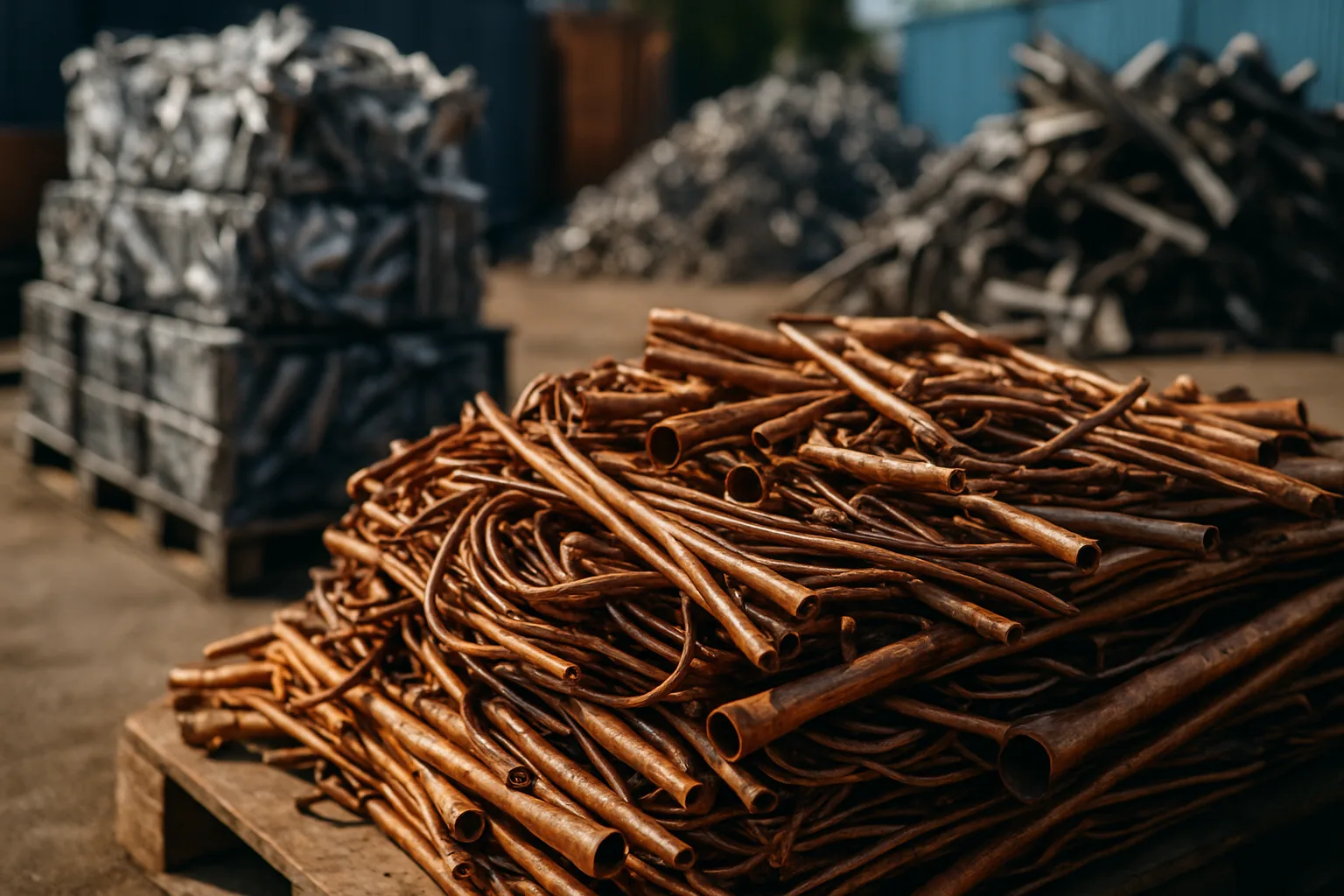
Take copper as an example. Bare bright copper wire fetches the top of the market. But the same wire with insulation, solder, or contamination drops into lower grades — #1 copper, #2 copper, or even insulated wire categories — each priced differently. Aluminum follows the same logic: extrusions, cast, sheet, and clip are all separate grades with separate prices. If you mix them without knowing, the yard grades down the whole load or sorts it themselves and charges for the labor.
Common grading categories you'll encounter:
- Bare bright copper: Clean, uncoated, unalloyed wire — top grade
- #1 copper: Clean pipe and wire, no insulation, minimal oxidation
- #2 copper: Dirty, painted, or soldered copper
- Aluminum extrusion vs. cast: Different alloys, different prices
- 304 vs. 316 stainless: Both stainless, very different value
- Cats (catalytic converters): Graded by type, substrate condition, and precious metal content
Knowing your grades before you show up changes the conversation. Yards move faster on sorted, labeled material. And when you're selling on a B2B scrap metal marketplace, documented grades attract more serious buyers — which matters for price discovery.
Catalytic Converters: The Grade That Changes Everything
Cats deserve their own section. No category in scrap metal is more grade-sensitive than catalytic converters. The platinum group metals (PGMs) inside — platinum, palladium, and rhodium — drive the value, but the grade depends on far more than just the make and model of the vehicle.
Substrate condition is critical. A cracked or blown-out substrate means less recoverable PGM. Aftermarket cats carry significantly less metal than OEM units. And the converter type — whether it's a diesel oxidation catalyst, a close-coupled unit, or a standard three-way cat — changes the assay profile entirely. Yards that specialize in cats use VIN lookups, serial number tracking, and assay data to grade accurately. Yards that don't often lowball because they're pricing in their own uncertainty.
If you're selling cats in Vancouver or anywhere across British Columbia, a catalytic converter auction format — like what SMASH runs — puts your converters in front of multiple vetted buyers who know exactly what they're bidding on. That competition is what reveals actual market value, not a single buyer's offer made over the phone.
Platforms like SMASH Recycling — where verified buyers bid on your metal use photo documentation, serial tracking, and condition reporting to make sure both sides of the transaction have the same information. That's how you get real price discovery on high-value material.
How Documentation Protects You in the Grading Process
Here's a scenario that plays out constantly: a seller drops off a load they've sorted carefully. The yard grades it differently than expected. The ticket prints. The seller takes the money and leaves — with no record of what was in the load or how it was graded.
That's a problem. Not because yards are necessarily acting in bad faith, but because without documentation, you have no baseline. You can't track whether your grades are consistent across loads. You can't compare one yard's grading against another's. And when prices shift — which they do constantly — you can't tell whether the change is market-driven or grade-driven.
Documentation changes that. Before a load leaves your yard, photograph it. Note the approximate breakdown by grade. Record weights if you have a floor scale. When you're selling through a B2B scrap metal marketplace, that documentation travels with the load — buyers see it, bid on it, and price it accordingly. The more confident a buyer is in what they're getting, the stronger their offer.
If you're curious about what your documented material could fetch today, check today's Canadian scrap metal prices to get a sense of current market rates before your next load goes out.
Selling Scrap Metal in Vancouver: What Local Yards Look For
Vancouver's scrap market is active. The port gives local yards direct access to export markets, which means pricing in Metro Vancouver can track global non-ferrous benchmarks closely. That's good news for sellers — when the market moves, local yards feel it relatively quickly.
But it also means grading standards here can be strict. Export-grade material needs to meet specifications that overseas mills and smelters set. If your copper is contaminated or your aluminum is mixed-alloy, it may not meet export specs — and the yard adjusts the grade accordingly. Understanding this before you sell puts you in a stronger position.
For sellers looking for Vancouver scrap metal services, knowing how local yards grade your material is the first step toward getting consistently fair returns. Don't just ask for the price — ask how they grade the material and what deductions they apply. A yard that can't explain their grading process clearly is a yard worth shopping around.
Whether you're searching for how to sell scrap metal near me for cash or looking for a yard that's open on your schedule, the grading conversation is one you should always have before the ticket prints. And if you want to go further — putting your documented loads in front of multiple buyers — that's where auction-based platforms change the game entirely.
To find current Canadian scrap metal prices and understand what your graded material should be fetching, current market data is your best starting point before any negotiation.
The Old Way vs. the SMASH Way
The old way: one buyer, one phone call, one price. You hope the grade is fair. You hope the scale is accurate. You have no way to compare. That's not a marketplace — that's a guess dressed up as a transaction.
The SMASH way flips that. You document your load — weights, grades, photos, serial numbers on cats. You list it. Vetted buyers compete. The market tells you what your material is actually worth. No subscription fees. No pressure. If it sells, SMASH earns when you earn. That's the model.
For yards in British Columbia — and across North America — running a B2B scrap metal marketplace transaction through SMASH means the grading work you do upfront pays off directly. Better documentation equals more buyer confidence equals stronger bids. The link between how you present your material and what you get paid for it becomes visible and real.
Want to stay current on what's moving in the Canadian market? Read the latest Canadian scrap metal market updates — understanding price trends helps you time your loads and set realistic expectations before you sell.
The scrap market rewards sellers who know their material. Understanding how yards weigh and grade your loads is the foundation of that knowledge. Build it, document it, and let competition do the rest. That's how you stop guessing and start selling smart. Check today's Canadian scrap metal prices at scrap-metal-prices.ca and go into your next transaction knowing your numbers.
Frequently Asked Questions
Q: How do recycling yards determine the grade of my scrap metal?
Yards grade scrap based on metal type, purity, contamination level, and condition. For copper, that means assessing insulation, solder, and oxidation. For catalytic converters, it means identifying the substrate type, checking serial numbers, and evaluating precious metal content. Sorting your material before drop-off gives you more control over how it's graded.
Q: Can I dispute a grade or weight ticket at a scrap yard in Vancouver?
You can raise questions, but once a ticket is printed and payment is made, disputes are difficult. The best protection is documentation before the load leaves your facility — photos, estimated weights, and a breakdown by grade. In British Columbia, commercial scales must meet Measurement Canada standards, so scale accuracy is regulated, but grading decisions remain at the yard's discretion.
Q: What's the difference between selling scrap on a B2B scrap metal marketplace vs. a local yard?
A local yard gives you one offer — take it or leave it. A B2B scrap metal marketplace like SMASH puts your documented load in front of multiple vetted buyers who compete on price. That competition is how you discover what your material is actually worth in the current market, not just what one buyer is willing to pay today.
Q: Are catalytic converter prices different in Vancouver compared to the rest of Canada?
PGM markets are global, so the underlying value of the platinum, palladium, and rhodium in your converters doesn't change by city. What varies is buyer access and competition. In a market like Vancouver with strong export infrastructure, running cats through a catalytic converter auction format can expose them to buyers across North America — not just local yards.
Q: How often do scrap metal prices change in Canada?
Non-ferrous prices like copper and aluminum can shift daily based on London Metal Exchange (LME) benchmarks, currency movements, and supply-demand dynamics. Ferrous prices tend to move more slowly but can shift week to week. Always check current rates before dropping off a significant load — scrap-metal-prices.ca posts updated Canadian scrap metal pricing regularly.
Disclaimer: Scrap metal prices fluctuate based on market conditions, metal grades, and regional demand. Always verify current rates with your local yard or at scrap-metal-prices.ca before making selling decisions.
Follow SMASH on LinkedIn for industry updates, scrap metal market insights, and news from across the North American recycling sector.
```