Scrap metal prices can shift by the hour. If you're hauling loads in Scarborough and relying on a phone quote from yesterday, you're already behind the market.
Understanding why prices move — and when to sell — isn't just useful knowledge. It's the difference between leaving money on the table and making the most of your material. Whether you're clearing a job site, running a yard, or selling the occasional load of non-ferrous, price awareness pays off.
This guide breaks down how daily price fluctuations work, what drives them in the Canadian market, and how sellers in Scarborough, Ontario can use that knowledge to sell smarter. If you want to check today's Canadian scrap metal prices before you read another word, that's the right instinct.
Why Scrap Metal Prices Today Are Never the Same as Yesterday
Scrap metal isn't priced like groceries. There's no fixed shelf price. Every yard sets its buy rate based on a moving combination of global commodity markets, local demand, and what they already have sitting on the floor. What you got paid last Tuesday is historical data — not today's market.
Prices move daily because the underlying commodities trade on exchanges like the London Metal Exchange (LME) and the COMEX. Copper, aluminum, and other non-ferrous metals are priced in real time. When those markets move, yards adjust their buy rates — sometimes the same day, sometimes with a lag of 24 to 48 hours.
Here's what actually drives daily movement in scrap metal prices today:
- Commodity exchange rates — LME copper and aluminum benchmarks shift with global supply and demand.
- Currency fluctuations — The CAD/USD exchange rate directly affects what Canadian yards pay, since most metal trades globally in USD.
- Export demand — Demand from overseas smelters and mills pulls material out of North American markets and tightens local supply.
- Freight and logistics costs — Shipping disruptions raise or lower the landed cost of processed scrap, which ripples back to the buy price.
- Local yard inventory — A yard that's long on aluminum won't pay top dollar for more aluminum this week, regardless of where the exchange sits.
None of this is complicated once you understand the system. The problem is most sellers don't have visibility into any of it. They call one yard, take a number, and assume it's fair. It might be. It might not be.
Aluminum Scrap Price Today — What Scarborough Sellers Need to Know
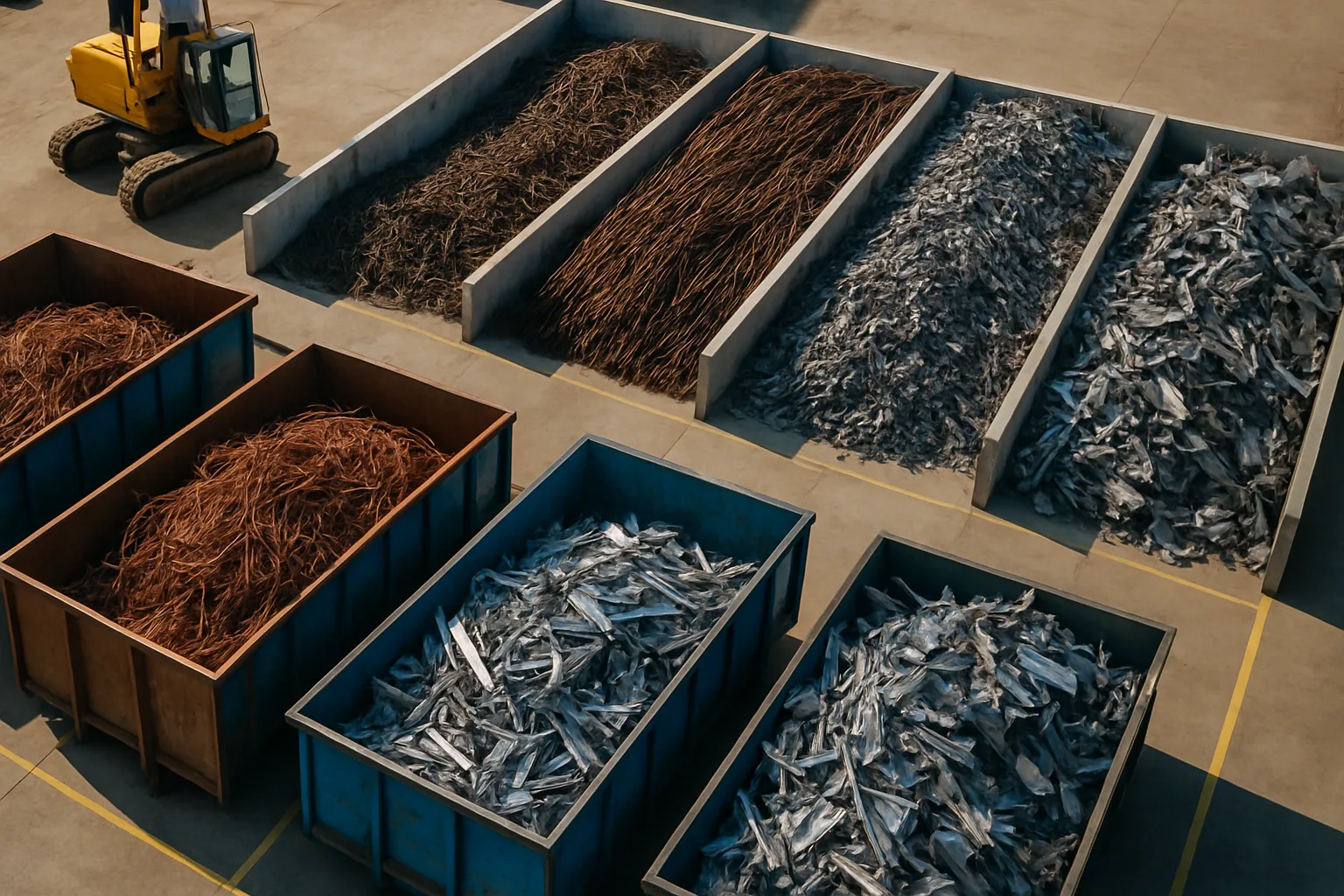
Aluminum is one of the most commonly sold non-ferrous metals across Ontario yards. Old sheet, cast, extrusions, mixed clips — the type and cleanliness of your aluminum material matters as much as the market price on any given day.
The aluminum scrap price today in Canada is influenced by primary aluminum production levels, scrap export volumes, and the strength of domestic demand from foundries and rolling mills. When primary aluminum production is constrained — whether by energy costs or supply chain disruption — scrap aluminum becomes more attractive to buyers, and prices can move up meaningfully.
For sellers in Scarborough, the practical reality is this: a clean load of aluminum extrusions will always command a better rate than a mixed, contaminated load. Preparation matters. Separating your material, removing attachments, and being honest about grade translates directly into better offers. Documented loads with photos and weight slips also give buyers more confidence — and confidence drives competitive pricing.
To find current Canadian scrap metal prices on aluminum grades before you book a pickup or drop a load, take two minutes to check where the market is sitting. Don't guess.
Copper Scrap Price Canada — Still the High-Value Play
Copper is the metal every seller pays attention to. It's the highest-value non-ferrous material most yards handle in volume, and even small swings in the copper scrap price have real dollar impact on a significant load.
Copper scrap price in Canada tracks closely to global copper benchmarks. The LME copper price is the anchor. Canadian yards adjust from there based on local conditions — freight to smelter, contamination levels, processing costs, and current inventory. A clean bright copper wire load will always attract the best price. Insulated wire, copper pipe, and mixed copper will be graded down based on estimated recovery.
Here's what most sellers overlook: copper prices are particularly sensitive to industrial demand signals. When major infrastructure projects accelerate — EV manufacturing, grid upgrades, construction booms — copper demand spikes. When industrial output slows, prices soften. In 2026, grid modernization across North America continues to put upward pressure on copper demand, which has kept scrap copper pricing relatively firm.
That said, no price is guaranteed to hold. If you've got a meaningful copper load sitting in Scarborough right now, the right move is to know today's market rate, document your material properly, and let buyers compete for it — rather than calling one number and taking whatever they offer.
How to Sell Scrap Metal Effectively — The Preparation Advantage
Knowing the market is step one. Preparing your material is step two. Sellers who show up with sorted, documented loads consistently get better outcomes than sellers who show up with mixed bins and no paperwork.
Here's a practical prep checklist before you sell scrap metal in Scarborough or anywhere in Ontario:
- Sort by metal type — Don't mix copper and aluminum. Don't mix ferrous and non-ferrous. Contamination drags the whole load down.
- Remove attachments — Plastic insulation, steel fittings, rubber seals. Cleaner material grades higher.
- Document with photos — A photo of your load before it ships tells buyers exactly what they're getting. This matters for competitive bids.
- Get a weight slip — Know your weights before you negotiate. Don't let the buyer's scale be your first data point.
- Know your grades — #1 copper, #2 copper, birch and cliff — these aren't arbitrary labels. They directly determine your per-pound or per-kilogram rate.
Platforms like Canada's B2B scrap recycling marketplace SMASH are built around this principle. Documented inventory, photo documentation, and serial tracking aren't bureaucratic overhead — they're what make competitive bidding possible. When buyers can trust what they're looking at, they bid more aggressively. That's better price discovery for the seller.
SMASH puts vetted buyers in direct competition for your loads, without a subscription fee. You only pay when you sell. That alignment matters — the platform wins when you win.
Daily Market Check — Making It a Habit
The sellers who consistently get better prices are the ones who treat market awareness as a routine, not an afterthought. Checking scrap metal prices today takes minutes. Not checking costs you real money when you time a sale wrong or walk into a yard blind.
Here's a simple daily habit for active scrap sellers in Ontario:
- Check benchmark metal prices first thing — copper, aluminum, and steel each have their own market signals.
- Note whether the CAD/USD rate is moving in your favor. A stronger USD means Canadian yards can pay more for material headed to export.
- Check if there's any major demand news — infrastructure announcements, manufacturing data, trade policy — that could move prices in the near term.
- Compare buy rates across more than one outlet before committing a significant load.
You don't need to become a commodities trader. You just need to stop treating a single yard's phone quote as the definitive market rate. It isn't. For the latest data on what metals are trading at across Canada, read the latest Canadian scrap metal market updates to stay informed before you sell.
Selling Scrap in Scarborough — Local Realities in a National Market
Scarborough sits inside one of the highest-density scrap generating regions in Canada. The Greater Toronto Area produces significant volumes of industrial, construction, and end-of-life vehicle scrap. That means local yards handle real volume — but it also means competition among sellers is real too.
The advantage for Scarborough sellers is access. There are multiple yards within a reasonable haul distance, and national platforms like SMASH extend your reach to vetted buyers beyond your immediate geography. You're not locked into whoever happens to answer the phone on a Tuesday morning.
Ontario's scrap market also benefits from strong export infrastructure. Material processed in southern Ontario can move to U.S. smelters or overseas markets efficiently. That export optionality matters — it means local buy rates tend to track global markets more tightly than in more isolated regions.
The bottom line for Scarborough sellers: you have options. Use them. Know your material, know the market, and don't settle for a single quote on a load you've worked to prepare properly.
Scrap metal prices today are where they are. Tomorrow they'll shift. The sellers who stay informed, prepare their loads, and access competitive markets consistently outperform the ones who don't. If you're ready to move material, check today's Canadian scrap metal prices — get current rates at scrap-metal-prices.ca and go into your next sale knowing exactly where the market stands.
Disclaimer: Scrap metal prices fluctuate daily based on global commodity markets, currency rates, and local yard conditions. Always verify current rates before selling.
Frequently Asked Questions
Q: How often do scrap metal prices change in Canada?
Scrap metal prices can change daily — sometimes more than once in a single day. Yards adjust their buy rates based on commodity exchange movements, currency shifts, and local inventory levels. Checking prices on the day you plan to sell is always the right move.
Q: Where can I sell scrap metal in Scarborough, Ontario?
There are several scrap yards operating within and near Scarborough that accept non-ferrous and ferrous material. For larger loads or bulk B2B transactions, platforms like SMASH connect you with vetted buyers across Ontario and beyond. Comparing options before committing a significant load is always worth the extra step.
Q: What is the best scrap metal to sell right now?
Copper consistently commands the highest per-kilogram value of common non-ferrous metals. Clean aluminum extrusions and insulated wire are also strong performers. The "best" metal to sell depends on today's market rates — which is exactly why checking current prices before you sell matters.
Q: Does the Canadian dollar affect scrap metal prices?
Yes, significantly. Since most metal commodities are priced in USD globally, the CAD/USD exchange rate directly affects what Canadian yards can pay sellers. A stronger USD relative to CAD generally supports higher buy rates at Canadian yards dealing with export-bound material.
Q: How do I get the best price when I sell scrap metal in Scarborough?
Sort and clean your material by grade, document it with photos and weight slips, check current market rates before you go, and don't rely on a single buyer's quote. Platforms like SMASH create competitive bidding environments that can help reveal the actual market value of your load — rather than just one yard's offer on a slow day.
Stay ahead of the scrap market — follow SMASH on LinkedIn for industry updates, pricing insights, and Canadian scrap metal market news: linkedin.com/company/scrap-metal-auction-sales-hub.