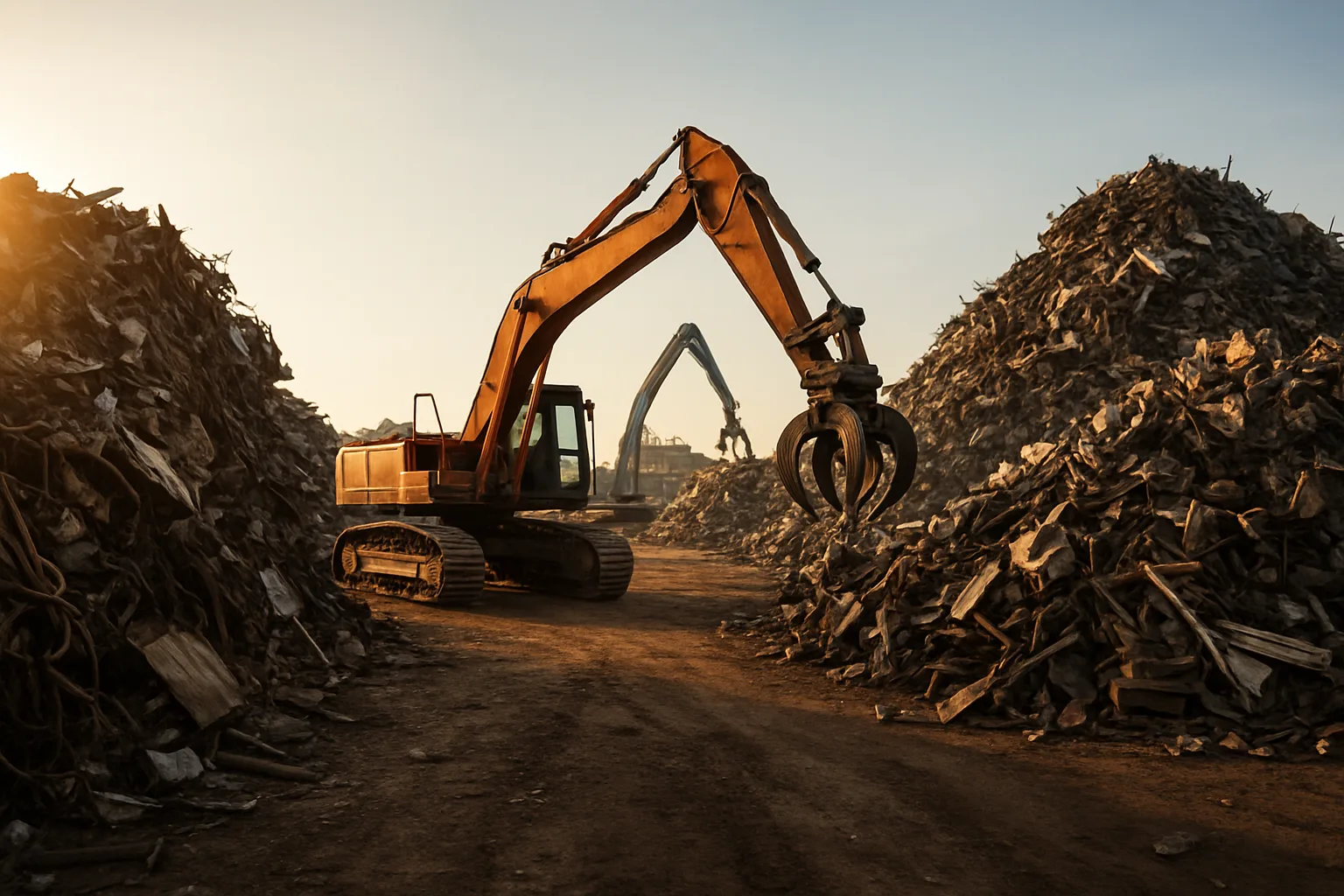
How One Quebec City Yard Turned Environmental Compliance Into a Competitive Edge
Most yard operators treat environmental regulations like a tax — something you pay, tolerate, and move on from. A recycling operation in Quebec City took the opposite approach. They leaned into compliance, documented everything, and used it to attract buyers who actually paid more for well-documented loads. Here's what that looked like in practice — and what it means for anyone doing scrap metal recycling in Quebec City right now.
Quebec's environmental framework for scrap metal is among the most detailed in Canada. The province operates under the Loi sur la qualité de l'environnement (Environment Quality Act), and municipalities like Quebec City layer additional expectations on top of that. That's not a complaint — it's context. Knowing the rules isn't just about staying legal. It's about running a tighter, more profitable operation.
The Environmental Rules Shaping Scrap Metal Recycling in Quebec
Quebec's scrap metal recycling sector operates inside a framework that covers everything from site permitting to fluid drainage, hazardous material handling, and end-of-life vehicle processing. As of 2026, yards handling catalytic converters, batteries, refrigerants, or vehicles with fluids intact face specific obligations under provincial regulation — not guidelines, obligations.
For operations in Quebec City specifically, that means:
- Proper containment for automotive fluids — oil, coolant, transmission fluid — before a vehicle shell can be processed
- Documentation trails for certain regulated metals and materials
- Hazardous waste manifests when applicable
- Site-specific permits tied to volume and material type
This isn't bureaucratic noise. Buyers — particularly industrial buyers purchasing non-ferrous loads — increasingly ask about documentation before bidding. A load with a clean paper trail and photo documentation moves faster and often attracts stronger offers than a comparable load with nothing attached to it. Compliance becomes a sales asset. That's the shift worth understanding.
To stay current on how these factors affect scrap metal prices today in Canada, it's worth checking market data regularly — pricing and regulatory environments shift together more often than people expect.
The Case Study: Documentation Drove Better Copper Scrap Prices in Quebec City
A mid-sized Quebec City yard was running a straightforward operation — buying cars, stripping non-ferrous metals, accumulating loads of copper wire and aluminum. Their pricing was consistent but unremarkable. They were moving material through a single buyer relationship, getting quoted rates with no visibility into whether those rates reflected the actual market.
The turning point came when they started treating their inventory like it had to be audited. Every load got:
- Photo documentation at intake and at lot staging
- Weight verification tied to each material type (bare bright copper, #1 copper, insulated wire — separated and documented)
- Serial tracking on higher-value cores and catalytic converters
- Condition notes that buyers could read before submitting a bid
When they brought a documented copper load to auction through SMASH, something different happened. Multiple buyers could see exactly what they were bidding on. The ambiguity was gone. Copper scrap prices in Quebec City — like everywhere else in Canada — fluctuate with LME benchmarks and local demand. But removing the guesswork from the lot itself meant buyers competed on price, not on who could discount most aggressively to offset unknown risk.
That's the mechanism. Better documentation reduces buyer risk. Lower perceived risk attracts more bids. More bids create real price discovery. It's not magic — it's just how competitive markets work when you give them the information they need.
Why Environmental Compliance and Price Discovery Are Connected
This sounds like two separate conversations. It isn't. When a yard processes material correctly — drains fluids, separates regulated materials, handles batteries and refrigerants according to provincial requirements — the byproduct is a cleaner, more accurately graded lot. And cleaner, more accurately graded lots are exactly what buyers want to see when they're deciding whether to bid.
Think about it from a buyer's side. If you're purchasing a load of non-ferrous material from a yard you've never worked with before, you're pricing in uncertainty. What's actually in the load? Has it been handled properly? Are there any liability issues attached to the material? A yard with documented processes and clean handling answers all of those questions before they're asked.
Platforms like SMASH make this dynamic work at scale. When you get competitive bids for your scrap in Canada, the auction format only works in your favor if buyers feel confident enough to bid aggressively. Documentation is what creates that confidence. The environmental compliance work you're already doing — or should be doing — translates directly into better price outcomes when the lot is presented properly.
For anyone looking to sell scrap metal online in Quebec or elsewhere, this is the practical takeaway: your compliance work has commercial value. Don't leave it in a filing cabinet.
What Quebec City Yards Can Do Right Now
If you're running a yard in Quebec City or anywhere in Quebec province and you're not treating your documentation process as a revenue driver, here's a practical starting point:
- Separate your non-ferrous material by grade at intake — don't mix bare bright copper with #2 wire and call it a copper load. Buyers will discount hard for ambiguity.
- Photograph everything — staged lots, stripped material, anything you're going to sell. Buyers who can see what they're buying bid with more confidence.
- Track your cats and cores with serial numbers — this matters for compliance and for value. A documented catalytic converter lot is a different product than an undocumented one.
- Keep your fluid drainage and hazmat records current — not just for inspectors, but because it proves your operation handles material responsibly.
- Use inventory tools that create audit trails automatically — SMASH's platform does this as part of the listing process, which means you're documenting while you're selling, not separately.
Quebec City's Quebec City scrap metal services market is competitive. Yards that operate transparently attract better buyers. That's the edge here — not cutting corners, but building a process that makes your material easier to buy.
Wondering how best scrap metal prices in Quebec are determined? A significant part of the answer comes down to how well a lot is presented. Two identical copper loads priced at the same benchmark rate will not attract the same bids if one has documentation and one doesn't. The market rewards information.
Broader Market Context: Regulations, Sustainability, and Scrap Metal Prices in Canada
Across Canada in 2026, environmental pressure on the recycling sector is increasing — not decreasing. Federal and provincial governments are tightening end-of-life vehicle regulations, extended producer responsibility frameworks are expanding, and industrial buyers face their own sustainability reporting requirements that push them toward documented, compliant supply chains.
What does this mean for scrap metal prices in Canada? It means the gap between compliant, well-documented operations and informal or poorly-documented ones is widening. Buyers with ESG reporting obligations — and there are more of them every year — are actively seeking supply partners who can show clean documentation. That changes who they buy from and what they're willing to pay.
This trend is visible in how yards from Quebec to Alberta are operating. Operations that figured this out early — documenting inventory, running clean processes, using platforms that create automatic paper trails — are in a better position now than they were two years ago. The regulatory environment pushed them to clean up their operations. The market rewarded them for it.
Whether you're looking at aluminum scrap prices in Canada or trying to track copper benchmarks, the underlying principle holds: documented material moves better. Read the latest Canadian scrap metal market updates to stay current on how pricing and regulatory shifts are moving together.
Platforms like SMASH are built for exactly this environment. No subscription fees. Vetted buyers. An auction format that rewards documentation with real competition. Auto-invoicing and inventory tools that handle the paperwork while you focus on the yard.
If you're ready to see what competitive bidding actually looks like for your loads, the place to start is understanding where your prices stand today. Find current Canadian scrap metal prices and compare against what your single buyer is quoting you. The gap might surprise you.
Environmental compliance isn't a cost center. Run it right, document it properly, and bring it to a competitive market — it becomes your best sales pitch.
Frequently Asked Questions
Q: What environmental regulations apply to scrap metal recycling in Quebec City?
Quebec City scrap metal operations fall under Quebec's Loi sur la qualité de l'environnement (Environment Quality Act) and associated provincial regulations. Key requirements include proper fluid drainage from end-of-life vehicles, hazardous material handling protocols, and site-specific permitting based on volume and material type. Municipal bylaws in Quebec City may add further obligations — contact your local authority or a Quebec environmental compliance specialist for current requirements specific to your operation.
Q: How do current copper scrap prices in Quebec City compare to other Canadian markets?
Copper scrap prices across Canada — including in Quebec City — are benchmarked against the London Metal Exchange (LME) and adjusted for local supply, demand, and dealer margins. Regional prices can vary based on proximity to smelters, buyer competition, and load quality. To get accurate current rates, check today's Canadian scrap metal prices and compare multiple buyer quotes before selling.
Q: Can I sell scrap metal online from Quebec City?
Yes. Platforms like SMASH allow yards and collectors in Quebec City to list documented loads for competitive auction with vetted buyers across North America. The process involves photographing and grading your material, listing it through the platform, and letting buyers compete — rather than accepting a single quote from one buyer. Better documentation on your end typically means stronger bids on theirs.
Q: Does proper documentation actually affect the price I get for my scrap metal?
It can. Buyers price risk into their bids — if they can't verify what's in a load, they discount accordingly. A well-documented lot with photos, accurate grading, and weight verification gives buyers confidence to bid more aggressively. It's not a guarantee of higher prices, but it removes the discount buyers apply to ambiguous material. More buyers bidding with confidence generally leads to better price discovery.
Q: What's the best way to stay updated on scrap metal prices in Quebec?
Check market data regularly from a reliable source that covers Canadian pricing benchmarks. Reading the latest Canadian scrap metal market updates is a good habit — prices for copper, aluminum, and other non-ferrous metals shift with global commodity markets, currency movements, and local demand. Relying on a single buyer's quoted rate without market context often means leaving money on the table.
Environmental compliance and strong scrap pricing aren't at odds — they're connected. The yards getting the best results in Quebec City right now are the ones that treat documentation as part of the product, not as overhead. If you want to know where you stand before your next load moves, check today's Canadian scrap metal prices at scrap-metal-prices.ca and go in with real market data behind you.
Follow SMASH on LinkedIn for scrap metal market insights, industry updates, and practical advice for yards and buyers across North America.