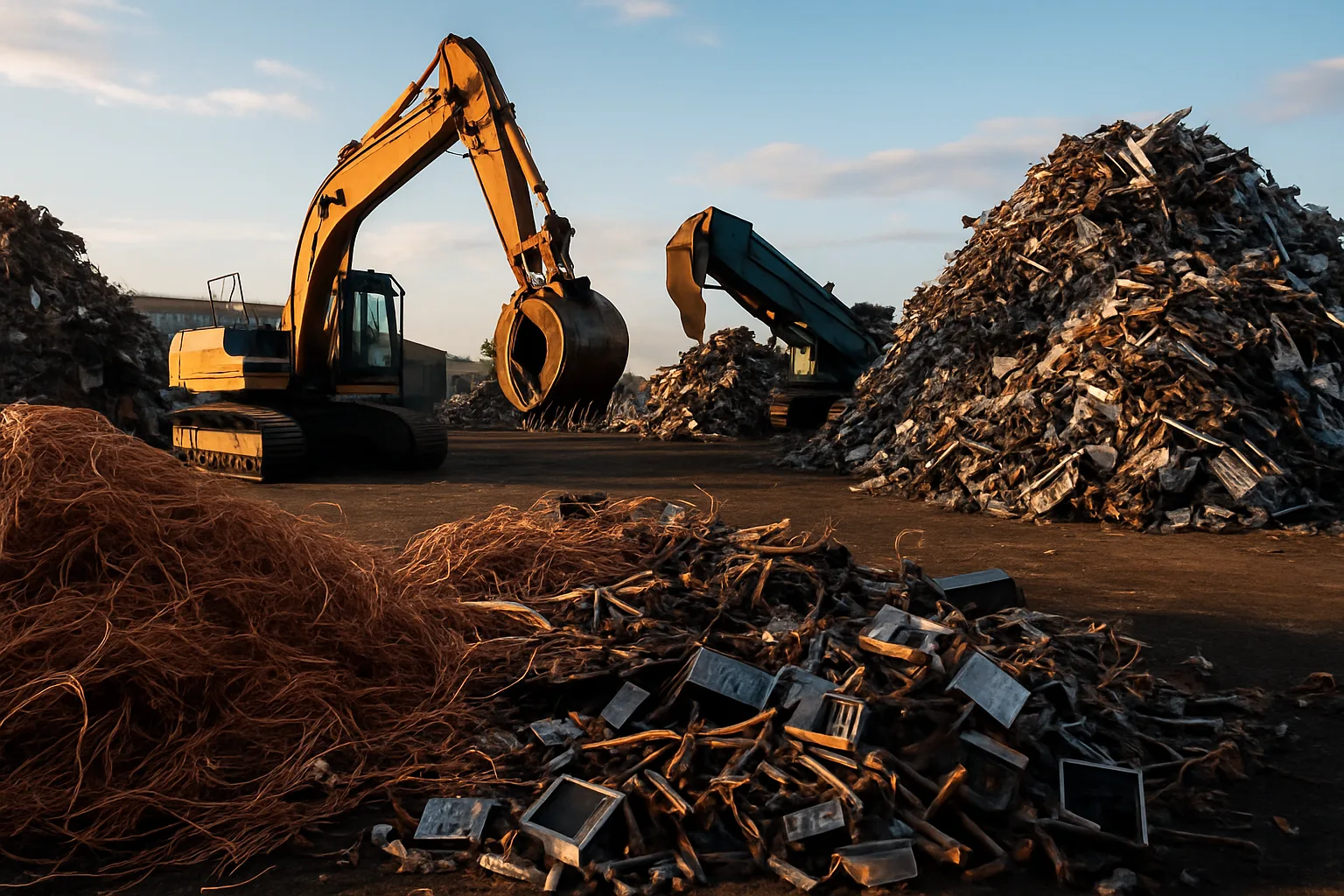
Your old laptop is worth more dead than you think. The average household in Canada sits on two to five pieces of broken or unused electronics — and most of those devices contain recoverable copper, gold, silver, palladium, and aluminum that recyclers actively want. If you've been watching the copper scrap price today and wondering whether your pile of dead phones and monitors counts, the answer is yes. It absolutely does.
E-waste is one of the fastest-growing waste streams in North America, and it's also one of the most underutilized sources of non-ferrous metal. Yards in Victoria, British Columbia, and across the country are increasingly equipped to process electronics — or connect sellers with buyers who are. The problem is that most people have no idea what's inside their old devices, what it's worth, or where to take it.
This article breaks it down clearly. No guessing. No vague ranges. Just the facts on what metals you'll find in e-waste, what drives their value in the current Canadian market, and how to make sure you're not leaving money on the table.
What Precious and Non-Ferrous Metals Are Actually Inside Your Old Electronics
Electronics are engineered with precision metals because those metals conduct electricity, resist corrosion, and handle heat. That makes them valuable long after the device stops working. Here's what you're typically dealing with when you break down e-waste:
- Copper: Found in wiring, circuit boards, motors, and power supplies. It's the most abundant non-ferrous metal in e-waste by weight. Copper prices remain a key benchmark — if you're tracking the copper scrap price today, know that e-waste copper typically yields lower per-kg rates than bare bright wire, but the volume can add up fast.
- Gold: Present in small quantities on circuit board contacts, CPUs, and connector pins. The gold content per device is measured in grams, not ounces, but industrial-scale refining makes it worth pursuing.
- Silver: Found in solder points, switches, and some membrane contacts. Silver content varies widely by device type and age.
- Palladium: Common in multilayer ceramic capacitors, particularly in older electronics manufactured before lead-free solder became standard. Palladium has held strong market value and is one reason catalytic converter theft remains a problem.
- Aluminum: Chassis, heat sinks, frames, and housings. The aluminium scrap value per kg is lower than copper but aluminum content per device can be substantial, especially in laptops and desktop towers.
- Steel and iron: Found in drive casings, brackets, and frames. Lower value per kg but adds to overall load weight.
The mix matters. A desktop tower from 2008 contains meaningfully more recoverable copper and precious metals than a modern ultra-thin laptop built to minimize material use. Older industrial electronics — servers, networking equipment, medical devices — often have higher precious metal density than consumer gear.
Copper Scrap Price Today: How E-Waste Copper Grades Stack Up
Not all copper is the same, and e-waste copper occupies a specific tier in the grading system. When buyers and yards talk about copper, they're referring to grades that reflect purity and how much processing is required before the metal can be re-melted. Bare bright is the top tier — clean, uncoated, unalloyed wire of a specific gauge. E-waste copper usually falls into lower grades: insulated wire, #2 copper, or "e-scrap" as its own category.
The copper scrap price today in Canada fluctuates with the London Metal Exchange (LME) benchmark, the Canadian dollar's strength against the USD, and regional demand from foundries and smelters. E-waste copper will trade at a discount to bare bright — sometimes 30 to 50 percent lower per kilogram — because of the processing cost required to strip insulation and refine mixed alloys. That said, copper is copper. Even at a discount, it's one of the most valuable metals by weight you'll find in your old electronics.
For sellers in Victoria and across British Columbia, it's worth separating your e-waste copper before bringing it to a yard. Strip what you can. Pull the wire harnesses from old power supplies. Separate transformer coils. The more you do before drop-off, the higher the grade — and the better the return. To check today's Canadian scrap metal prices and understand where copper grades are trading right now, bookmark a current pricing source and check it before you load your truck.
Aluminium Scrap Value Per Kg: Laptops, Heatsinks, and Enclosures
Aluminum has become a dominant material in consumer electronics over the past decade. Laptop enclosures, tablet backs, smartphone frames, and desktop heatsinks are increasingly aluminum rather than plastic. That shift is good news for scrap sellers because aluminum holds reasonable value and is easy to identify.
The aluminium scrap value per kg in Canada depends on alloy type and cleanliness. Electronics aluminum — the kind found in MacBook enclosures or server rack ears — is typically a high-grade alloy and relatively clean, meaning it hasn't been painted with anything that significantly impacts melt value. Cast aluminum from older desktop towers is slightly lower grade but still worth separating from steel and ferrous material.
Here's a practical breakdown of aluminum sources in e-waste:
- Laptop and tablet enclosures: High-grade aluminum alloy, often anodized. Good recovery rate per unit.
- CPU heatsinks: Usually extruded aluminum, sometimes with copper heat pipes — worth separating the two if you have volume.
- Desktop tower chassis: Often a mix of steel and aluminum. Use a magnet to separate them. Steel sticks; aluminum doesn't.
- Flat-screen TV backs and stands: Varies widely. Some are aluminum; many are ABS plastic. Know what you have before assuming.
- Server rack components: Rack ears, cable management bars, and tray slides are frequently aluminum and can add up in commercial strip-outs.
If you're doing a large commercial cleanout — a server room decommission, an office renovation, or an IT asset disposal job — aluminum alone can represent a meaningful portion of your total scrap value. Get competitive bids for your scrap in Canada before settling on a single buyer. Competition changes what you walk away with.
Scrap Metal Recycling in Victoria: Where E-Waste Fits the Local Market
Victoria, British Columbia has a reasonably active scrap metal recycling scene, but e-waste sits in a specific category that not every yard handles the same way. Some yards accept whole electronics for a flat rate or by weight. Others strip and sort in-house. A few will refer you to e-waste processors who specialize in precious metal recovery at the refinery level.
If you're doing scrap metal recycling Victoria-style — meaning you're an individual or small business bringing in a mixed load — the practical approach is to pre-sort before you arrive. Separate copper-bearing components from aluminum, pull batteries (most yards won't accept intact lithium batteries in bulk for safety reasons), and identify anything with obvious precious metal content like server CPUs or gold-finger RAM sticks. Those may warrant a separate conversation with the buyer rather than dropping them in a general e-scrap bin.
Victoria's geography also shapes the market slightly. As an island city, transport costs affect what buyers can offer. Industrial volume — pallets of servers, full trailer loads of IT equipment — often warrants shipping to processors on the mainland or in the interior of British Columbia for better returns. For individual sellers, the calculus is different. Victoria scrap metal services can help you find the right outlet for your specific load, whether it's a single laptop or a commercial haul.
For those tracking scrap metal recycling Canada-wide trends, the e-waste market is moving toward more sophisticated recovery. Refiners are investing in hydrometallurgical processing that can extract precious metals more efficiently than traditional smelting. That eventually filters down to better returns for sellers — but for now, the yard-level price is still your starting point.
How to Maximize Your Return on E-Waste Scrap in 2026
The difference between what an informed seller gets and what an uninformed seller gets can be significant. Here's the practical framework for maximizing your e-waste scrap return:
- Sort before you go. Separate copper, aluminum, steel, and precious metal-bearing components. Mixed loads get priced at the lowest common denominator.
- Know your grades. Insulated wire, #2 copper, and e-scrap board material each have different values. Ask your yard how they classify what you're bringing.
- Pull lithium batteries. Most yards require batteries to be removed. It's a safety issue, not a preference. Handle this before drop-off.
- Check current prices before you go. The copper scrap price today in Canada shifts with the market. Find current Canadian scrap metal prices before you load up — you want to negotiate from a position of knowledge.
- Get multiple bids on volume loads. If you're moving 500 kg or more of e-scrap, don't settle for one call. Platforms like SMASH put your load in front of vetted buyers who compete for it, which is exactly how price discovery should work.
- Document your load. Photos, weights, and descriptions protect you. They also give buyers more confidence, which can translate to stronger bids.
SMASH is built for exactly this kind of situation. If you have a commercial e-waste load — a server room cleanout, a warehouse full of old terminals, a pallet of mixed boards and wire — the old way of calling one buyer and taking whatever number they give you is the wrong move. Competition is how you find the real market. To read the latest Canadian scrap metal market updates and stay ahead of price swings, make it a habit before any major sell.
The Broader Canadian Scrap Metal Market in Mid-2026
The Canadian scrap metal market in mid-2026 continues to be shaped by a few persistent forces: global copper demand driven by electrification and grid infrastructure investment, ongoing aluminum demand from the automotive and aerospace sectors, and tightening regulations around e-waste disposal that are pushing more material into formal recycling channels rather than landfills.
For sellers, this environment is generally favorable. Demand for non-ferrous metals remains strong. The copper market in particular has been supported by large-scale infrastructure programs across North America. But prices fluctuate — sometimes sharply — based on LME movements, currency shifts, and regional supply dynamics. What's true today may not be true next month. That's why checking the copper scrap price today before you sell, rather than assuming last month's rate still applies, matters more than most sellers realize.
Whether you're in Victoria, British Columbia, or running a yard operation anywhere from Halifax to Vancouver, the fundamentals are the same: know what you have, know what it's worth, and don't sell to the first buyer who answers the phone without understanding the market. If you're moving volume, SMASH gives you a better way to do it — vetted buyers, competitive auction format, no subscription fees, and auto-invoicing that keeps your paperwork clean.
When you're ready to sell, get competitive bids for your scrap in Canada and stop guessing at what the market will pay. The data exists. Use it.
Prices fluctuate daily based on market conditions. Always verify current rates before selling. The information in this article reflects general market context as of June 2026 and should not be taken as a guaranteed price indication.
Frequently Asked Questions
Q: What is the copper scrap price today in Canada for e-waste?
E-waste copper trades at a discount to higher-purity grades like bare bright wire because of the processing required to recover it. The exact rate depends on your local yard, current LME copper benchmarks, and the Canadian dollar exchange rate. Check a live pricing source like scrap-metal-prices.ca before selling to make sure you're working with current numbers — prices shift regularly.
Q: Is it worth stripping copper from old electronics before selling?
Yes, in most cases. Stripping insulated wire or separating copper components from steel housings upgrades the grade of what you're selling and improves your per-kilogram rate. The effort is worth it if you have meaningful volume. For small quantities, the time investment may outweigh the price difference — ask your local yard what threshold makes separation worthwhile.
Q: Where can I recycle e-waste for scrap metal value in Victoria, BC?
Victoria has several scrap metal yards and e-waste processors that accept electronics. Your best approach is to call ahead, describe your load, and ask how they classify and price e-scrap material. For larger commercial loads, exploring platforms like SMASH can help you reach multiple buyers rather than settling for a single offer. Victoria scrap metal services can help you navigate local options.
Q: What is the aluminium scrap value per kg for laptop enclosures?
Laptop enclosures are typically high-grade aluminum alloy and price accordingly — generally above cast aluminum but below clean extrusion grades. The exact rate varies by yard and current market conditions. Separate aluminum cleanly from steel and plastic components before weighing in to ensure you're getting the right grade price.
Q: Do Canadian scrap yards accept whole electronics, or do they need to be broken down?
It varies by yard. Some accept whole electronics and handle processing in-house, pricing accordingly. Others prefer pre-sorted material and will offer better rates for it. Call your yard ahead of time, describe what you have, and ask what prep they recommend. If you have commercial volume, getting competitive bids from multiple buyers — rather than calling one yard — is always the smarter move.
Ready to stop guessing at what your scrap is worth? Check today's Canadian scrap metal prices — get current rates at scrap-metal-prices.ca and go into your next sale knowing exactly where the market stands.
Follow SMASH on LinkedIn for ongoing scrap metal market insights, pricing trends, and industry updates across Canada and North America.
```