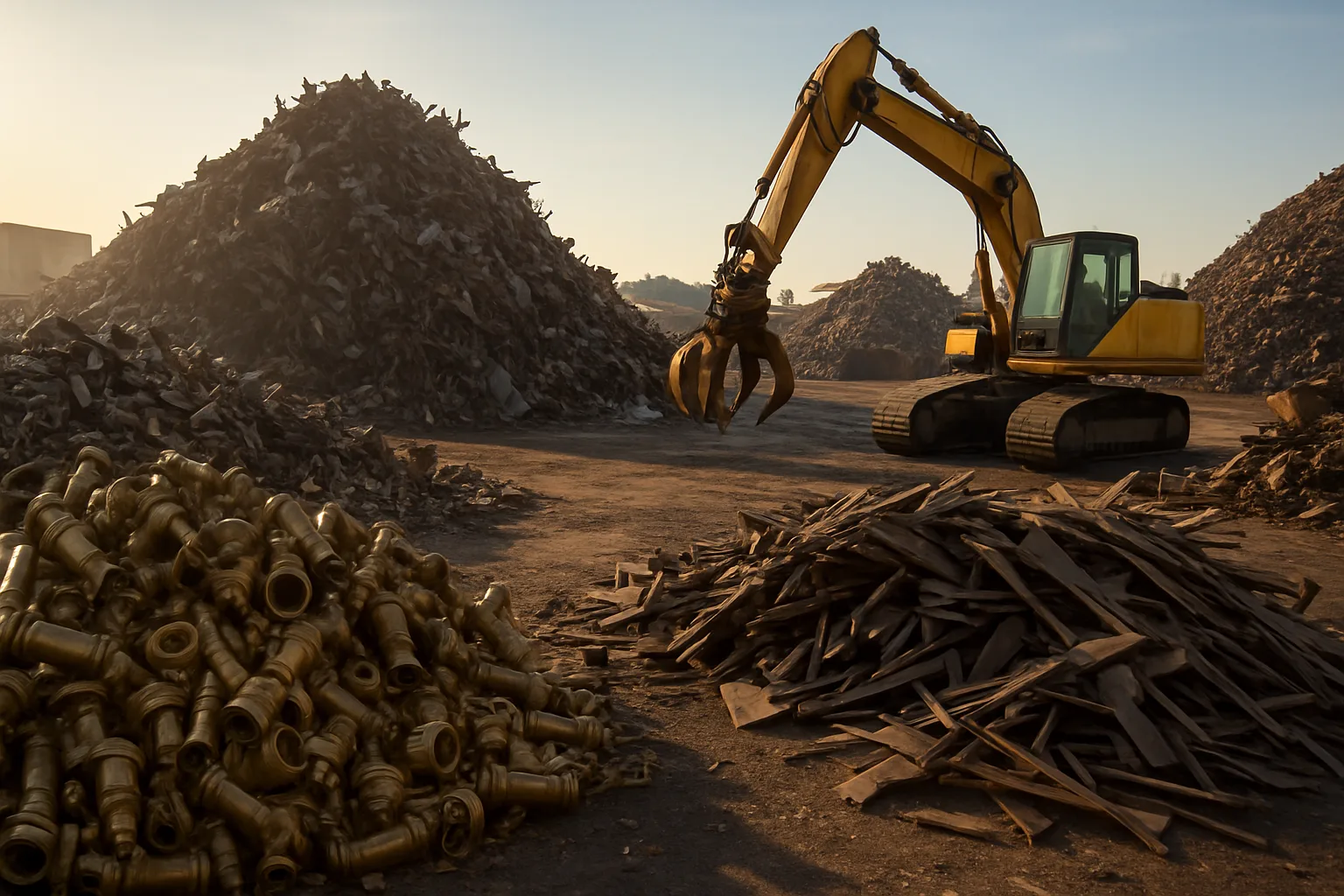
Most people walk right past brass and bronze without knowing what they're holding. A pile of old plumbing fittings, a worn-out marine cleat, a box of industrial bushings — that's not junk. That's non-ferrous metal with real cash value. If you're in St. John's and you've been sitting on this kind of material, understanding the copper scrap price today is your starting point. Brass and bronze are copper alloys, and their value tracks closely with copper markets.
This guide breaks down what brass and bronze actually are, where people typically find them, what they're worth in Canada right now, and how to get the best return when you sell. Whether you're cleaning out a property or running a recycling operation in Newfoundland and Labrador, this is the information you need before you load your truck.
---Brass vs. Bronze: Know What You're Selling
These two metals get mixed up constantly — even by experienced sellers. Getting them confused costs you money, because they don't always pay the same rate.
Brass is an alloy of copper and zinc. It's yellow-gold in colour, relatively soft, and you'll find it everywhere from plumbing to door hardware to musical instruments. Common forms include:
- Plumbing fittings, valves, and shut-offs
- Pipe nipples and compression fittings
- Door handles, hinges, and decorative hardware
- Electrical connectors and terminals
- Cartridge casings (spent shell brass)
- Radiator end tanks
Bronze is an alloy of copper and tin, sometimes with other metals like aluminum or silicon added. It's typically darker — more reddish-brown — and significantly harder than brass. You find it in more industrial and marine applications:
- Propeller shafts and marine hardware
- Pump housings and impellers
- Bushings and bearings
- Statues, plaques, and architectural castings
- Gear blanks and industrial castings
In St. John's, with its deep marine heritage and working harbour, bronze shows up more often than it does in landlocked cities. Old boat fittings, decommissioned dock hardware, salvaged marine equipment — it's worth knowing bronze from brass before you hand it over to a yard.
A quick test: brass is brighter and yellower. Bronze tends toward a darker, warmer reddish tone. When in doubt, ask the yard. But knowing ahead of time puts you in a stronger position to negotiate.
---What Drives the Copper Scrap Price Today — and Why It Matters for Brass and Bronze
Brass and bronze don't have their own commodity benchmark the way copper does. Their scrap value is calculated as a percentage of the copper content — so when the copper scrap price today moves, brass and bronze prices move with it.
Copper markets are driven by global demand, primarily from construction, electric vehicles, renewable energy infrastructure, and electronics manufacturing. In mid-2026, copper remains a high-demand metal as North American grid modernization and EV production continue to accelerate. That tailwind benefits anyone holding brass or bronze scrap.
Typical copper content by alloy type:
- Yellow brass: roughly 60–70% copper
- Red brass: 80–85% copper (higher value, closer to copper pricing)
- Bronze: typically 80–95% copper depending on the alloy
Red brass and clean bronze consistently fetch stronger prices than yellow brass. If you're separating material at the yard, pulling red brass fittings from yellow brass hardware is worth the extra five minutes. It can make a meaningful difference on a large load.
To check today's Canadian scrap metal prices before you haul anything, that's always the right move. Prices shift with the market — sometimes week to week. Walking in with current data means you know whether the offer is fair.
---Where to Find Brass and Bronze Scrap in Newfoundland and Labrador
You don't need to be a professional scrapper to build a decent load of brass or bronze. These metals show up in predictable places if you know where to look. In Newfoundland and Labrador, certain sources are especially common given the province's industrial and maritime character.
Renovation and Demolition Sites
Any home built before the 1990s likely has brass plumbing throughout. Older commercial buildings in St. John's — especially those being gut-renovated or demolished — can yield substantial quantities of brass valves, fittings, and pipe assemblies. If you're doing the work yourself or know someone in trades, set aside the non-ferrous before anything goes in the bin.
Marine and Fishing Industry Equipment
This is where St. John's has a genuine edge. The working waterfront generates decommissioned bronze hardware regularly — propeller shafts, through-hull fittings, seacocks, cleats, deck hardware, and anchor windlasses. Boat salvage is a legitimate source of high-value bronze. Even older fishing vessels being scrapped or repaired can yield significant weight in quality alloys.
Industrial and Mechanical Equipment
Pump housings, valve bodies, bushings, gear blanks, and bearing cages. Any industrial facility doing equipment turnover or decommissioning will generate bronze and brass scrap. Machine shops, hydraulic repair shops, and industrial fabricators are worth knowing if you operate a pickup route.
Electrical and HVAC Systems
Older electrical panels contain brass bus bars and terminals. HVAC equipment uses brass fittings and valve bodies extensively. Commercial property cleanouts and HVAC retrofits are reliable sources of mixed non-ferrous material.
Estate Sales and Property Cleanouts
Old homes in St. John's often contain decades of accumulated hardware — door furniture, plumbing components, decorative items, and sometimes antique bronze pieces. Not every brass candlestick belongs at a yard, but functional hardware and plumbing components are fair game.
---Scrap Metal Recycling in St. John's: Sorting and Preparing Your Load
How you present your material at the yard affects what you get paid. Recyclers grade brass and bronze based on cleanliness and alloy type. Mixed, contaminated, or unsorted loads get discounted — sometimes heavily.
Here's how to prepare for a better payout:
- Separate by type — Keep red brass, yellow brass, and bronze in separate containers or bags. Don't mix them with copper, aluminum, or steel.
- Remove attached steel — Brass valves often have steel bolts or iron pipe thread connections. Cut or thread them off. Steel contamination drops your price per pound significantly.
- Clean what you can — Remove rubber gaskets, plastic handles, and painted components where practical. Clean material grades higher.
- Don't mix cartridge brass with plumbing brass — Some yards pay differently for spent shell casings. Keep them separate.
- Weigh before you go — Know what you're bringing. A rough weight estimate lets you validate the yard's scale reading and gives you a baseline for the conversation.
Good scrap metal recycling practice isn't complicated — it's just consistent. Yards reward sellers who show up organized. You'll spend less time at the scale and more time getting paid what the material is worth.
For a broader view of how Canadian markets are moving across all metal types, read the latest Canadian scrap metal market updates — it's worth checking before any significant haul.
---Getting the Best Scrap Metal Prices: Why Competition Matters
Here's a reality most casual sellers don't think about: the first price you're offered is not necessarily the market price. It's one buyer's offer. In smaller markets, that number can drift well below what your material is actually worth — not because anyone is acting dishonestly, but because single-buyer pricing doesn't have to be competitive.
This is exactly the problem that platforms like smashrecycling.ca are built to solve. SMASH runs a vetted buyer network and auction-format sales that put your load in front of multiple buyers at once. More buyers means better price discovery. Competition can help reveal what the market will actually pay — not just what one yard decides to offer that afternoon.
For sellers in St. John's sitting on a meaningful load of bronze or brass, this matters. Shipping weight off the island has its own economics — but understanding what competitive buyers across Canada will pay for your material gives you real leverage, even locally. SMASH also handles photo documentation, inventory tools, and auto-invoicing — so the process is documented from start to finish. No guessing, no phone tag, no vague verbal quotes.
If you want to find current Canadian scrap metal prices and understand where your load sits in the broader market, start there. Then decide whether you're getting a fair offer.
---Price Disclaimer and How to Stay Current
Brass and bronze scrap prices fluctuate with global copper markets, exchange rates, and local supply and demand. The figures discussed in this article reflect general market conditions as of June 2026 and are meant to orient your thinking — not to serve as a guaranteed quote.
Always check current rates directly with your local yard or through a current pricing resource before making hauling decisions. A load that makes economic sense at one copper price point may not pencil out the same way two weeks later. That's not a reason to wait — it's a reason to stay informed.
For anyone in Newfoundland and Labrador building a recycling habit or running a commercial operation, price awareness is the difference between leaving money on the table and getting paid what your material is worth. Check current rates at scrap-metal-prices.ca, know your alloys, and bring clean sorted loads. Those three habits compound over time.
---Frequently Asked Questions
Q: How does the copper scrap price today affect what I get paid for brass?
Brass is a copper alloy, so its scrap value is directly tied to the copper market. Yards typically pay a percentage of the copper spot price based on the alloy's copper content. Yellow brass (around 60–70% copper) pays less per pound than red brass or bronze, which run 80–95% copper. When copper prices rise, brass and bronze scrap prices follow.
Q: What's the difference between red brass and yellow brass at the scrap yard?
Red brass has a higher copper content — typically 80–85% — and looks more reddish or pinkish compared to the bright yellow of standard brass. Yards pay more per pound for red brass. Common sources of red brass include older plumbing fittings, gate valves, and water meter components. It's worth separating before you arrive at the yard.
Q: Where can I find scrap metal recycling options in St. John's?
St. John's has local scrap yards and metal recyclers that accept non-ferrous material including brass and bronze. For sellers with larger loads or commercial volumes, platforms like SMASH connect you with vetted buyers across Canada and can help establish competitive pricing through an auction format rather than a single-buyer quote.
Q: Do I need to clean brass and bronze before bringing it to a scrap yard?
You don't need to polish it, but removing obvious contaminants helps — steel bolts, rubber gaskets, plastic handles, and painted components can lower your grade. Clean, sorted material consistently yields better pricing than mixed or contaminated loads. A few minutes of prep at home is worth it on any significant quantity.
Q: Are scrap metal prices in Canada different from U.S. prices?
Yes. Canadian scrap prices are quoted in CAD and reflect local market conditions, exchange rates, and regional demand. Global copper prices set the general direction, but what a yard in St. John's pays per pound will vary from what a yard in another market quotes. Always check current Canadian rates before hauling — scrap-metal-prices.ca tracks current pricing across Canada.
---If you're sitting on brass valves, bronze marine hardware, or a mixed load of non-ferrous from a renovation or cleanout, now is a good time to know what it's worth. The copper market in mid-2026 remains active, and well-sorted brass and bronze scrap commands real money. Start by knowing the current rate — check today's Canadian scrap metal prices at scrap-metal-prices.ca — and go from there with confidence.
Follow SMASH on LinkedIn for ongoing scrap metal market insights, pricing trends, and industry updates across Canada.