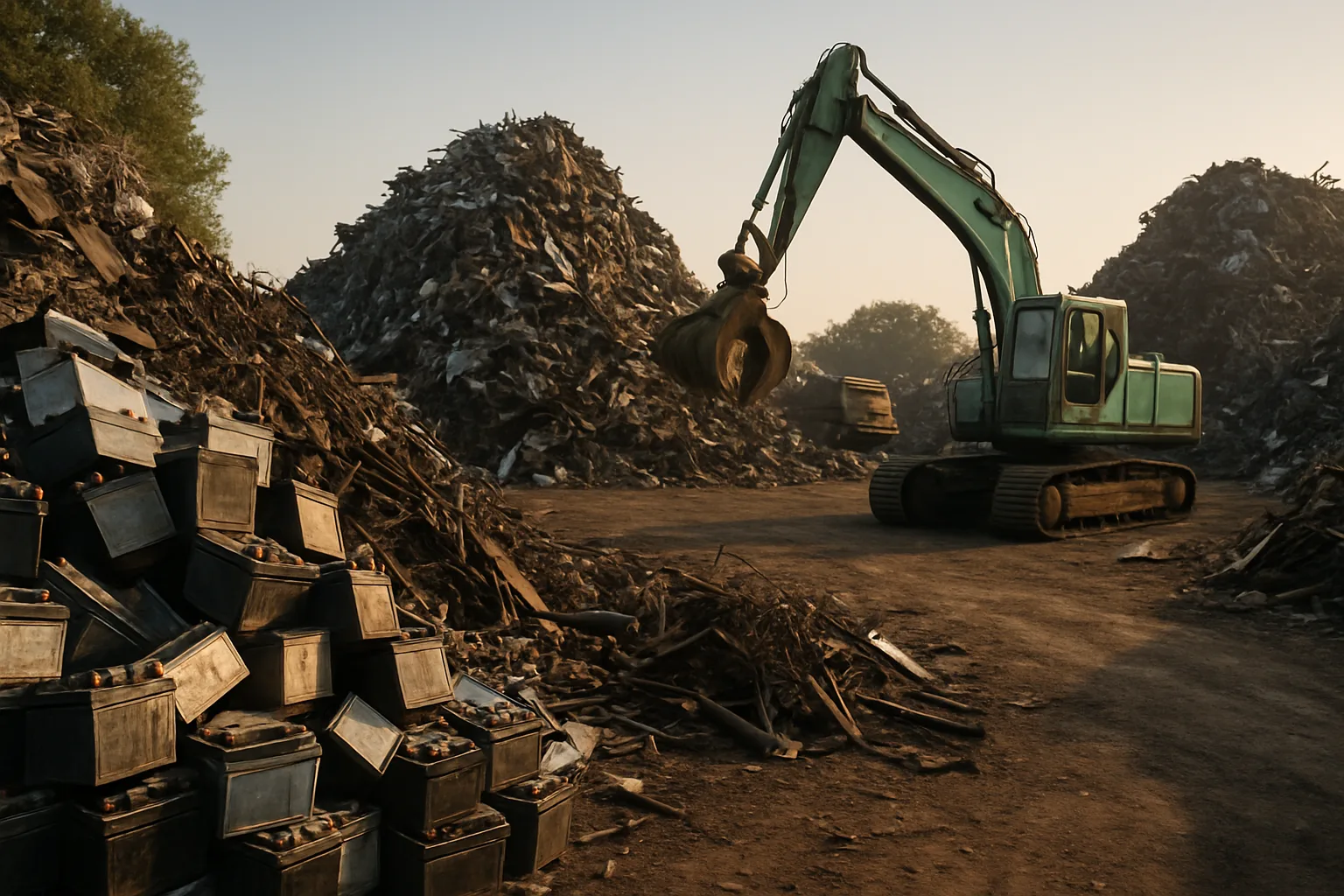
Lead-Acid Batteries Are Worth More Dead Than You Think
Most people treat a dead car battery like garbage. They toss it in the corner of the garage, let it sit for months, and eventually haul it to the curb. That's a mistake. Lead-acid batteries are one of the most recyclable items in the scrap stream — and the lead inside them holds real value. If you're doing scrap metal recycling in Barrie, understanding what's in a dead battery and what it's worth could meaningfully change your payout.
This isn't a niche conversation either. Every vehicle on the road runs on a lead-acid battery. Fleet operators, auto salvage yards, garages, and even homeowners generate these batteries constantly. The question isn't whether you have them — it's whether you're getting fair value when you hand them over.
What's Actually Inside a Lead-Acid Battery
A standard automotive lead-acid battery is roughly 60–70% lead by weight. That lead sits in the form of plates, grids, and terminals — all recoverable. The rest is polypropylene casing (recyclable plastic) and sulfuric acid electrolyte (neutralized during processing).
Here's how the weight breaks down in a typical 12V automotive battery:
- Lead plates and grids: approximately 60–65% of total weight
- Polypropylene casing: approximately 10–12%
- Sulfuric acid: approximately 20–25%
- Separators and other materials: remainder
A standard passenger car battery weighs between 10 and 20 kg depending on the CCA rating. A heavy-duty truck or industrial battery can push 30 to 60 kg or more. That weight matters when you're calculating what a load of batteries is actually worth. Lead scrap prices fluctuate with the market, but battery lead is consistently traded — it's not a niche commodity that sits idle.
The high lead content is exactly why scrap yards treat batteries as a separate category. They're not tossed into a mixed bin. They're priced per kilogram on lead value, and that price moves with global demand for refined lead — driven heavily by battery manufacturing itself, particularly the growing energy storage sector.
Scrap Lead Prices in Canada vs. Other Non-Ferrous Metals
Lead doesn't get the same headlines as copper or aluminum, but it's a legitimate non-ferrous earner. When comparing aluminium scrap value and copper scrap prices, lead typically trades lower per kilogram — but battery lead is dense and you're moving volume every time. A pile of ten dead truck batteries can represent hundreds of kilograms of recoverable lead.
Here's a rough comparison of where lead stacks up against other common non-ferrous metals in the Canadian scrap stream (note: all prices fluctuate — always check today's Canadian scrap metal prices before you haul):
- Copper (bare bright): highest per-kg value in most yards
- Aluminum (clean extrusion or sheet): mid-range per kg, high volume
- Lead (battery grade): lower per-kg than copper or aluminum, but heavy and consistent
- Zinc: trades similarly to lead in many markets
- Steel/ferrous: lowest per-kg, typically sold by the tonne
Lead's value is in the density and the consistency. Unlike catalytic converters — where value depends heavily on platinum group metal content and model identification — battery lead is straightforward. Yards know what they're buying. The grading is simple. That makes it one of the more predictable materials to sell, even when the market shifts.
For anyone tracking scrap metal prices today in Canada, lead prices move with LME (London Metal Exchange) benchmarks, similar to how copper and aluminum are priced. International demand — including markets that influence the copper scrap price globally — ripples into Canadian pricing. Domestic refinery capacity and battery recycling infrastructure also play a role in what Ontario yards will actually pay.
How Lead-Acid Battery Recycling Works in Ontario
Ontario has one of the more structured battery recycling frameworks in Canada. Lead-acid batteries fall under regulated end-of-life product categories, and most scrap yards in the province are set up to handle them properly. If you're looking at Barrie scrap metal services, you'll find that reputable yards accept batteries, price them by weight, and handle the downstream processing through licensed smelters and recyclers.
The recycling process itself is worth understanding if you're selling regularly:
- Battery is received and weighed at the yard — you get paid per kilogram of battery weight
- Casing is broken and the acid is neutralized or reclaimed
- Lead plates and grids are separated and smelted into ingots
- Refined lead re-enters the supply chain — often back into new battery manufacturing
- Polypropylene casing is granulated and sold as recycled plastic resin
Secondary lead — lead recovered from recycled batteries — makes up a significant share of total lead supply in North America. New batteries are built largely from old batteries. It's one of the highest closed-loop recycling rates of any material on the market. That closed loop is part of what sustains consistent demand for battery scrap.
Getting the Best Scrap Metal Prices in Ontario: What Battery Sellers Get Wrong
Most people selling batteries leave money on the table. Not because yards are cheating them — but because they don't shop the load. They call one yard, take the first number, and move on. That's the old way of doing things, and it costs you.
Here's what sellers often miss when it comes to getting the best scrap metal prices in Ontario:
- Not separating battery types. Automotive batteries, industrial/forklift batteries, and sealed AGM batteries may be priced differently. Know what you have.
- Not weighing before you go. Get a rough weight estimate at home. A bathroom scale works for small quantities. It gives you a baseline to verify at the yard.
- Calling only one buyer. Price discovery requires competition. One phone call tells you one price. That's not a market — that's a guess.
- Not understanding what "per battery" vs. "per kg" pricing means. Some yards quote a flat rate per battery. Others price by weight. On heavy industrial batteries, per-kg pricing often wins.
- Ignoring timing. Lead prices — like copper and aluminum — move with global markets. Selling during a price dip because you're in a hurry costs real dollars on a large load.
Platforms like Canada's B2B scrap recycling marketplace — SMASH — exist precisely to fix the single-buyer problem. When you list a load, vetted buyers compete. That competition is how the market actually sets price. It's a better outcome than cold-calling yards and hoping you landed a good day.
SMASH and the Case for Competitive Battery Scrap Sales
The scrap industry has run on relationships and phone calls for decades. That works — until it doesn't. When you're moving one battery, sure, call your guy. When you're clearing out a fleet yard, a salvage operation, or a storage facility with dozens or hundreds of units, a single call is the wrong move.
SMASH brings an auction format to loads like this. You document what you have — weight, type, condition — and vetted buyers across the network put real bids on it. No guessing. No single buyer setting the price uncontested. More buyers means better price discovery, and documented inventory gives buyers more confidence to bid aggressively.
For yards and sellers in Barrie and across Ontario, that transparency matters. The lead scrap market isn't obscure — you can read the latest Canadian scrap metal market updates and understand where prices are sitting. But knowing the market and actually getting market price are two different things. Competition is what closes that gap.
SMASH charges no subscription fees. The model is straightforward — we only win when the seller wins. That alignment matters when you're deciding whether to list a load or just take the first number a yard quotes you on the phone.
Lead-Acid Batteries vs. Other High-Value Scrap: A Quick Comparison
If you're deciding where to focus your scrap collection efforts in Barrie, here's a practical comparison of battery lead against other commonly recycled materials:
- Lead-acid batteries: Heavy, consistent value, easy to grade, high recycling infrastructure in Ontario. Best when sold by weight in volume.
- Copper wire and pipe: Higher per-kg value, but requires proper stripping and sorting for top price. Copper scrap prices in Barrie and across Ontario track LME closely.
- Aluminum extrusion and sheet: Good volume material, consistent demand. Aluminum scrap value depends heavily on alloy and cleanliness.
- Catalytic converters: High value per unit but complex to price without PGM assay or VIN-based lookup. SMASH's serial tracking and photo documentation tools help verify what you have before you sell.
- Mixed ferrous (steel, iron): Lowest per-kg return, but high-volume sellers can move tonnes efficiently.
Battery lead sits in a comfortable middle ground — not as glamorous as cats or copper, but reliable, high-volume, and consistently in demand. For anyone running a garage, fleet operation, or salvage business, it's not a material to ignore.
Before your next haul, take five minutes to find current Canadian scrap metal prices so you walk into any transaction knowing what the market looks like. That knowledge is free. Not using it costs you money.
Frequently Asked Questions
Q: How much is a dead car battery worth as scrap in Barrie?
Battery scrap value depends on current lead prices and battery weight. A standard automotive battery typically weighs 10–20 kg. Most yards in Barrie and Ontario price batteries per kilogram of battery weight, so heavier batteries pay more. Check current lead scrap rates before you go — prices fluctuate with the market.
Q: Can I mix different battery types in one load for scrap metal recycling in Barrie?
You can bring mixed battery types to most yards, but separating them can help you get better pricing. Automotive, AGM, and heavy industrial or forklift batteries may be priced differently. It takes a few extra minutes and can make a real difference on larger loads.
Q: Where do I sell a large volume of scrap batteries in Ontario?
For large volumes — think fleet cleanouts, salvage yards, or industrial operations — competitive auction platforms like SMASH are worth using. Listing a documented load to multiple vetted buyers tends to produce better outcomes than calling a single yard. SMASH operates across North America, including Ontario, with no subscription fees.
Q: How do lead scrap prices in Canada compare to copper scrap prices?
Lead typically trades lower per kilogram than copper in the Canadian scrap market. Copper — especially bare bright or clean copper pipe — commands a premium. However, battery lead is dense and easy to source in volume, which makes it a reliable earner even at lower per-kg rates. Both metals track international benchmarks like the LME.
Q: Is it legal to sell scrap batteries in Ontario?
Yes. Lead-acid batteries are accepted at licensed scrap yards across Ontario, including in Barrie. The province has regulated frameworks for end-of-life battery handling, and most yards are equipped to process them properly. Bring a valid ID — most yards in Ontario require it for scrap transactions.
Disclaimer: Scrap metal prices fluctuate daily based on market conditions. All price references in this article are general in nature. Always verify current rates with your local yard or check scrap-metal-prices.ca before making selling decisions.
Dead batteries sitting in your yard are worth real money — but only if you know current rates and have more than one buyer looking at your load. Check today's Canadian scrap metal prices and get current rates at scrap-metal-prices.ca before your next haul.
Stay ahead of the market. Follow SMASH on LinkedIn for ongoing scrap metal market insights, pricing trends, and industry updates across Canada.