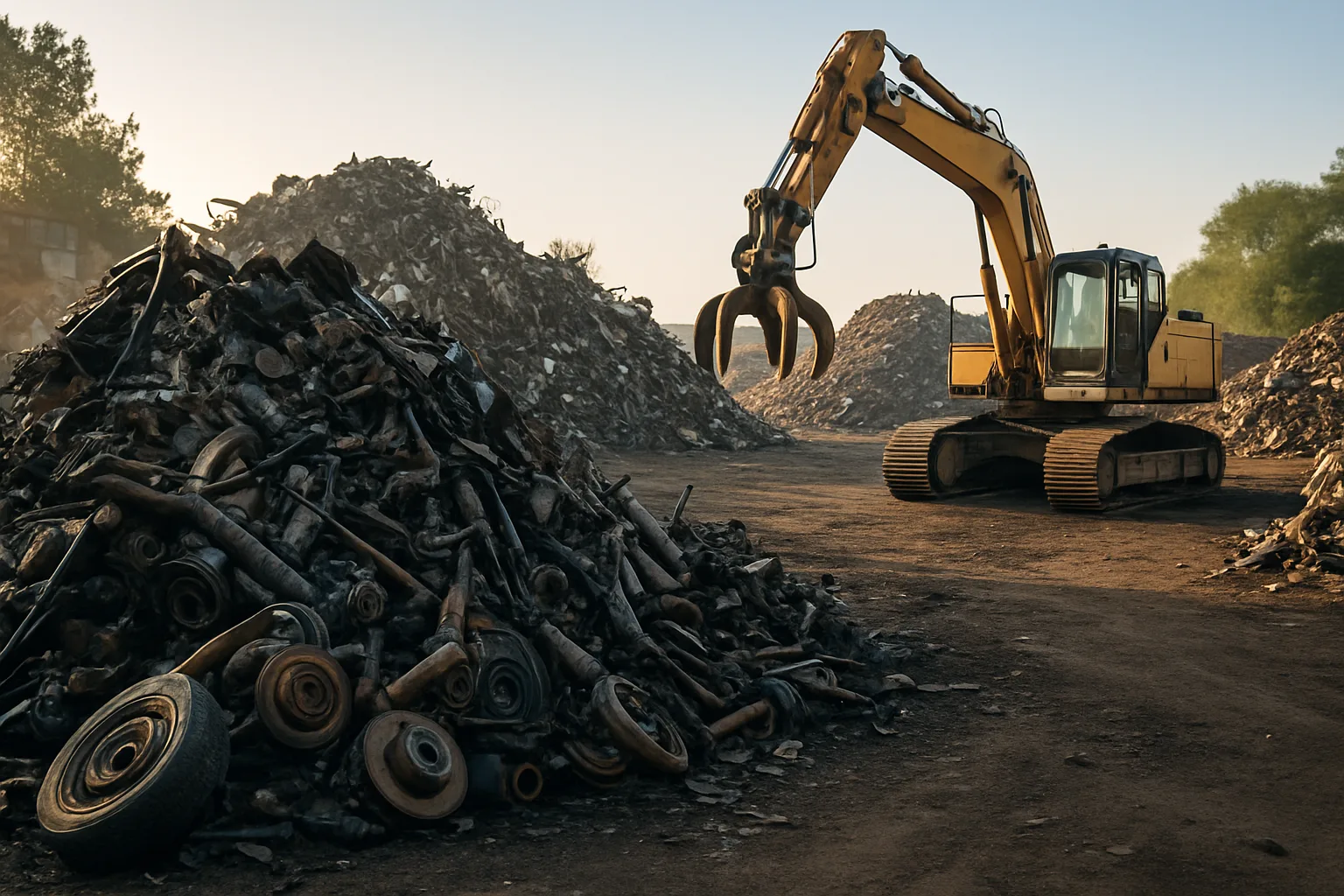
Most people have no idea a single car contains over a tonne of recyclable metal. Radiators, alternators, starters, copper wiring harnesses — these aren't trash. They're inventory. And if you're selling them to a single buyer with a single phone call, you're likely leaving money on the table every single time.
This is exactly the problem a B2B scrap metal marketplace is built to solve. Competitive bidding, documented inventory, and a pool of vetted buyers replace the old guessing game. For yards in Kelowna and across British Columbia, that shift can mean the difference between a fair price and the right price.
Let's break down how auto parts like radiators and alternators actually get recycled for metal — and why the way you sell them matters just as much as what they contain.
---What's Actually Inside a Radiator or Alternator?
Before you can price it right, you need to know what you're selling. Auto parts aren't single-material items. They're composites — and that complexity is exactly what makes them valuable to the right buyer.
Radiators are typically one of the most copper-heavy components in a standard vehicle. An aluminum/copper radiator from a passenger car carries copper fins and brass end tanks bonded to an aluminum core. Strip one apart and you've got three distinct metal streams. Leave it whole and sell it as a unit — the buyer's processing cost goes up, but so does your convenience. Knowing which approach yields better find current Canadian scrap metal prices for your specific volume is the key decision every yard operator faces.
- Copper radiators (older vehicles): Higher copper content, premium pricing per pound
- Aluminum/copper radiators: Most common in modern vehicles — priced as a blended unit or stripped
- Aluminum-only radiators: Found in some European and newer models — valued on aluminum scrap price Canada benchmarks
Alternators tell a similar story. The housing is cast aluminum. Inside, you've got copper windings, steel laminations, and a rotor shaft. Whole alternators are typically sold by the pound as a mixed unit. Some buyers want them whole for remanufacturing. Others want them crushed for metal recovery. Your buyer pool determines which path makes more sense — and that's exactly why having more than one buyer changes everything.
The Recycling Process: How Auto Parts Become Raw Metal
Understanding what happens after the parts leave your yard helps you document and sell them better. The recycling chain for auto components is more methodical than most sellers realize.
When a radiator arrives at a processing facility, the first step is usually depollution — draining any remaining coolant, which is hazardous and regulated. From there, the unit gets shredded or manually stripped depending on volume and facility type. Shredded material passes through magnetic separation (pulling ferrous steel), eddy current separation (pulling non-ferrous metals like aluminum and copper), and density sorting. The result is clean metal streams that flow into the commodity market.
Alternators follow a similar path if they're being recovered for metal. Whole cores headed for remanufacturing skip the shredder entirely — they get cleaned, rewound, and resold as rebuilt parts. This is why some buyers will pay a core premium over straight scrap weight. Knowing who your buyer is and what they intend to do with the part directly affects what they'll pay.
- Depollution: Fluids removed, hazardous materials handled per regulation
- Sorting: Parts categorized by type — copper radiators, aluminum radiators, alternators, starters
- Processing: Shredding, hand-stripping, or whole-unit core recovery depending on buyer spec
- Separation: Ferrous and non-ferrous streams split using magnetic and eddy current systems
- Commodity sale: Clean metal sold into the global scrap market
Every step in that chain adds cost — which means your documentation and sorting at the yard level directly affects the price a buyer is willing to pay. A load with clean photo documentation, accurate weights, and a clear packing list attracts more confident bids. Guesswork kills bidder confidence.
Why Selling Auto Parts Through a Scrap Metal Auction Platform Changes the Math
Here's where the old way breaks down. A single call to a single buyer gives you one number. That number reflects their margin, their capacity, and their mood on a Tuesday morning — not necessarily the actual market value of your load.
A scrap metal auction platform replaces that single data point with competition. Multiple vetted buyers see the same load, at the same time, and bid against each other. The result isn't a guaranteed windfall — but it is genuine price discovery. You find out what the market actually thinks your radiators and alternators are worth, not just what one buyer thinks they can get away with paying.
Platforms like smashrecycling.ca are built specifically for this. The inventory tool lets you document loads with photos, weights, and part categories before the auction opens. Serial tracking and VIN lookup give buyers the context they need to bid confidently on cores and whole-unit auto parts. Auto-invoicing removes the back-office friction after the sale closes.
For yards processing auto parts in Kelowna — where your local buyer pool is naturally smaller than in a major metro — this kind of reach matters. Instead of accepting what one regional buyer offers, you're tapping into a network of vetted buyers across North America who are actively looking for exactly what you have.
Sell Scrap Metal Kelowna: What Local Yards Should Know About Auto Part Pricing
If you're looking to sell scrap metal Kelowna, auto parts are one of the highest-value categories you'll handle — and one of the most inconsistently priced. Copper scrap price Canada benchmarks shift with global commodity markets. Aluminum scrap price Canada follows its own cycle. A radiator that fetched strong prices six months ago may be priced differently today based on LME moves and regional demand.
That volatility makes real-time price discovery even more critical. Locking into a static relationship with one buyer means you absorb all the downside of price movement without capturing the upside when markets run hot. You need current data and you need competition — both of which are exactly what a functioning B2B scrap metal marketplace delivers.
British Columbia yards also deal with specific logistics considerations. Distance to major processors, freight costs, and load minimums all affect net return. Documenting auto part loads thoroughly — weights per category, condition notes, photo sets — helps buyers factor in logistics and still compete aggressively on price. Better documentation consistently attracts more bids. More bids mean better price discovery.
You can check today's Canadian scrap metal prices to benchmark your loads before you list. Knowing the commodity baseline puts you in a stronger position when evaluating offers and understanding what the market is actually moving at.
How SMASH Makes Auto Part Loads Easier to Sell
SMASH was built for exactly this scenario — yards with real inventory who are tired of the single-buyer guessing game. The platform handles the parts of the transaction that slow you down: inventory documentation, buyer vetting, bidding transparency, and invoicing.
For auto parts specifically, the photo documentation and VIN lookup features matter. A load of 40 alternators is worth more to a buyer who can see what they're getting. Core buyers especially want confidence before they commit. When your listing includes weights by category, condition photos, and clear packing lists, you attract the buyers who pay more because they know more. That's the platform doing its job.
No subscription fees. SMASH earns when you earn. That model keeps the incentives aligned — the platform only succeeds when sellers get competitive results. For yards in Kelowna and across scrap metal recycling British Columbia, that's a fundamentally different relationship than a single cash buyer with his own margin to protect.
To stay current on market movements and see the latest on how read the latest Canadian scrap metal market updates affect auto part pricing, check in regularly. Markets move. Your pricing strategy should move with them.
Stop Guessing. Start Selling Into a Real Market.
Radiators and alternators aren't commodity scrap in the way rebar or shredded steel is. They carry copper windings, aluminum cores, and core premiums that vary by buyer type and end use. Selling them like they're generic scrap — one buyer, one call, one number — means you're almost certainly underpricing them on a regular basis.
The fix is straightforward: document your inventory properly, list on a platform where vetted buyers compete, and let the market tell you what your loads are actually worth. That's what a B2B scrap metal marketplace is for. More buyers means better price discovery. Documented inventory gives buyers more confidence. Competition can help reveal the market.
Whether you're running a small auto salvage yard in Kelowna or processing high-volume auto parts across British Columbia, the approach is the same. Know your metals. Document your loads. Sell into competition, not away from it. When you're ready to benchmark your loads against live market data, Kelowna scrap metal services are available — and getting current pricing is as simple as checking today's Canadian scrap metal prices at scrap-metal-prices.ca before your next load moves.
Disclaimer: Scrap metal prices fluctuate with commodity markets, regional demand, and load-specific factors. Always verify current rates before finalizing any transaction.
---Frequently Asked Questions
Q: What scrap metal is in a car radiator?
Most modern radiators contain a mix of aluminum and copper, with some older units being copper and brass throughout. The exact metal composition affects pricing — copper-heavy radiators typically command higher per-pound rates. Stripping versus selling whole also affects net return depending on your buyer's requirements.
Q: How does a B2B scrap metal marketplace work for auto parts?
A B2B scrap metal marketplace connects yards with multiple vetted buyers through a competitive auction format. You document your load — weights, photos, part categories — and buyers bid against each other. The process replaces the single-buyer phone call with genuine price competition, which can help reveal true market value for your inventory.
Q: Can I sell scrap metal in Kelowna through an online platform?
Yes. Platforms like SMASH allow yards in Kelowna and across British Columbia to list loads and reach vetted buyers across North America. This is especially valuable in smaller regional markets where local buyer options are limited. Proper documentation — photos, weights, packing lists — helps attract stronger bids from distant buyers.
Q: Are alternators worth more as cores or scrap metal?
It depends on condition and the buyer. Remanufacturers pay core premiums for units they can rebuild and resell — often more than straight scrap weight. If the alternator is damaged or high-mileage, straight scrap may be the better route. Listing on a platform with both core buyers and metal recyclers lets the market sort it out.
Q: How often do copper and aluminum scrap prices change in Canada?
Copper and aluminum scrap prices in Canada can shift daily based on LME (London Metal Exchange) movements, U.S. tariff dynamics, and regional supply-demand conditions. Checking current rates regularly — especially before listing a load — helps you benchmark your expectations against live market conditions.
---Follow SMASH on LinkedIn for ongoing scrap metal market insights, platform updates, and industry news: linkedin.com/company/scrap-metal-auction-sales-hub.