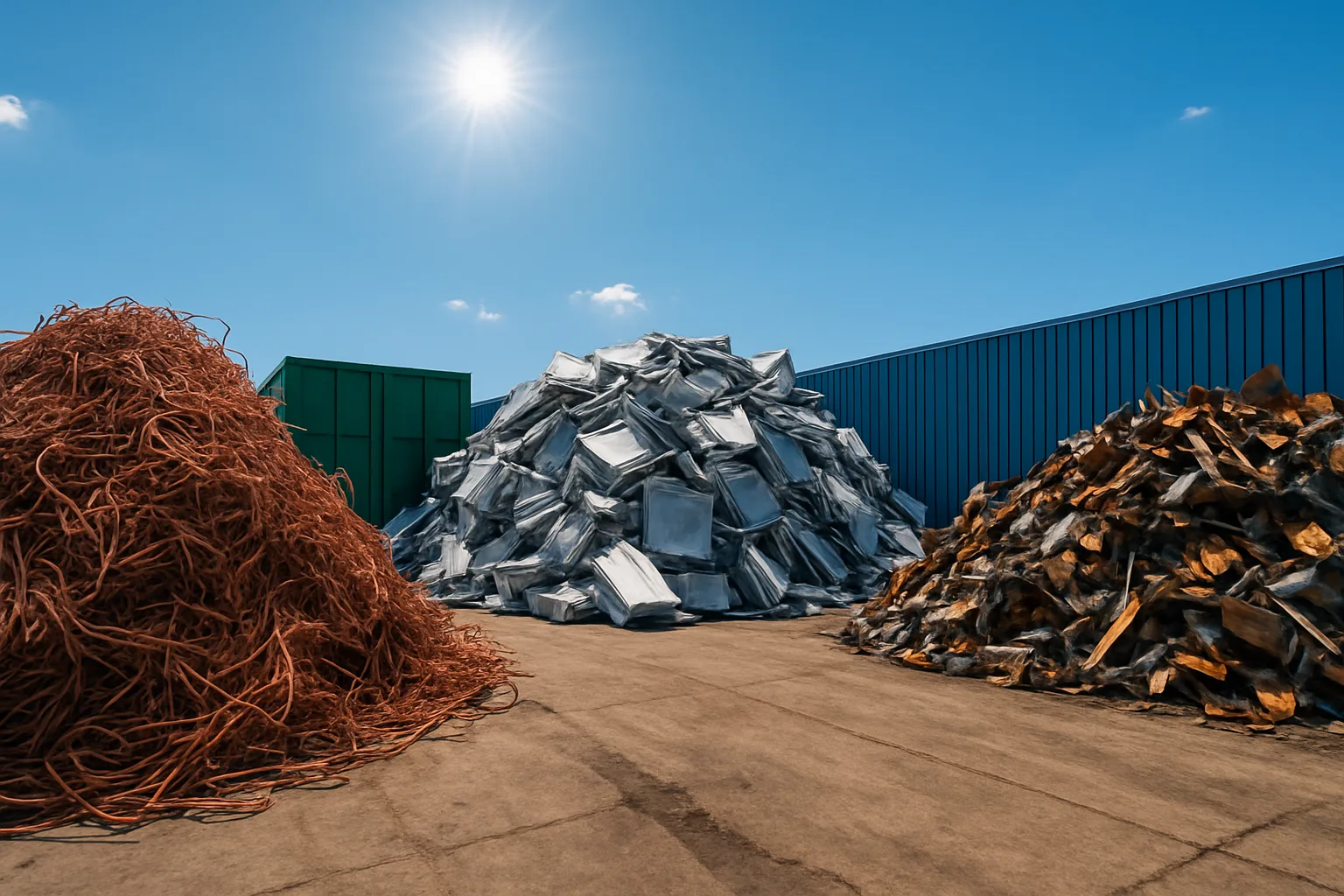
Why the Scale and the Grader Decide Your Payout — Before You Say a Word
You haul in a truck bed full of copper, drop it on the scale, and wait. What happens next — in the next 60 seconds — determines exactly how much money you walk out with. Most sellers focus on copper scrap price today, and fair enough. But the grade your yard assigns that load matters just as much as the price per kilogram. Get graded down, and you've already lost money before negotiations even start.
Understanding how yards weigh and grade your material isn't insider knowledge reserved for industry veterans. It's practical information that every seller in Ontario — whether you're clearing out a job site in Markham or running a mid-size recycling operation — should know cold.
How Recycling Yards Weigh Your Scrap Metal
Most commercial yards use a certified truck scale — also called a weigh bridge — to weigh full loads. You drive in, get a gross weight. You drop your load, drive out empty, and get a tare weight. The difference is your net weight. That number goes on your ticket, and that ticket is the basis of your payout.
For smaller loads, yards use floor scales or bench scales. These are typically calibrated regularly and certified under Measurement Canada standards. If a scale is out of certification, a legitimate yard won't use it for commercial transactions. You have the right to ask when a scale was last calibrated — any reputable operation will tell you.
A few practical things to keep in mind at the scale:
- Wet material weighs more. Rain-soaked copper wire or aluminum sheet will read heavier than dry material — but most yards will account for moisture, especially on large loads. Don't count on getting paid for water weight.
- Mixed loads get sorted before final pricing. If you bring in a mix of copper, aluminum, and steel together, the yard will sort it before pricing each grade separately.
- Containers and pallets count unless stripped. If your copper is on a steel pallet, that pallet weight comes off. Come prepared — strip pallets before you arrive if you can.
- Ticket accuracy matters. Always read your weight ticket before leaving the scale. Errors happen, and they're much easier to correct before you've driven away.
Newer yards — especially those integrated with platforms like SMASH Recycling — are moving toward digital weight capture tied directly to inventory records. That means your weight, grade, and lot number link up automatically, reducing manual entry errors and creating a clean paper trail from intake to auction.
How Grading Works — and Why It Directly Impacts Your Copper Scrap Price Today
Grading is where most sellers lose money they didn't know they had. The grade assigned to your material determines the price multiplier applied to your weight. A higher grade means more money per kilogram. A lower grade — or a downgrade — means less, sometimes significantly less.
Grading standards in North America largely follow the Institute of Scrap Recycling Industries (ISRI) Scrap Specifications Circular, which defines grades for hundreds of material types. Yards may use their own shorthand, but the underlying logic tracks ISRI definitions closely. Here's how it plays out on common non-ferrous metals:
Copper Grades
- Bare bright copper (#1 Bare Bright): Clean, uncoated, unalloyed copper wire, minimum 1/16" diameter. No solder, no insulation, no oxidation. Top dollar.
- #1 Copper: Clean copper pipe, bus bar, clippings. May have light oxidation. Still strong pricing.
- #2 Copper: Copper with solder, paint, or minor contamination. Noticeably lower price per kilogram than #1.
- Insulated copper wire (ICW): Priced based on estimated copper recovery percentage. A thick-jacketed wire might be 65% copper by weight; thin communications wire might be 30%. The yard estimates recovery, and that estimate drives your price.
Aluminum Grades
- Clean cast aluminum: Engine blocks, transmission housings, no steel inserts or iron contamination.
- Aluminum extrusion (6061/6063): Window frames, door frames, clean extruded stock.
- Mixed/contaminated aluminum: Sheet with paint, clips, rivets, or attached steel. Lower recovery, lower price.
The gap between the best and worst grade for the same metal can be substantial. On copper alone, the spread between bare bright and #2 copper can be significant per kilogram — and on a large load, that difference adds up fast. Knowing the copper scrap price today per kg at your local yard only matters if you also know what grade you're bringing in.
If you're in Markham or anywhere across Ontario, check today's Canadian scrap metal prices before you load your truck. Knowing current grades and rates puts you in a stronger position at the gate.
What Yards Look for When They Grade Your Load — scrap metal recycling Markham context
Graders at recycling yards aren't making random calls. They're evaluating specific contamination factors that affect downstream processing and refinery recovery rates. In a competitive market — including scrap metal recycling in Markham and across the Greater Toronto Area — yards that process cleaner material can offer more consistent pricing because their downstream buyers pay premiums for clean feedstock.
Here's what a grader is actually assessing:
- Attached ferrous metal: Steel bolts in aluminum, iron fittings on copper pipe — all of it reduces grade. Bring a magnet to pre-sort before arrival.
- Insulation and coatings: Paint, rubber, plastic jacketing — all contamination that reduces copper or aluminum purity at the processor.
- Solder and fittings: Soldered copper joints push #1 copper down to #2. Strip fittings where practical.
- Oxidation and corrosion: Heavy oxidation on copper reduces recovery. It won't disqualify a load, but it will affect grade.
- Mixed alloys: Mixing aluminum alloys (cast with extrusion, for example) forces a downgrade to mixed aluminum. Keep alloy types separated if volume justifies it.
Experienced sellers in Ontario sort at the source — job site, demolition site, or shop floor — rather than at the yard. The more pre-sorted your material arrives, the faster the intake process and the harder it is for a yard to justify a downgrade.
Photo documentation of your load before transport is increasingly common among commercial sellers. Platforms like SMASH Recycling build photo documentation and serial tracking into the inventory workflow — creating a documented record of material condition that supports your grade claim and gives downstream buyers more confidence in what they're bidding on.
How to Prepare Your Load to Get the Best Scrap Metal Prices in Toronto and Markham
You can't change the commodity market. But you can control how your material presents at the scale. These steps are straightforward, and they consistently result in better grades and stronger payouts — whether you're checking for the best scrap metal prices Toronto buyers are offering, or shopping yards in Markham and across Ontario.
- Sort by metal type before you load. Copper in one bin, aluminum in another. Never mix ferrous and non-ferrous in the same container.
- Strip insulation where it's practical. High-volume wire strippers are inexpensive and pay for themselves quickly on large loads of copper wire.
- Remove steel attachments. Bolts, brackets, fittings — pull them before transport. Bring a magnet and do a quick sweep.
- Let wet material dry if possible. Especially important for loose material like shredded wire or turnings.
- Document with photos. Before loading, photograph the material. It establishes condition at origin, which matters if you're selling through an auction platform where remote buyers are bidding on your load.
- Know your grade before you arrive. Review ISRI definitions or call ahead. Arriving informed means you can push back on a downgrade with specific language rather than just a gut feeling.
Want to know what buyers are actually paying right now? Find current Canadian scrap metal prices and benchmark your expected payout before the scale ticket prints.
Why Transparency in Weighing and Grading Matters More Than Ever
The old model — one buyer, one phone call, one offer with no explanation — is a system that benefits the buyer. When you don't know how a grade decision was made, you can't challenge it. When you don't know what competitive buyers would have paid, you have no leverage.
That's exactly the problem platforms like SMASH were built to address. When your load is documented, graded, and listed in a competitive auction format with vetted buyers, the pricing process becomes transparent. More buyers means better price discovery. Documented inventory gives buyers more confidence — and confident buyers bid higher.
The scrap metal market across Ontario is active, with processing facilities and buyers across the Greater Toronto Area — including Markham — consistently buying non-ferrous material. But activity doesn't automatically mean you're getting the best price. Competition does. To read the latest Canadian scrap metal market updates and stay current on what's moving and at what grades, bookmark a reliable pricing resource and check it before every major sale.
If you're selling anything larger than a pickup load — or selling regularly — it's worth understanding that the weighing and grading process is where your payout gets set. Every kilogram you document accurately, every grade you protect through proper preparation, and every buyer you expose your load to through a competitive platform is money you keep instead of leaving at the gate.
The scrap metal prices today matter. But so does the process that turns those prices into your actual payout. Now you know how it works — use it.
Before your next sale, check today's Canadian scrap metal prices and get current rates at scrap-metal-prices.ca — so you walk in informed and walk out with what your material is actually worth.
Follow SMASH on LinkedIn for ongoing scrap metal market insights, pricing trends, and industry updates across Canada.
Frequently Asked Questions
Q: How does a recycling yard determine the copper scrap price today per kg?
Yards set copper prices based on current commodity market rates — typically referencing the London Metal Exchange (LME) or COMEX copper futures — adjusted for their processing costs, local competition, and the grade of material you bring in. The price you see quoted for copper scrap today per kg is usually for a specific grade like bare bright or #1 copper. Lower grades receive a lower rate per kilogram.
Q: What's the difference between #1 and #2 copper at a scrap yard?
#1 copper is clean, uncontaminated copper pipe, bar, or clippings with no solder, paint, or significant oxidation. #2 copper includes soldered fittings, painted pipe, or mildly contaminated material. The price difference between the two grades can be meaningful — especially on large loads — so stripping fittings and cleaning your material before delivery is worth the effort.
Q: Can I get a better price by shopping multiple yards in Markham and the GTA?
Yes. Yard prices for the same grade of copper or aluminum can vary across facilities in Markham and the broader Greater Toronto Area. Calling ahead or checking current rates online before you load your truck helps you identify which yard is paying the most on a given day. Platforms like SMASH take this further by bringing multiple vetted buyers into a competitive auction format — which can reveal stronger market pricing than a single-yard quote.
Q: How do I know if a yard's scale is accurate?
In Ontario, commercial scales used for trade must be certified under Measurement Canada regulations and calibrated on a regular schedule. You have the right to ask a yard when their scale was last certified. Reputable operations will have current certification on file. Always read your weight ticket before leaving the yard — errors are much easier to dispute on the spot than after the fact.
Q: Does wet or dirty copper affect my payout at a scrap yard?
It can. Wet material weighs more, but most yards will account for moisture on larger loads — meaning you won't get paid for the added water weight. Dirty or oxidized copper may also be downgraded, reducing your price per kilogram. Where practical, let wet material dry and brush off heavy oxidation before transport to protect your grade.
Disclaimer: Scrap metal prices fluctuate daily based on commodity markets, grade, volume, and yard-specific factors. Always check current Canadian scrap metal prices before selling.