Catalytic Converter Recycling: What's Inside, What It's Worth, and Why the Price Keeps Moving
Your catalytic converter is worth more than you think — and probably a lot less than the guy on Facebook Marketplace is promising. That gap between expectation and reality is exactly why understanding how catalytic converter recycling actually works can save you from leaving serious money on the table. This week's market recap breaks it all down.
Cats are one of the most valuable scrap items you'll ever pull off a vehicle. They contain platinum group metals (PGMs) — platinum, palladium, and rhodium — in concentrations that make even a small unit worth real money. But the price isn't fixed, it's not simple, and it changes weekly. If you're selling cats in Dartmouth or anywhere else in Nova Scotia, here's what you need to know right now.
What's Actually Inside a Catalytic Converter
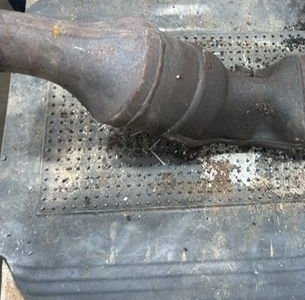
Strip away the steel shell and you'll find a ceramic or metallic honeycomb substrate coated with a thin layer of PGMs. These metals act as catalysts — they reduce harmful emissions without being consumed in the process. That's what makes them recoverable and recyclable at the end of a vehicle's life.
The three metals that drive value are:
- Platinum — used in diesel converters primarily; historically the most recognized PGM
- Palladium — dominant in gasoline converters; has seen significant price swings over the past several years
- Rhodium — used in small quantities but commands a high per-ounce price; responsible for some of the biggest spikes in cat values
The exact mix and quantity of PGMs depends on the vehicle make, model, engine size, and year of manufacture. A large-displacement truck or SUV cat will typically carry more PGM loading than a small sedan unit. That's why a Ford F-250 cat and a Honda Civic cat are priced completely differently at the yard — it's not arbitrary. It's chemistry.
Beyond PGMs, the steel shell itself has scrap value. It's a secondary consideration, but yards account for it in the overall weight and payout structure.
How the Recycling Process Works From Your Hands to the Refinery
When you drop off a catalytic converter at a yard, the journey to final payment involves several steps — and each step introduces a layer of pricing complexity that affects what you ultimately receive.
Here's the general flow:
- Collection — You bring cats to the yard. The yard identifies the unit using a serial number, make/model data, or a lookup tool. Proper identification matters. An unidentified or damaged unit gets a lower return because the buyer is taking on more uncertainty.
- Sorting and grading — Yards sort cats by type. Foil cats, ceramic cats, diesel cats, aftermarket cats — each category has a different value profile. Damaged, cracked, or tampered units (missing substrate) are worth significantly less.
- Sale to a processor — Yards aggregate cats and sell loads to specialist processors. These processors have the assay equipment to quantify PGM content precisely.
- Assay and settlement — The processor samples the material, determines actual PGM content, and settles payment based on current spot prices for platinum, palladium, and rhodium. This is where the real number gets calculated.
- Refining — The PGMs are extracted and re-enter the supply chain, often going back into new automotive converters or industrial applications.
What this process means for you as a seller: the price you get from a yard is an estimate based on expected PGM content and current market prices. Yards build in a margin to cover their risk and costs. The more accurately a unit is identified — and the more competitive the buying environment — the closer that yard offer gets to actual recovered value.
Why Catalytic Converter Prices Vary So Much
If you've ever called two different yards and gotten two completely different quotes for the same unit, you've experienced the core problem with cat pricing. The variance is real and it comes from several directions at once.
PGM spot prices move constantly. Platinum, palladium, and rhodium trade on global commodity markets. Prices shift with automotive production forecasts, mining supply disruptions, industrial demand, currency movements, and investor activity. A quote you got last Tuesday may not be valid this Tuesday. This is why checking current rates matters — not just for copper scrap prices, but across the entire non-ferrous and specialty metals market. You can check today's Canadian scrap metal prices to get a current baseline before you walk into any yard.
Unit identification drives value. A yard that correctly identifies your unit can offer a price tied to known PGM data. A yard that guesses — or doesn't have access to good lookup tools — will price conservatively to protect themselves. If you have a serial number, provide it. If the shell is stamped, point that out. Documentation isn't just paperwork. It's money.
Buyer competition (or lack of it) affects your payout. This is the factor most sellers never think about. If you're calling one yard and accepting their number, you're not discovering the market — you're accepting whatever they offer. More buyers in the conversation means better price discovery. It's the same principle that drives the auction format SMASH uses for scrap loads. Competition reveals value that a single phone call hides.
Aftermarket versus OEM units. Aftermarket replacement converters typically contain lower PGM loadings than original equipment units. Yards know this and price accordingly. If you have a mix of OEM and aftermarket cats in a load, don't expect the OEM price across the board.
Condition matters more than people expect. A cracked or hollowed-out substrate — whether from age or tampering — means the PGMs aren't there to recover. Yards discount aggressively on damaged units. Inspect what you're selling. Know what you have.
Copper Scrap Prices in Dartmouth and the Weekly Market Picture
Catalytic converters get the headlines, but copper is still the backbone of non-ferrous scrap value for most yards and collectors. Copper scrap prices Dartmouth are influenced by the same global drivers — LME copper spot, North American demand from construction and electrical manufacturing, and the strength of the Canadian dollar against USD. These factors don't pause for weekends.
As of this week, the copper market remains tied closely to infrastructure and electrification demand signals out of the U.S. and Asia. For sellers in Dartmouth and across Nova Scotia, that translates to real-time price movement you should be tracking before you load a truck. To find current Canadian scrap metal prices across copper grades, aluminum, and specialty metals, bookmark scrap-metal-prices.ca and check it before every significant sale.
For those also watching scrap metal prices Ontario — the provincial market there often moves slightly ahead of Atlantic Canada given higher industrial throughput and buyer density. If Ontario prices are climbing, Nova Scotia typically follows within a short window. Use that signal to time your larger loads when possible.
Grades to know for copper this week:
- Bare bright copper — highest value, clean uncoated wire
- #1 copper — clean pipe and solid copper, minimal oxidation
- #2 copper — dirty or coated copper, stripped wire with insulation traces
- Copper turnings / mixed copper — lower grades, often contaminated with other metals
Knowing your grade before you show up to the yard means you're negotiating from a position of information, not hope.
Scrap Metal Inventory Management — Why Documentation Pays
Whether you're running a full scrap operation or just clearing a shop, scrap metal inventory management separates the sellers who get fair value from the ones who get whatever the yard decides to offer.
For catalytic converters specifically, documentation is non-negotiable if you want top dollar. Serial numbers, VIN data from the donor vehicle, photo documentation of the substrate condition — these aren't bureaucratic requirements. They're the evidence that justifies a higher price. A buyer facing a documented load with clean photos and accurate serial records has less uncertainty to price in. Less uncertainty means less discount.
Platforms like SMASH make it easier to find the best price for your scrap in Canada by connecting documented loads with vetted buyers who compete for them. The inventory tool built into SMASH supports photo uploads, serial tracking, and BOL documentation — the kind of detail that turns a generic "cat load" into a precisely described, more valuable asset. No subscription fees. No guessing. The platform wins when the seller wins.
If you're managing any volume of cats, cores, or non-ferrous material, building an inventory habit now pays dividends every time you go to sell. Even a basic spreadsheet with unit counts, serial numbers, and condition notes puts you ahead of most sellers walking in cold.
Finding the Right Yard and Getting the Right Price
If you've ever typed "scrap yard near me open" at 7 AM trying to figure out where to take a load before the day gets away from you, you know the frustration. Hours vary. Buyer interest varies. And not every yard buys cats or non-ferrous at competitive rates.
In Dartmouth and the broader Nova Scotia market, the yards that specialize in non-ferrous and handle cats regularly will give you better identification and better pricing than a general yard treating cats as an afterthought. Ask upfront whether they have a lookup system for cats, whether they buy OEM and aftermarket separately, and what the current turnaround looks like for payment.
Beyond the local yard, bringing your material into a competitive buying environment is worth considering for larger loads. SMASH connects sellers across North America with vetted buyers who bid on documented loads — no cold calls, no single-buyer guessing. If you want to understand how that model works for your operation, email jeff@smashscrap.com directly.
To stay current on what the market is doing week to week, read the latest Canadian scrap metal market updates on the blog — it's one of the fastest ways to stay ahead of price movements without spending hours tracking commodity feeds.
Prices move fast. Cats, copper, aluminum — none of it waits. The sellers who check rates regularly, document their material, and bring multiple buyers into the conversation consistently do better than those who don't. That's not a sales pitch. That's just how commodity markets work.
Frequently Asked Questions
Q: What determines catalytic converter scrap prices in Dartmouth?
The main factors are PGM spot prices (platinum, palladium, rhodium), the specific vehicle make and model the unit came from, its condition, and whether it's OEM or aftermarket. Local yard competition and market demand in Dartmouth and Nova Scotia also influence what buyers will offer on any given week.
Q: How do copper scrap prices in Dartmouth compare to other Canadian cities?
Copper scrap prices Dartmouth generally track closely with national Canadian averages, though there can be slight regional variation based on buyer concentration and transportation costs. Markets like Ontario with higher industrial activity may see faster movement in pricing, but the LME spot price sets the baseline for the whole country.
Q: Why did two yards give me different prices for the same catalytic converter?
Different identification tools, different buyer relationships, and different risk tolerance all produce different offers. One yard may have precise serial lookup data while another is estimating. Bringing your load to a competitive environment — where multiple buyers see it — tends to close that gap in your favour.
Q: Are damaged or cracked catalytic converters worth anything?
Yes, but significantly less than intact units. If the ceramic substrate is cracked, hollowed, or contaminated, the recoverable PGM content drops sharply. Yards account for this in their offers. Always disclose condition upfront — misrepresenting a damaged cat creates problems at settlement.
Q: How do I find current scrap metal prices before I go to a yard in Nova Scotia?
Check scrap-metal-prices.ca for current Canadian scrap metal prices across copper grades, aluminum, and specialty metals before you load up. Knowing the going rate before you walk in gives you a reference point for the offer you receive — and tells you whether it's worth shopping around.
Prices on cats, copper, and everything else in the yard shift week to week — sometimes day to day. Stay current, document your material, and put more buyers in the room. Head to scrap-metal-prices.ca to see what the market looks like right now.
Follow SMASH on LinkedIn for weekly scrap metal market insights, industry updates, and tips on getting better value from your loads across Canada.
```