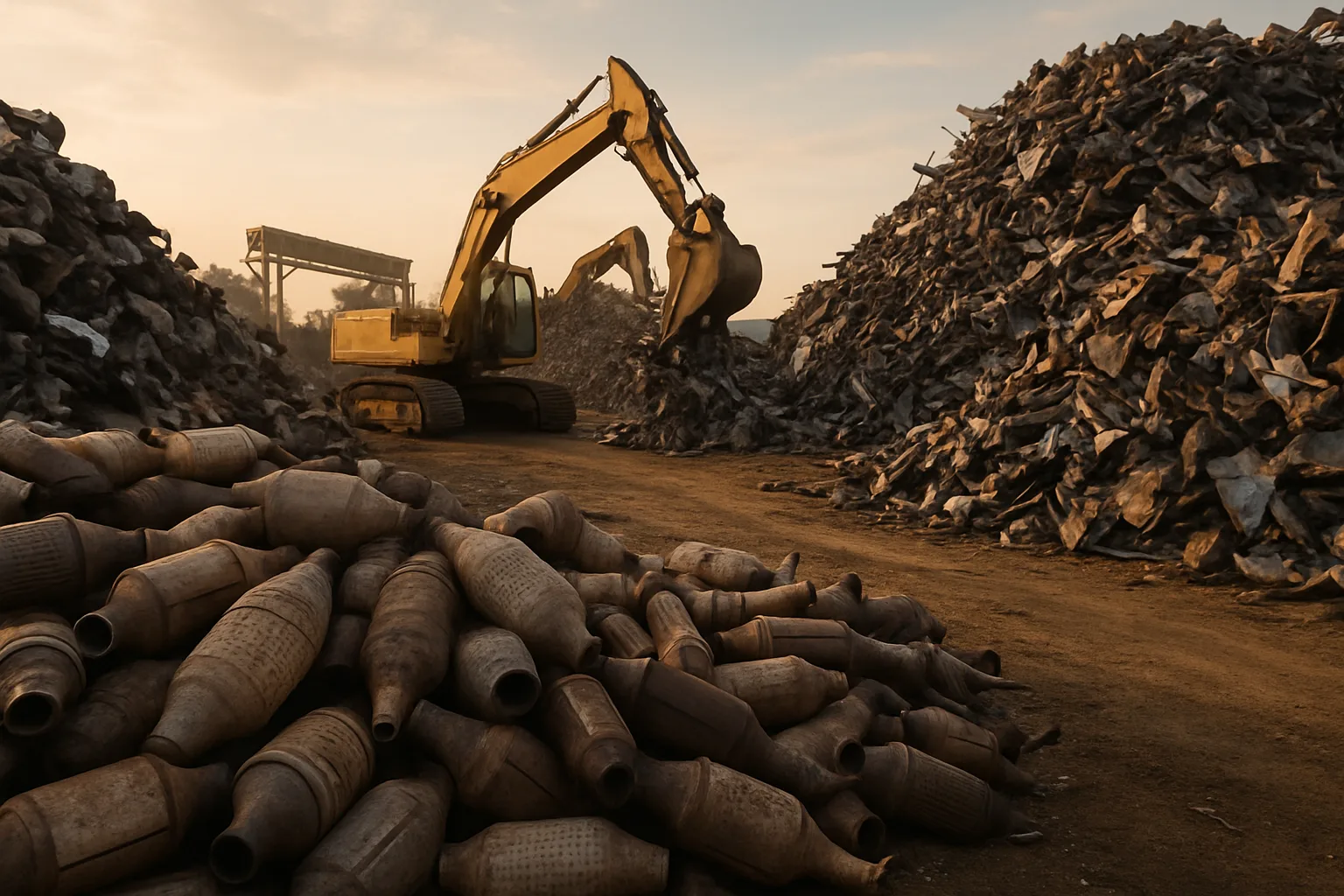
What's Actually Inside a Catalytic Converter — and Why Scrap Yards Care So Much
Most people know catalytic converters are worth money. Few know why. The short answer: platinum, palladium, and rhodium. These are precious metals mined in tiny quantities from some of the most remote places on earth — and your old converter contains all three. That's why a single cat can be worth anywhere from $50 to several hundred dollars depending on what's inside it.
If you're trying to sell scrap metal in Regina and you've got a pile of cats sitting in the yard, understanding how this pricing works isn't optional — it's money left on the table. Prices for catalytic converters swing hard based on global precious metal markets, vehicle type, and converter condition. Let's break it all down.
How Catalytic Converter Recycling Actually Works
The recycling process starts when a converter is removed from a vehicle — either during a routine repair or at end-of-life. From there, it moves to a collector or scrap yard, where it gets sorted, catalogued, and eventually processed. Most scrap yards in Canada don't process cats in-house. They aggregate them and sell to a refinery or processor that has the equipment to extract the platinum group metals (PGMs).
Here's the basic flow:
- Collection: Converters come off vehicles at repair shops, salvage yards, or during car crushing.
- Sorting: Converters are identified by type — OEM vs. aftermarket, foreign vs. domestic, large vs. small substrate.
- Decanning: The outer steel shell is cut open to access the ceramic or metallic substrate inside.
- Crushing and milling: The substrate is ground into a fine powder called "catalyst material."
- Assaying: The powder is tested to measure the exact concentration of platinum, palladium, and rhodium.
- Smelting and refining: The PGMs are extracted and separated for resale into manufacturing markets.
This process takes time — which is why catalytic converter payouts aren't instant. Refiners need to run assays before they can commit to a final price. That's also why platforms like smashrecycling.ca help yards get competitive bids on their cat inventory rather than accepting whatever a single buyer quotes them over the phone.
Why Catalytic Converter Scrap Prices Vary So Much
This is the question every yard operator and scrapper in Saskatchewan eventually asks. You pull two cats off nearly identical vehicles and one is worth three times the other. Why?
Several factors drive converter value:
- Vehicle make and model: Trucks, SUVs, and luxury vehicles typically carry larger substrates with higher PGM loading. A pickup converter often outvalues a compact car converter significantly.
- OEM vs. aftermarket: Original equipment manufacturers load their converters with more precious metal. Aftermarket replacements use less. This directly hits the scrap value.
- Converter condition: Cracked, melted, or missing substrates drastically reduce value. A "rattler" — a converter where the substrate has broken loose — often pays out at a fraction of a healthy unit.
- Live precious metal prices: Platinum, palladium, and rhodium trade on global commodity markets. When rhodium spikes, cat prices spike. When palladium drops, payouts follow.
- Buyer competition: If you're calling one buyer, you're getting one number. That number may or may not reflect actual market value. More buyers in the process means better price discovery.
Rhodium, in particular, has been one of the most volatile metals on the planet over the past decade. It hit historic highs and then corrected sharply. Anyone selling cats without tracking PGM prices is essentially flying blind. You can check today's Canadian scrap metal prices to get a clearer read on where the market sits before you move inventory.
Scrap Metal Prices Today in Regina: What to Know Before You Sell
Catalytic converters don't exist in isolation. If you're a yard operator or a scrapper in Regina, you're probably moving multiple materials — aluminum, copper, steel, and cats — in the same week. Understanding how each of these markets behaves independently helps you make smarter decisions about when to hold and when to sell.
Aluminum scrap value per kg has held relatively steady through mid-2026, supported by ongoing demand from automotive manufacturing and construction sectors. Clean aluminum — wheels, extrusions, sheet — continues to attract strong bids. Contaminated or painted material pulls lower numbers, so sorting matters. If you're tracking aluminum scrap price today, know that regional premiums can vary. A yard in Regina may see slightly different numbers than one in Toronto or Vancouver due to freight costs and local buyer density.
Copper remains one of the most reliable earners in the scrap mix. Bare bright copper commands premium pricing, while insulated wire, motors, and #2 copper all trade at varying discounts to the base price. If you want to get the best return on non-ferrous loads, documentation and sorting are your two biggest levers. Buyers pay more when they know exactly what they're getting.
For anyone selling or buying across multiple markets — whether that's scrap metal in Toronto or loads moving out of Regina — price transparency is the real competitive edge. Read the latest Canadian scrap metal market updates to stay current on how regional markets are behaving this week.
How to Get a Fair Price on Catalytic Converters in Saskatchewan
The old way of selling cats: one phone call, one quote, take it or leave it. That model works for the buyer — not for you. In a market where converter values can shift week to week based on PGM prices, accepting a static quote without context is a gamble you don't have to take.
Here's how to approach it smarter:
- Document your inventory before you sell. Photo documentation, serial numbers where available, VIN-based lookups — all of this helps buyers price accurately and helps you dispute low offers with evidence.
- Know your converter types. Group OEM separately from aftermarket. Separate foreign (Asian makes) from domestic. Buyers sort this way anyway — you'll get cleaner bids if you do it first.
- Track the PGM market. You don't need to be a commodities trader. But checking whether platinum or palladium has moved 10% in the past month tells you whether to push for a better number or lock in quickly.
- Use competition to your advantage. Multiple buyers bidding on the same load is how price discovery actually works. One buyer quoting in isolation isn't a market — it's a guess that favors them.
SMASH is built specifically for this. The platform connects sellers with vetted buyers across North America, runs competitive auctions on loads, and handles auto-invoicing so you're not chasing paperwork after the sale. No subscription fees. SMASH only earns when the seller does. For Regina scrap metal services and pricing resources specific to your area, start there.
Why Transparency Is the Biggest Factor in Scrap Metal Pricing
Here's something most scrappers figure out eventually: price is rarely the only variable. The difference between a good sale and a great sale often comes down to how much information the buyer has — and how much trust exists in the transaction. Buyers price risk into their bids. If they're unsure what's in a load, they discount it. If they can see clean documentation, accurate weights, and consistent inventory records, they bid more aggressively.
This is especially true for catalytic converters, where the actual value isn't visible to the naked eye. A well-documented load of cats — with vehicle source records, condition notes, and photos — is fundamentally different from an unsorted pile. The first gets better bids. The second gets conservative ones.
Platforms like SMASH help solve this by building documentation into the selling process from the start. Inventory tools, photo uploads, serial tracking, and VIN lookup give buyers confidence. More buyer confidence means more competitive bidding. More competitive bidding means better price discovery for the seller. It's a straightforward mechanism — but it only works if you actually use the tools available to you.
If you want to find current Canadian scrap metal prices across all categories — cats, copper, aluminum, steel — bookmark scrap-metal-prices.ca as a regular reference point before moving any significant inventory.
Disclaimer: All scrap metal prices — including catalytic converter values and aluminum scrap price today — fluctuate based on global commodity markets, local supply and demand, and individual buyer assessments. Always verify current rates before selling. This article reflects general market context as of July 2026 and does not constitute financial or pricing advice.
Frequently Asked Questions
Q: How do I know if my catalytic converter is worth scrapping in Regina?
Most catalytic converters have some scrap value — even older or damaged ones. The key factors are vehicle type, converter condition, and current PGM prices. OEM converters from trucks and SUVs typically pay more than small aftermarket units. Get multiple quotes and check current market rates before committing to a sale.
Q: Why does the price for catalytic converters change so often?
Converter prices are directly tied to platinum, palladium, and rhodium markets — three of the most volatile precious metals traded globally. When these metals move, cat prices move with them. Checking scrap metal prices today before you sell helps you catch favorable windows rather than selling at the bottom of a cycle.
Q: Can I sell scrap metal in Regina without going through a middleman?
Yes — and you should. Working directly with vetted buyers through an auction-based platform cuts out guesswork and single-buyer pricing. SMASH connects yards and sellers with multiple buyers competing for the same load, which is how you get a number that actually reflects the market rather than one buyer's margin.
Q: What affects aluminum scrap value per kg in Saskatchewan?
Material grade is the biggest driver — clean aluminum (bare wheels, extrusions) pays significantly more than painted, coated, or mixed aluminum. Beyond that, global aluminum prices, local freight costs, and buyer demand all play a role. Sorting your material before selling almost always improves the per-kg return.
Q: Is it worth scrapping a catalytic converter separately from the rest of a car?
In most cases, yes — especially for OEM converters from larger vehicles. Removing and selling the converter separately before crushing a vehicle can add meaningful value compared to lumping everything into a car body price. Just make sure you're working with a buyer who prices cats by type and condition, not by weight alone.
If you're moving scrap this week — cats, aluminum, copper, or mixed loads — take two minutes and check today's Canadian scrap metal prices at scrap-metal-prices.ca. Knowing where the market sits before you call a buyer is always the right move.
Follow SMASH on LinkedIn at linkedin.com/company/scrap-metal-auction-sales-hub for weekly scrap metal market updates, industry insights, and pricing context across North America.
```