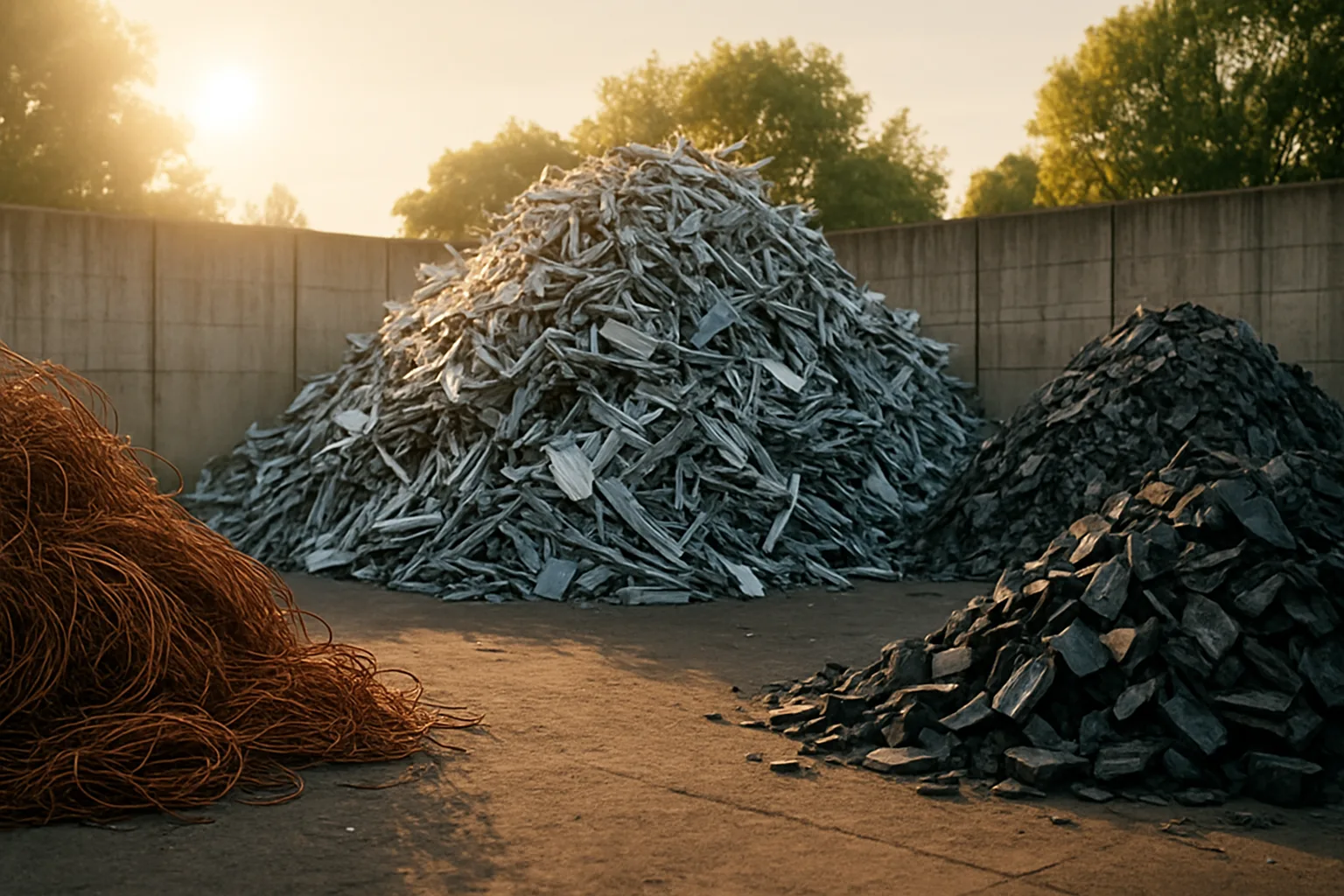
Most scrap metal sellers walk into a yard without knowing if they're holding #1 copper or contaminated wire — and that gap costs them real money. If you're sorting through a pile of copper and aluminum in Burnaby right now, this guide will help you grade it right, time your sale, and understand what drives price swings in 2026.
Why Copper and Aluminum Scrap Prices Move Differently
Copper and aluminum don't follow the same market logic. Copper tracks global supply tightly — mine output from Chile and the Democratic Republic of Congo, energy costs for smelting, and EV manufacturing demand all pull the price in different directions simultaneously. Aluminum responds faster to domestic energy prices and recycled content demand from auto and packaging manufacturers across North America.
In 2026, both metals are seeing sustained industrial demand, but volatility hasn't gone away. Copper has stayed elevated due to grid infrastructure buildout and continued electrification projects. Aluminum remains in strong demand for lightweight vehicle components and beverage packaging, keeping secondary aluminum prices competitive for sellers with clean, sorted loads.
Understanding this distinction matters before you load a truck. A mixed, unsorted pile gets priced to the lowest common denominator. A sorted, graded load gives buyers confidence — and confidence translates into better price discovery at auction.
Copper Scrap Grading: What Each Grade Actually Means
Copper grading isn't complicated once you know the categories. Yards and buyers across British Columbia use industry-standard grades to set purchase prices. The spread between grades can be significant, so misidentifying your copper is an expensive mistake.
Here's a breakdown of the most common copper grades:
- #1 Bare Bright Copper: The top grade. Clean, uncoated, unalloyed copper wire or bus bar, minimum 1/16" diameter. No solder, no insulation, no paint. Bare bright commands the highest price per pound.
- #1 Copper (Heavy Copper): Clean copper pipe, bus bars, and wire free of excessive oxidation, solder, paint, or fittings. Slight tarnish is acceptable. This is the grade most plumbing and electrical teardown produces.
- #2 Copper: Includes copper with solder, paint, light coatings, or minor contamination. Old plumbing with fittings still attached typically falls here. Price is noticeably lower than #1.
- #3 Copper / Copper Breakage: Heavily contaminated, alloyed, or dirty copper. Mixing boards, corroded material, or copper bonded to other metals. Lowest copper price tier.
- Insulated Copper Wire (ICW): Priced by the percentage of copper recovery. A thick single-strand wire in good insulation recovers more copper per pound than multi-strand telephone cable. Yards factor the stripping cost into their offer.
The practical takeaway: strip your wire before you go if you can. Even removing insulation from heavy gauge wire and presenting it as #1 bare bright versus insulated copper wire can meaningfully change what you walk away with. Every yard in Burnaby and across British Columbia applies these grades, so showing up with pre-sorted, properly graded copper gives you a real advantage in any negotiation or auction setting.
Aluminum Scrap Price Today: Grades, Forms, and What Buyers Want
The aluminum scrap price today depends heavily on form and alloy. Aluminum isn't one commodity — it's dozens of alloys that recycle into very different end products. A buyer making structural extrusions doesn't want the same aluminum as a diecaster making engine housings.
Key aluminum grades you're likely to encounter:
- Aluminum Extrusion (6061/6063): Window frames, door frames, heat sinks. Clean and sorted, this is one of the higher-value aluminum grades. Burnaby's construction and renovation sectors generate a steady supply of this material.
- Cast Aluminum: Engine blocks, transmission housings, lawn equipment bodies. Heavier and dense. Contamination from iron inserts or steel bolts drops the price.
- Painted/Coated Aluminum: Siding, gutters, automotive trim. Lower recovery rate due to coating removal costs. Price reflects that.
- Aluminum Cans (UBC — Used Beverage Cans): Highly recyclable, tightly graded. UBC pricing tracks the LME aluminum price closely. Clean, dry, and loose gets better rates than crushed or contaminated bales.
- Sheet Aluminum: Roofing, HVAC panels, food service equipment. Varies by alloy — some sheet is higher-grade 3003 or 5052, some is painted or laminated.
- Turnings and Borings: Machine shop waste. Priced with a significant discount because of oil, moisture, and mixed alloy content. Dry and oil-free turnings recover better rates.
Sorting aluminum by type before you sell isn't extra work — it's money you're leaving on the table if you skip it. Platforms like SMASH make it straightforward to document your aluminum by grade with photos and inventory tools, so buyers bid on what they're actually getting. That transparency is exactly what competitive price discovery requires. You can also find current Canadian scrap metal prices before you walk into any yard or listing a load on an auction platform.
What's Driving Copper and Aluminum Prices in Mid-2026
The market conditions in July 2026 reflect a few converging factors that anyone selling scrap in British Columbia should understand. This isn't generic market noise — these drivers are actively moving the numbers yards quote you every week.
Copper price drivers right now:
- Grid modernization spending in the U.S. and Canada continues to absorb primary and secondary copper at elevated rates.
- EV production ramp-up demands copper for motors, wiring, and charging infrastructure — that demand hasn't peaked.
- Global mine supply constraints keep the floor under copper prices elevated versus historical averages.
- The Canadian dollar's position against the USD affects what domestic buyers can pay for secondary copper since LME pricing is USD-denominated.
Aluminum price drivers right now:
- Automotive lightweighting continues to push demand for high-quality secondary aluminum alloys.
- Packaging manufacturers want post-consumer aluminum with verified contamination levels — clean UBC is in demand.
- Energy cost volatility affects primary aluminum smelting economics, which keeps secondary aluminum competitive by comparison.
- Construction slowdowns in some regions have softened extrusion demand slightly, affecting scrap aluminum extrusion premiums.
To stay current on these shifts, read the latest Canadian scrap metal market updates — the market can move in a week, and last month's price is already old data.
Best Scrap Metal Prices in Burnaby: How to Actually Get Them
Getting the best scrap metal prices in Burnaby isn't about finding a different yard — it's about showing up with better material and more leverage. Most sellers in British Columbia are still working the old model: one call, one price, take it or leave it. That's not a negotiation. That's a single buyer setting your number for you.
Here's how sellers who consistently get stronger returns approach it:
- Sort before you sell. Mixed loads get mixed (lower) prices. Separate copper by grade, separate aluminum by type, keep ferrous and non-ferrous apart.
- Document your inventory. Photos, weights, and descriptions give buyers enough information to bid confidently without hedging downward on price.
- Create competition. One buyer makes a market for you. Multiple vetted buyers competing for your load reveals what the load is actually worth. More buyers means better price discovery.
- Know your grades. If you can correctly identify #1 copper versus #2 copper before you arrive at the yard, you can push back when a grade gets downgraded at the scale.
- Time your sale. Copper and aluminum both have weekly and monthly fluctuations. Selling into strength rather than desperation makes a real difference over time.
SMASH runs vetted buyer auctions for scrap metal loads across North America, including British Columbia. The platform handles inventory documentation, photo uploads, and auto-invoicing — which means less paperwork for you and more confidence for buyers bidding on your material. No subscription fees. If you want to see how competitive auction format changes the conversation around a load of copper or aluminum, visit smashrecycling.ca and see how the platform works.
Burnaby sellers have access to a strong regional buyer network. Don't undercut yourself by skipping the step that creates competition. You can check today's Canadian scrap metal prices to anchor your expectations before you go anywhere.
How to Sell Scrap Metal for Cash Without Leaving Money Behind
Selling scrap metal for cash in Canada in 2026 is more structured than it was a decade ago. Most provinces have tightened transaction recordkeeping requirements — photo ID, vehicle plate records, and itemized receipts are standard at licensed yards. This isn't a barrier; it's actually what separates legitimate buyers from low-ball operations that don't care about material traceability.
For larger loads — anything where you're moving multiple grades, significant weight, or high-value non-ferrous material like copper — the auction model outperforms the walk-in model consistently. It's not about distrust of your local yard. It's about the math: competition reveals price. Selling to one buyer without knowing what other buyers would have paid is never the strongest position.
If you're sorting a major cleanout, an estate, or a commercial renovation teardown in the Burnaby area, take the extra hour to photograph, weigh, and grade your material before you sell. That documentation pays dividends whether you're selling to a local yard or listing on a platform like SMASH. Organized material with clear documentation closes faster and at better prices — that's true across every channel in the industry.
Frequently Asked Questions
Q: What is the aluminum scrap price today in Burnaby, British Columbia?
Aluminum scrap prices in Burnaby fluctuate based on grade, form, and current LME aluminum pricing. Extrusion aluminum, cast aluminum, and UBC cans are all priced differently. Check current rates at scrap-metal-prices.ca for up-to-date Canadian pricing rather than relying on last week's numbers. Prices can shift week to week based on market conditions.
Q: How is copper scrap graded in Canada?
Canadian yards use industry-standard grades: bare bright copper is the top tier, followed by #1 copper, #2 copper, and copper breakage at the low end. Insulated copper wire is graded separately based on estimated copper recovery percentage. Proper grading before you sell ensures you're not getting a blended-down price on premium material.
Q: Where can I find the best scrap metal prices in Burnaby?
The best scrap metal prices in Burnaby come from creating competition for your load, not just shopping yards one at a time. Sorting your material, documenting it properly, and using a platform like SMASH to reach vetted buyers gives you more price discovery than a single-yard walk-in. Check baseline pricing at scrap-metal-prices.ca before you sell.
Q: Does the grade of my copper really affect what I get paid?
Absolutely — the spread between bare bright copper and #2 copper can be substantial per pound. On a large load, that difference adds up fast. Stripping insulation, removing fittings, and keeping grades separated before you sell is one of the highest-return activities in scrap metal preparation.
Q: Is it worth sorting aluminum before selling scrap in British Columbia?
Yes. Mixed aluminum gets priced to the lowest-value alloy in the pile. Separating extrusion from cast from sheet aluminum, and keeping UBC cans separate, means each grade gets valued at its actual market rate. It takes more time upfront but consistently returns more per pound on your total load.
Before your next sale, take five minutes to check today's Canadian scrap metal prices at scrap-metal-prices.ca — knowing the current market rate for copper and aluminum puts you in a far stronger position at the scale. The information is free. Leaving money on the table because you didn't look it up isn't.
Disclaimer: Scrap metal prices fluctuate daily based on commodity markets, buyer demand, and material grade. Always verify current rates directly with buyers or at scrap-metal-prices.ca before selling.
Follow SMASH on LinkedIn for ongoing scrap metal market insights, pricing trends, and industry updates across North America.