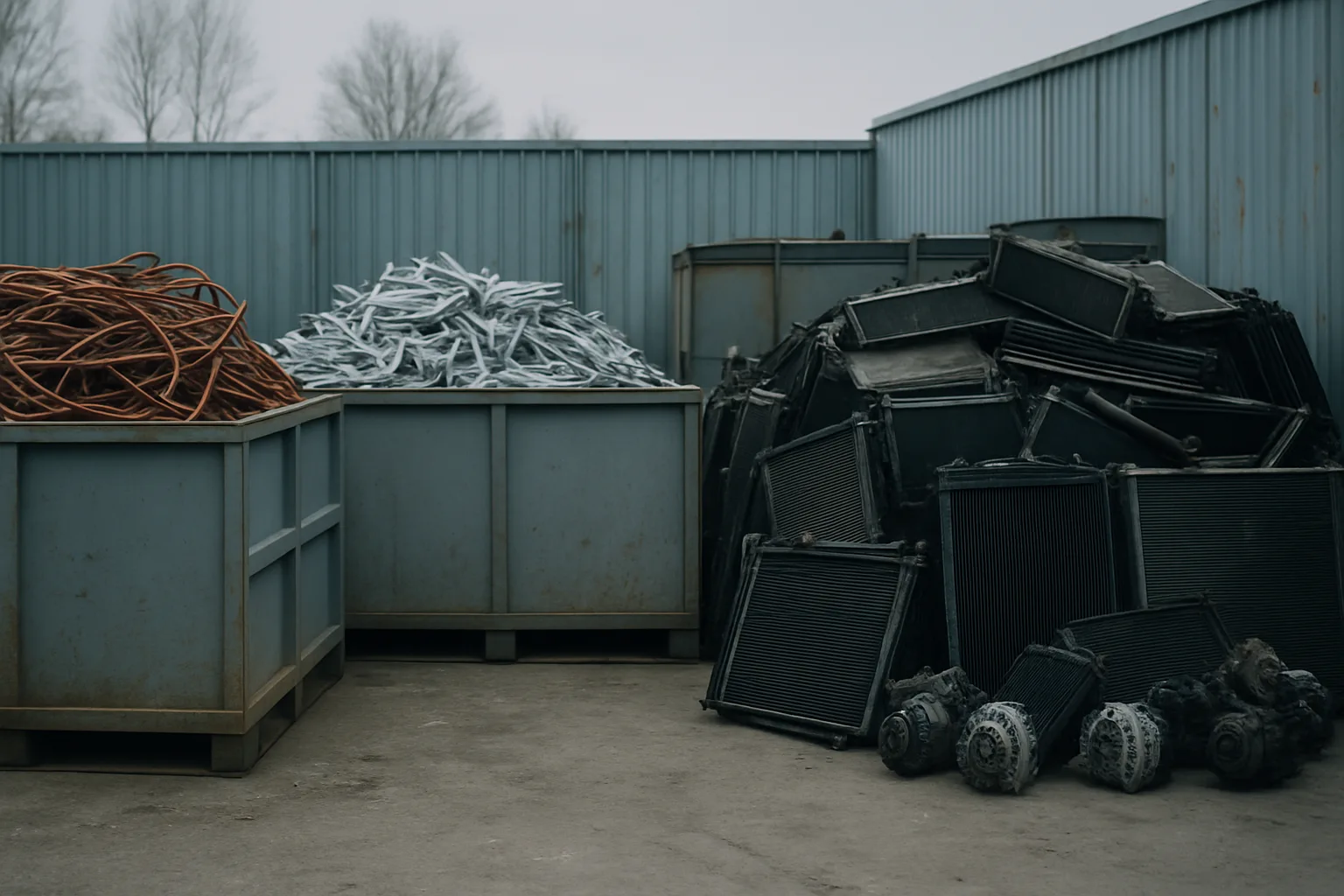
What Happens to Your Car's Radiator and Alternator After the Crusher?
Most people think scrapping a car means hauling a hunk of metal to a yard and walking away with cash. But what actually happens to that radiator sitting in your trunk, or the alternator you pulled last weekend? The answer matters more than you think — because aluminum scrap price today swings dramatically depending on how well-sorted and documented your material is when it hits the scale.
Auto parts recycling is one of the most nuanced corners of the scrap industry. Radiators, alternators, starters, and other vehicle components aren't single metals — they're assemblies. Mixed materials. And how yards break them down (or don't) determines what you get paid. If you're selling in Halifax or anywhere across Nova Scotia, understanding this process means more money in your pocket.
This is a story about how that process actually works — and how sellers who show up prepared walk out ahead.
Radiators: More Metal Than You Think
A standard automotive radiator looks like one piece. It isn't. Most radiators are built from an aluminum core — the thin fins and tubes that actually move coolant — with plastic end tanks on either side. Some older vehicles use copper-brass radiators, which are a different story entirely and worth significantly more per pound at current copper scrap prices in Canada.
When a radiator hits a recycling yard, the first decision is whether it gets weighed as-is or broken apart. Yards that process volume will often separate the aluminum core from the plastic tanks before weighing. Why? Because aluminum and plastic have completely different values, and selling a mixed unit means the buyer discounts the whole thing to account for the contamination. A clean aluminum radiator core fetches a better rate than an unprocessed radiator with end tanks still attached.
Here's what drives value in radiators:
- Material type: Aluminum vs. copper-brass — both valuable, priced differently
- Condition: Drained of fluids, free of oil contamination
- Separation: Core stripped from plastic and rubber components
- Volume: Selling in quantity improves your negotiating position
A single radiator from a passenger car might weigh 4 to 8 pounds of recoverable aluminum. Multiply that across a full load of cores from a dismantling operation and you're looking at real weight. Halifax-area sellers pulling apart salvage vehicles regularly deal in this kind of volume, and the difference between a prepared load and a sloppy one can add up fast. To check today's Canadian scrap metal prices on aluminum cores before you load up, do it — that five minutes of research changes your expectations and your conversation at the gate.
Alternators and Starters: The Copper Inside the Iron Shell
Alternators are where things get interesting for scrap sellers. On the outside, an alternator looks like a cast iron or aluminum housing — heavy, bulky, not obviously valuable. But inside that housing sits a copper winding. The rotor and stator coils are wound copper wire, and copper is consistently one of the highest-value metals in the scrap stream.
Most yards buy whole alternators at a flat rate — sometimes called "irony aluminum" or priced by unit depending on the operation. That rate accounts for the mixed material: aluminum or iron housing plus copper internals. Sellers who disassemble alternators and extract the copper windings separately can sometimes realize a better return, but it's labour-intensive and only makes sense at scale or when copper prices are running high.
Starters follow a similar pattern. Cast housing, copper windings, sometimes a small amount of steel gearing. The same logic applies: separation increases value, but the economics have to work for your volume and your time.
If you're working with a dismantler or salvage operation in Nova Scotia and you're moving significant quantities of alternators and starters, it's worth having a direct conversation with your buyer about whether they want whole units or broken-down components. The answer tells you a lot about their downstream processing capability — and it affects your rate. Platforms like SMASH let you compare scrap metal bids from Canadian buyers so you're not guessing what the market will bear for your specific mix of material.
Catalytic Converters: The High-Value Exception
No discussion of auto parts recycling is complete without addressing catalytic converters. Cats are in a category of their own. The housing is stainless steel — low value per pound. But inside the ceramic or metallic substrate sits platinum, palladium, and rhodium. Precious metals. And their prices don't track with the aluminum scrap price today or copper benchmarks — they move on their own market entirely.
The ability to sell catalytic converters online has changed how serious sellers operate. You're no longer locked into whatever your local yard offers on the day you walk in. Specialist buyers who process cats at volume pay more because they have the downstream relationships to recover those precious metals efficiently. Sellers in Halifax and across Nova Scotia who used to take a single price from a single buyer are now getting competitive offers by reaching multiple buyers at once.
Documentation matters here more than anywhere else in the scrap stream. Serial numbers on catalytic converters, vehicle VIN information, and photo documentation protect sellers and buyers alike. Platforms that support serial tracking and photo uploads make this easier — and that documentation makes buyers more confident, which can improve price discovery. If you want to find current Canadian scrap metal prices on precious-metal-bearing materials, understanding that cats trade on a separate market from base metals is the starting point.
How Halifax Sellers Are Getting Better Prices on Auto Parts
Here's a pattern that shows up consistently: sellers who treat their scrap like inventory — sorted, documented, weighed before they arrive — consistently do better than sellers who show up with a mixed load and hope for the best. That's not a complicated insight. But in practice, most casual sellers don't do it.
A Halifax-area salvage operator working through a pile of pulled auto parts might have:
- Aluminum radiator cores (stripped, drained)
- Copper-brass radiators (older domestic vehicles)
- Whole alternators and starters
- Catalytic converters with VINs documented
- Steel brackets, pulleys, and miscellaneous iron
That's five different material categories with five different price points. Lumping them into one bin and asking for a "scrap price" means getting one blended rate that favors the buyer. Separating them — even roughly — means each category gets priced on its own merits. You can access Halifax scrap metal services that understand this breakdown and price accordingly.
SMASH operates on exactly this principle. Documented loads — with photos, weights, and material breakdowns — attract more serious buyers and give the market more to work with. More buyers looking at a well-described load means better price discovery. That's not a promise of a higher price on every transaction. It's how competitive markets work. And it's a significant improvement over one phone call to one buyer who quotes you a number you have no way to verify.
For sellers moving volume, the best scrap metal prices in Halifax aren't found by driving to different yards on the same morning. They're found by putting your material in front of multiple vetted buyers at once and letting competition do the work.
What the Recycling Process Actually Recovers
After your auto parts leave the yard, they enter a processing stream that's more sophisticated than most sellers realize. Aluminum goes to secondary smelters who alloy it back into usable material for automotive castings, extrusions, and sheet. Copper from windings gets refined and re-enters the electrical wire and tubing supply chain. Precious metals from catalytic converters go through specialized refiners who use chemical and thermal processes to recover platinum group metals at extremely high recovery rates.
Nothing is wasted in a well-run recycling operation. The steel housing on an alternator, the plastic tanks on a radiator, even the rubber hoses — all of it has a downstream path. The value varies enormously, but the material moves. That's the point of the industry, and it's why understanding what you have matters so much when you're on the selling end.
If you're in Nova Scotia and you want to stay current on what those materials are worth right now, read the latest Canadian scrap metal market updates — market conditions shift quickly and the difference between last month's aluminum price and today's can be meaningful on a significant load.
Check today's Canadian scrap metal prices before your next trip to the yard — knowing the current rates at scrap-metal-prices.ca takes two minutes and puts you in a much stronger position at the scale. And if you're moving enough material to make competitive bidding worthwhile, reach out to SMASH directly. No subscription fees. We only win when you win.
Frequently Asked Questions
Q: What is the aluminum scrap price today for radiator cores in Halifax?
Aluminum scrap prices fluctuate daily based on commodity markets, so the best way to get an accurate current rate is to check today's Canadian scrap metal prices online before heading to the yard. Radiator cores are typically priced as clean aluminum or as a mixed/contaminated grade depending on whether plastic end tanks have been removed — separation usually improves what you're offered.
Q: Should I strip my alternator before selling it for scrap?
It depends on your volume and the current spread between copper and aluminum/iron prices. At high copper prices, extracting the windings can pay off, but it's labour-intensive. For most casual sellers, whole alternators are priced by the unit or as irony aluminum — ask your buyer upfront what they prefer and what the price difference is.
Q: How do I get the best scrap metal prices in Halifax for catalytic converters?
Cats are priced on precious metal content, not standard base metal rates. The best prices come from specialist buyers who process high volumes and have direct refinery relationships. Documenting your converters — serial numbers, VINs, photos — protects you legally and gives buyers more confidence in the material. Selling to multiple vetted buyers rather than a single local yard is the most effective way to access competitive pricing.
Q: Do I need to drain fluids from radiators before selling them for scrap?
Yes. Most scrap yards require radiators to be drained of coolant before they'll accept them. Coolant is considered a hazardous material and contaminated cores may be refused or discounted. Draining and cleaning your radiators before arrival is standard practice and often a condition of sale.
Q: Is there scrap metal pickup near me in Nova Scotia for auto parts?
Pickup availability varies by location and volume. Most pickup services in Nova Scotia are offered for larger loads — full vehicles, bulk auto parts, or commercial quantities. For smaller quantities, dropping material at a local yard is typically more practical. Check with local yards or platforms like SMASH to see what pickup options are available for your specific load size and location.
Follow SMASH on LinkedIn for ongoing scrap metal market insights, price trend updates, and industry news across Canada.
Disclaimer: All scrap metal prices mentioned in this article are for general reference only. Prices fluctuate daily based on commodity markets, material grade, and regional demand. Always verify current rates directly with buyers or at scrap-metal-prices.ca before selling.
```