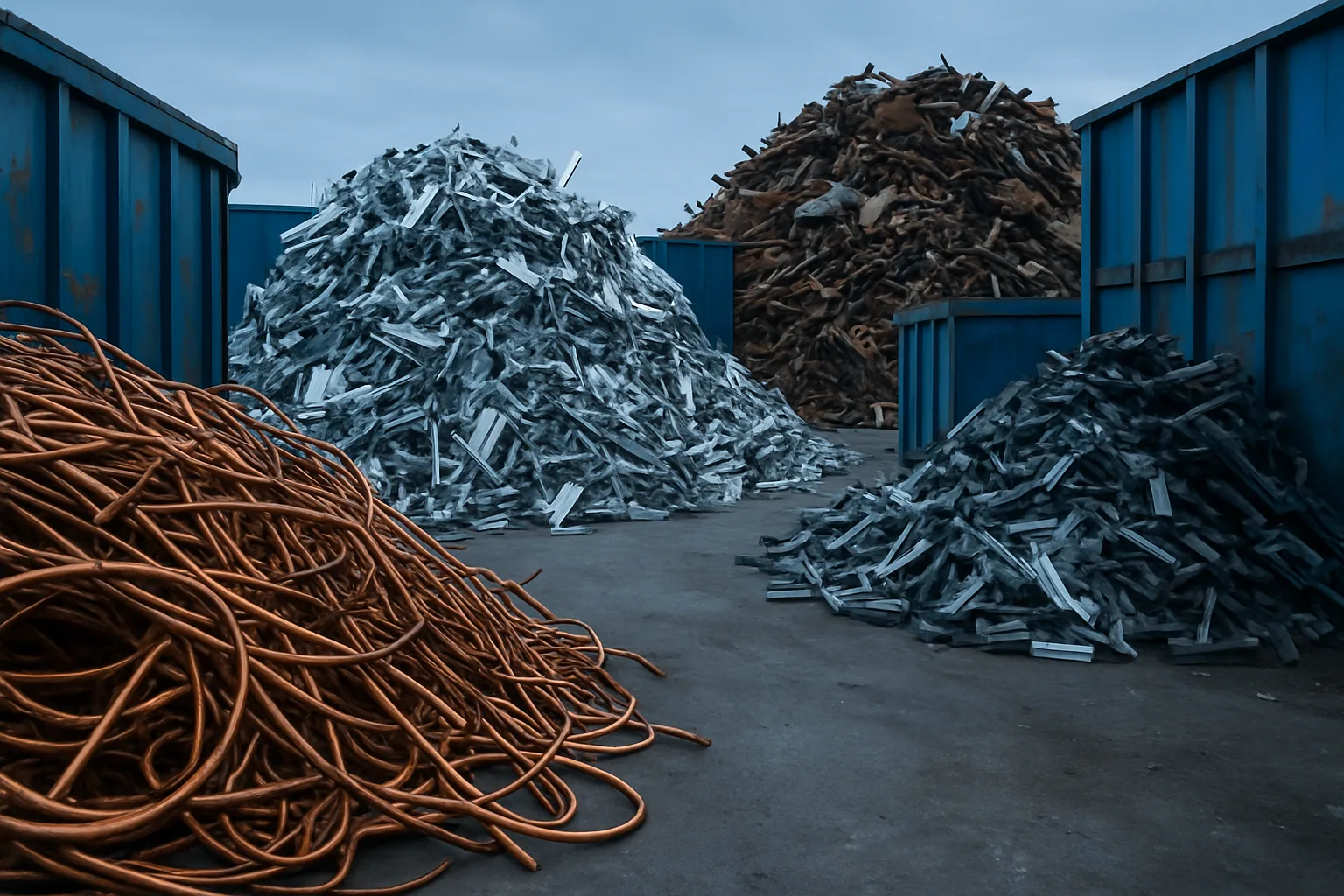
Most sellers treat steel and iron like they're the same pile of metal. They're not. Confusing the two at the scale costs you real money — especially if you're selling loads in a competitive market like Coquitlam, where buyers know exactly what they're looking at. If you've ever wondered why your neighbour got a better price on a similar load, the answer might be sitting in how they sorted and identified their material.
This isn't a chemistry lesson. It's a practical breakdown of why steel and iron price differently, what that means for scrap metal prices in Coquitlam and across British Columbia, and how proper inventory management can close the gap between what you're getting and what you could be getting.
Before we go further — if you need a starting point, check today's Canadian scrap metal prices to understand where the market sits right now.
---Steel and Iron Are Not the Same Grade — And Buyers Price Accordingly
Here's the core issue: cast iron and steel scrap behave differently in a furnace. Cast iron has a higher carbon content — typically 2% to 4% — while steel runs leaner, usually under 2% carbon. That difference changes how each metal melts, what it can be reprocessed into, and ultimately what a buyer is willing to pay for it.
Cast iron is denser and more brittle. Think engine blocks, radiators, old stoves, municipal pipe. Steel is more ductile — structural beams, auto frames, sheet metal, rebar. Mills and smelters have specific recipes for their heat charges, and mixing cast iron into a steel scrap load throws off those recipes. That's why buyers discount mixed or unidentified ferrous loads. They're pricing in the sorting labour and the risk.
In practical terms:
- Cast iron typically prices lower than prepared steel — buyers factor in higher impurities and variable melt behaviour.
- Prepared steel (P&S, #1 HMS) commands a premium because it's clean, sized, and predictable.
- Shredder feed (unprepared mixed ferrous) sits at the bottom of the ferrous price ladder.
- Stainless steel jumps to a completely different tier — it's priced on nickel content, not just the ferrous base.
When you lump cast iron and prepared steel together, the buyer prices the whole load at the lower grade. Sort it, document it, and you can negotiate each grade separately. That's not theory — that's how experienced sellers operate.
---The Real Story: What Proper Sorting Did for One Seller's Ferrous Load
This is the part of the article that actually matters. A mid-sized demolition contractor working out of the Coquitlam area had been running mixed ferrous loads to the same yard for years. The relationship was comfortable. The prices felt familiar. But when the contractor started breaking loads down — separating cast iron pipe and engine blocks from structural steel — something changed.
The structural steel, properly sorted and documented with weights and photos, opened the door to competitive offers. Buyers quoting on a documented, graded load behave differently than buyers quoting on a mystery pile. The cast iron went separately, at its correct grade, with no penalty dragging down the cleaner steel.
The contractor started using a platform — SMASH — to list loads with full photo documentation and per-grade weight breakdowns. Vetted buyers could see exactly what was on offer. The auction format created competition where there had been none. The contractor wasn't guessing at a market rate anymore — the market was telling them directly, through bids.
That's how Canada's B2B scrap recycling marketplace is designed to work. Not a single phone call to a single buyer. Documented inventory, multiple buyers, competitive pricing discovery.
---Scrap Metal Inventory Management: The Step Most Sellers Skip
Bad inventory management is the single biggest reason sellers underperform on ferrous loads. It's not the market. It's not the yard. It's the fact that most sellers hand over a mixed load and accept whatever grade the buyer assigns.
Good scrap metal inventory management doesn't require expensive software. It requires discipline and documentation:
- Weigh by grade before pickup. Know your cast iron weight separate from your prepared steel. Don't mix them in the same bin if you can avoid it.
- Photograph the load. Good photos — showing material type, cleanliness, and absence of contaminants — give remote buyers confidence to bid higher.
- Document what's in there. If your steel load includes copper-bearing attachments, say so. If it's clean, say that too. Specifics build trust.
- Track serial numbers or item types for specialty scrap. This matters especially for catalytic converter cores, copper wire grades, and non-ferrous materials.
- Build a history. Repeated, documented loads establish your reputation as a reliable seller. Buyers pay more for sellers they trust.
Platforms like SMASH have inventory tools built in — photo uploads, weight entry by grade, and serial tracking where applicable. It's not extra work. It's how you stop accepting low-ball prices on material you know is worth more.
For sellers across British Columbia, where loads can travel significant distances to reach the right buyer, documentation matters even more. A buyer in another city needs to trust what's in the load before they bid. Give them a reason to.
---Copper Scrap Prices in Coquitlam: Why Non-Ferrous Sorting Follows the Same Logic
The steel vs. iron conversation is really just the ferrous version of a problem that shows up everywhere in scrap: mixed material gets priced at the lowest grade. And nowhere does that hurt more than with copper.
Copper scrap prices in Coquitlam — and across Canada — vary significantly by grade:
- Bare bright copper (#1 copper wire, stripped) sits at the top. Clean, no insulation, no solder.
- #1 copper includes clean pipe and solid copper with minimal oxidation.
- #2 copper covers copper with light solder, paint, or coatings.
- Insulated copper wire (ICW) is priced based on the estimated copper recovery percentage — heavy gauge ICW returns more than light gauge.
- Copper mixed with other metals (brass fittings, bronze bearings) drops to a blended or downgraded price.
Strip your wire. Sort your pipe. Keep your bare bright separate. These aren't optional steps if you're serious about copper scrap prices in Coquitlam — they're the whole game.
To find current Canadian scrap metal prices by grade and make sure you're comparing the right category to the right rate.
---How to Purchase Scrap Metal — And Why Buyers Also Benefit from Grade Clarity
This conversation isn't only for sellers. If you're on the buy side — understanding how to purchase scrap metal intelligently — grade documentation protects you too. Buying a mixed ferrous load at a premium price because the seller called it "clean steel" and it turned out to be 30% cast iron is a real problem in this industry.
Buying through a documented auction platform changes the dynamic. You see photos. You see weight by grade. You see what the seller claims, and you can price accordingly or pass. That transparency works both ways — sellers get fair value, buyers avoid bad loads.
For buyers looking at loads in markets like Coquitlam or anywhere else in Canada, vetted seller profiles and documented inventory aren't a nice-to-have. They're how you avoid expensive surprises when the truck arrives.
The old way — a cold call, a rough description, a handshake price — leaves both parties guessing. That's not a market. That's luck. Read the latest Canadian scrap metal market updates to stay current on what's moving prices across ferrous and non-ferrous categories.
---What This Means for Sellers in Coquitlam Right Now
The scrap metal market in mid-2026 is rewarding sellers who come prepared. Ferrous markets have seen pressure from global steel output, and non-ferrous grades like copper remain sensitive to energy market shifts and industrial demand cycles. In that environment, the sellers getting the best prices aren't the ones with the biggest loads — they're the ones with the best documentation and access to the most buyers.
If you're running loads out of Coquitlam or anywhere across British Columbia, now is a good time to reassess your process. Are you sorting by grade? Are you documenting weights and photos? Are you selling to one buyer out of habit, or are you testing the market with competition?
SMASH exists for exactly this — no subscription fees, a vetted buyer network, and an auction format that lets competition do what competition does: reveal the actual market price for your material.
The price difference between steel and iron isn't arbitrary. It reflects real differences in how each material is used downstream. Understanding that difference — and sorting accordingly — is how you stop subsidizing your buyer's margin with your own ignorance of grades.
Check today's Canadian scrap metal prices and know what your material is worth before the truck pulls in. Get current rates at scrap-metal-prices.ca — then sort, document, and sell like you know what you've got.
Disclaimer: Scrap metal prices fluctuate based on global market conditions, local demand, and material grade. Always verify current rates before selling. The prices and grade differentials described in this article are general market context, not guaranteed quotes.
---Frequently Asked Questions
Q: What is the price difference between steel and cast iron scrap in Canada?
Cast iron typically prices lower than prepared steel scrap because of its higher carbon content and less predictable melt behaviour. The exact spread shifts with market conditions, but sorted and documented loads of each grade will always return more than a mixed unsorted load priced at the lowest common denominator. Check current grades at scrap-metal-prices.ca.
Q: What are copper scrap prices in Coquitlam right now?
Copper scrap prices in Coquitlam vary by grade — bare bright copper sits at the top, followed by #1 copper, #2 copper, and various insulated wire grades. Prices shift with global copper markets and local yard demand. For current rates, check scrap-metal-prices.ca and compare grades before you bring your load in.
Q: How do I get a better scrap metal price in Coquitlam?
Sort your material by grade before selling. Document weights and take clear photos of your load. And don't sell to a single buyer without testing the market — platforms like SMASH connect you to vetted buyers who compete for your material, which helps reveal the actual market price rather than one buyer's best offer.
Q: What is scrap metal inventory management and why does it matter?
Scrap metal inventory management means tracking your material by grade, weight, and condition before it leaves your yard. It matters because buyers price mixed or undocumented loads at the lowest grade. Documented inventory — with photos, per-grade weights, and clean separation — gives buyers confidence to bid higher and reduces disputes at delivery.
Q: Does SMASH charge a subscription fee to sell scrap metal?
No. SMASH operates on a no-subscription model — you don't pay to list. The platform connects sellers with vetted buyers through a competitive auction format, and there are no upfront fees to access the buyer network. Contact jeff@smashscrap.com if you're ready to sell or buy through SMASH.
---Follow SMASH on LinkedIn for industry updates, scrap metal market insights, and practical tips for getting more out of every load you sell.