Why Your Old Batteries Are Worth More Than You Think
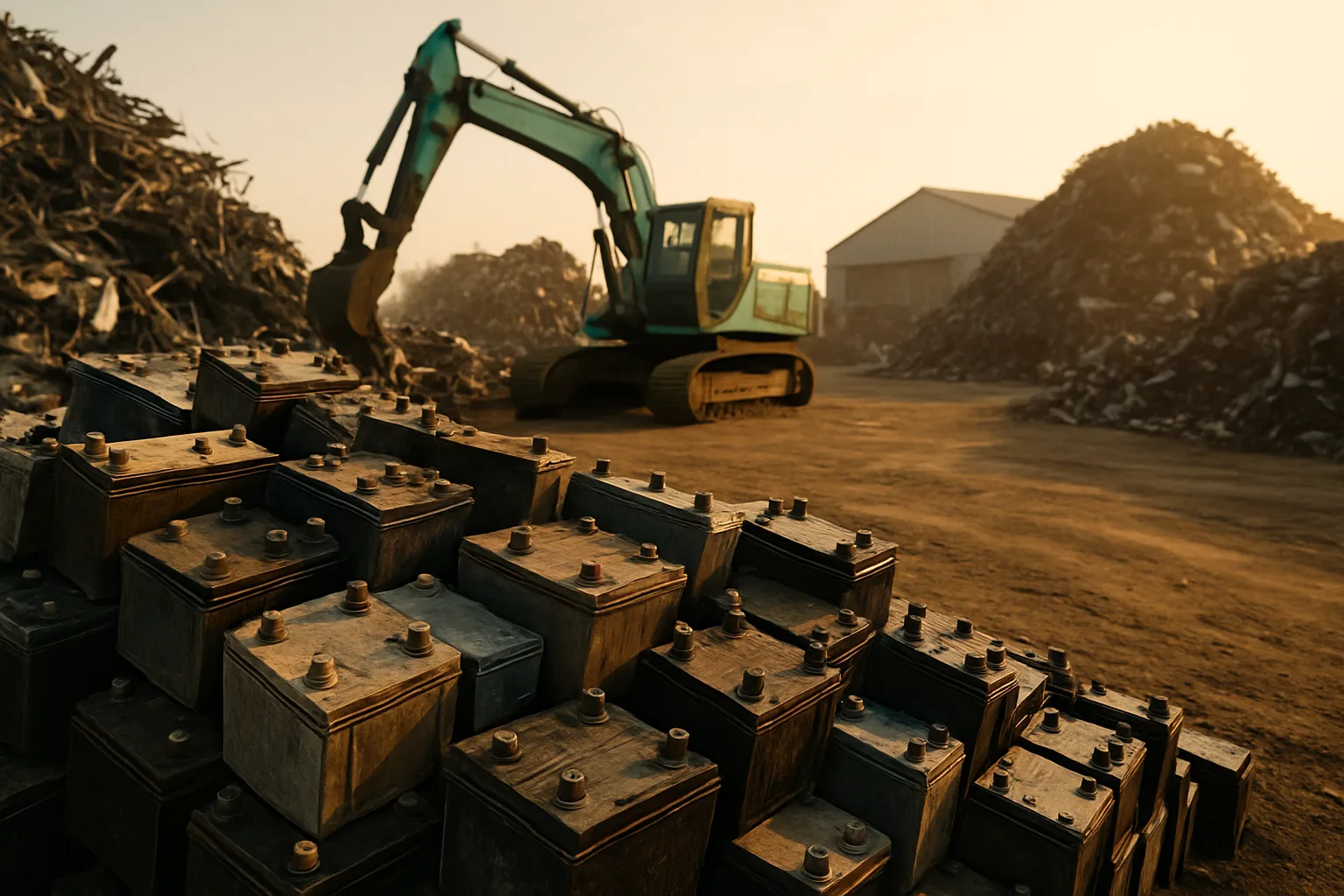
Most people toss dead car batteries into a corner of the garage and forget about them. That's a mistake. Lead-acid batteries are one of the most recyclable products on the planet — and one of the most consistently valued materials in the scrap market. If you're doing scrap metal recycling Sudbury, lead-acid batteries deserve a spot at the top of your list.
A single 12-volt car battery weighs anywhere from 18 to 25 kilograms. Most of that weight is pure lead — in plates, terminals, and paste. Lead is dense, globally traded, and in steady industrial demand. That weight translates directly into cash at the yard, and if you're sitting on a pile of dead batteries from a fleet, a shop, or a seasonal cleanout, the value adds up fast.
What's Actually Inside a Lead-Acid Battery
Understanding what makes these batteries valuable helps you negotiate better at the yard. A standard automotive lead-acid battery contains several distinct materials, each with its own scrap value:
- Lead plates and grids — the bulk of the battery's weight and the primary source of scrap value
- Lead oxide paste — packed between the plates; recovered during smelting
- Lead terminals and connectors — solid lead, easy to recover
- Polypropylene casing — the plastic shell is shredded and recycled separately
- Sulfuric acid electrolyte — neutralized and processed at licensed facilities
Recyclers recover lead from all of those components. A well-run smelter can reclaim over 95% of the lead in a battery. That recovery rate is part of why lead-acid batteries have one of the highest recycling rates of any consumer product in North America. Scrap yards in Sudbury and across Ontario know this — they've been pricing batteries based on lead content for decades.
Lead Scrap Prices: What Drives the Numbers in 2026
Lead prices fluctuate on global commodity markets, so the rate you get at the yard in Sudbury today might differ from what you got six months ago. In 2026, lead pricing is influenced by several converging factors:
- Electric vehicle infrastructure — backup battery systems and industrial UPS units still rely heavily on lead-acid technology, sustaining demand
- Global smelter capacity — refinery output in Asia and Europe affects North American secondary lead supply chains
- Seasonal vehicle turnover — spring and fall bring higher volumes of dead car batteries to market across Ontario
- Freight and logistics costs — transportation costs between Sudbury and secondary smelters affect what local yards can offer
- Regulatory compliance costs — handling sulfuric acid and meeting environmental standards adds to processing overhead
What this means practically: the price you see posted at one yard isn't necessarily the best price available. Yards set their own buy rates based on their relationships with downstream processors. If you're selling in volume — think a shop clearing out a season's worth of cores, or a fleet operation with dozens of units — you have real leverage. Competition between buyers matters here, which is exactly where platforms like smashrecycling.ca change the game. Instead of calling one yard and taking their number, you get multiple vetted buyers competing for your load.
Lead vs. Other Non-Ferrous Metals: How Battery Scrap Stacks Up
Lead isn't the highest-value non-ferrous metal per kilogram — copper scrap prices in Sudbury typically run higher on a per-pound basis. But battery lead has a key advantage: predictable composition and high volume. When you're comparing what to prioritize in a mixed load, it helps to understand where lead sits relative to other materials.
Here's a general value hierarchy for non-ferrous scrap (rates vary — always check today's Canadian scrap metal prices before heading to the yard):
- Copper — consistently the highest-value common non-ferrous metal; bare bright copper leads the pack
- Brass — solid demand from foundries; valves, fittings, and fixtures add up
- Aluminum — high volume material; aluminum scrap value per pound is lower than copper but moves in large quantities
- Lead — lower per-pound rate than copper, but battery lead comes in bulk weight, which compensates
- Stainless steel — varies by grade; 304 and 316 command different premiums
If you're sorting a mixed haul, don't let lead batteries sit at the bottom of the priority list just because the per-kilo rate is lower than copper. A pallet of dead batteries can weigh several hundred kilograms. At market rates, that's a meaningful cheque — and when you sell scrap metal online through a competitive auction platform rather than walking it into one yard, you're more likely to see the full market value reflected in your offer.
How to Prepare Your Batteries for Sale and Get the Best Price
Preparation matters. Yards price batteries based on condition, and a little effort before you show up translates into better rates and faster transactions. Here's how to maximize what you get for your battery scrap in Sudbury:
Sort by type before you go
Automotive batteries, industrial fork truck batteries, sealed AGM units, and gel batteries all have different compositions. Most yards differentiate between whole batteries and drained or broken ones. Keep them separate and know what you have before you negotiate.
Don't drain the acid yourself
Sulfuric acid is a hazardous material. Draining it improperly creates liability and can actually reduce your scrap value if the yard has to treat contaminated batteries differently. Leave them intact — licensed recyclers handle the acid as part of their process.
Document your volume
If you're a shop or fleet selling regularly, keep records. How many units per month, average weight, battery type. This documentation strengthens your position when negotiating with buyers, especially if you're selling through a platform that lets buyers see your inventory in advance.
Check the market before you sell
Lead prices move. Don't assume the rate from three months ago still applies. A quick check at find current Canadian scrap metal prices before you load up the truck can tell you whether now is a good time to move your stock or whether holding briefly makes sense.
Get competing offers
This is the single biggest lever you have as a seller. One quote is just one data point. SMASH exists specifically to create competition among vetted buyers — that competition is where best scrap metal prices Ontario sellers actually get realized, not from walking into the nearest yard and accepting the posted rate.
Scrap Metal Recycling in Sudbury: What Local Sellers Need to Know
Sudbury has a unique position in Ontario's scrap metal ecosystem. The region's long history in mining and resource extraction means industrial scrap volumes are higher here than in many other Ontario cities. There's real infrastructure for handling heavy non-ferrous materials, and yards that serve the mining and processing sector have experience moving large quantities of lead and other metals.
That industrial base is an advantage for local sellers. Yards servicing Sudbury scrap metal services are accustomed to bulk transactions and industrial-grade material — which means you're less likely to be treated as a small walk-in if you show up with volume. But the flip side is that yard pricing in a resource town can sometimes feel locked in. Operators know the buyers; buyers know the operators. That familiarity doesn't always benefit the seller.
Using a platform like SMASH brings external buyers into that equation. Vetted buyers from across Ontario and beyond can bid on your load, and suddenly the local yard's posted rate has competition. For scrap metal prices Ontario today, that competitive pressure is often the difference between a fair price and a great one. You can read the latest Canadian scrap metal market updates to track how lead and other non-ferrous rates are moving before you make your move.
Whether you're a Sudbury shop clearing battery cores, a facility manager moving industrial UPS batteries, or a collector who's been hoarding dead batteries in the yard — the market for lead scrap is active, and it rewards sellers who do their homework.
Before your next trip to the yard, take two minutes to check today's Canadian scrap metal prices and make sure you're walking in with a number in mind, not walking in blind.
Frequently Asked Questions
Q: How much is a lead-acid car battery worth at a scrap yard in Sudbury?
Battery scrap prices fluctuate with the lead commodity market, so there's no fixed number — rates change week to week. A standard automotive battery typically weighs 18–25 kg, and you're paid based on weight and current lead prices. Check current rates before you go and get more than one quote if you're selling in volume.
Q: Can I sell batteries through an online scrap platform instead of going to a yard?
Yes. Platforms like SMASH let you list your battery inventory, document the load, and receive offers from vetted buyers across Ontario and North America. This works especially well for shops and fleet operators moving consistent volumes — it removes the guesswork and introduces real buyer competition.
Q: Do I need to drain the acid out of batteries before taking them to a scrap yard in Sudbury?
No — and you shouldn't. Sulfuric acid is a regulated hazardous material. Licensed recyclers handle acid neutralization as part of their process. Bring batteries intact; let the licensed facility manage the chemistry safely and legally.
Q: How do scrap metal prices in Ontario compare to the rest of Canada?
Ontario prices generally track global commodity markets, with local adjustments for transportation costs, yard overhead, and regional supply and demand. Northern Ontario cities like Sudbury may see slight variations from southern Ontario yards due to freight costs to downstream processors. Checking a live price resource gives you the most accurate current picture.
Q: What other scrap metals should I bring in alongside my batteries to maximize a trip to the yard?
Non-ferrous metals like copper wire, aluminum, and brass pair well with battery loads since most yards handle all of them. Sort your materials before you arrive — mixed, unsorted loads often get lower rates. Copper scrap prices in Sudbury tend to be strong, so if you have copper alongside your batteries, keep it clean and separate for the best return.
Lead-acid batteries aren't garbage — they're one of the most recoverable materials in the recycling stream, and in 2026, the market for secondary lead remains active. Do the prep work, check the market, and don't settle for the first number you're offered. If you're ready to move a load and want buyers competing for it, connect with SMASH at smashrecycling.ca or email jeff@smashscrap.com directly.
And before you load the truck, take a minute to find current Canadian scrap metal prices at scrap-metal-prices.ca — knowing your number before you negotiate is always the right move.
Follow SMASH on LinkedIn for ongoing scrap metal market insights, pricing trends, and industry updates across Canada.