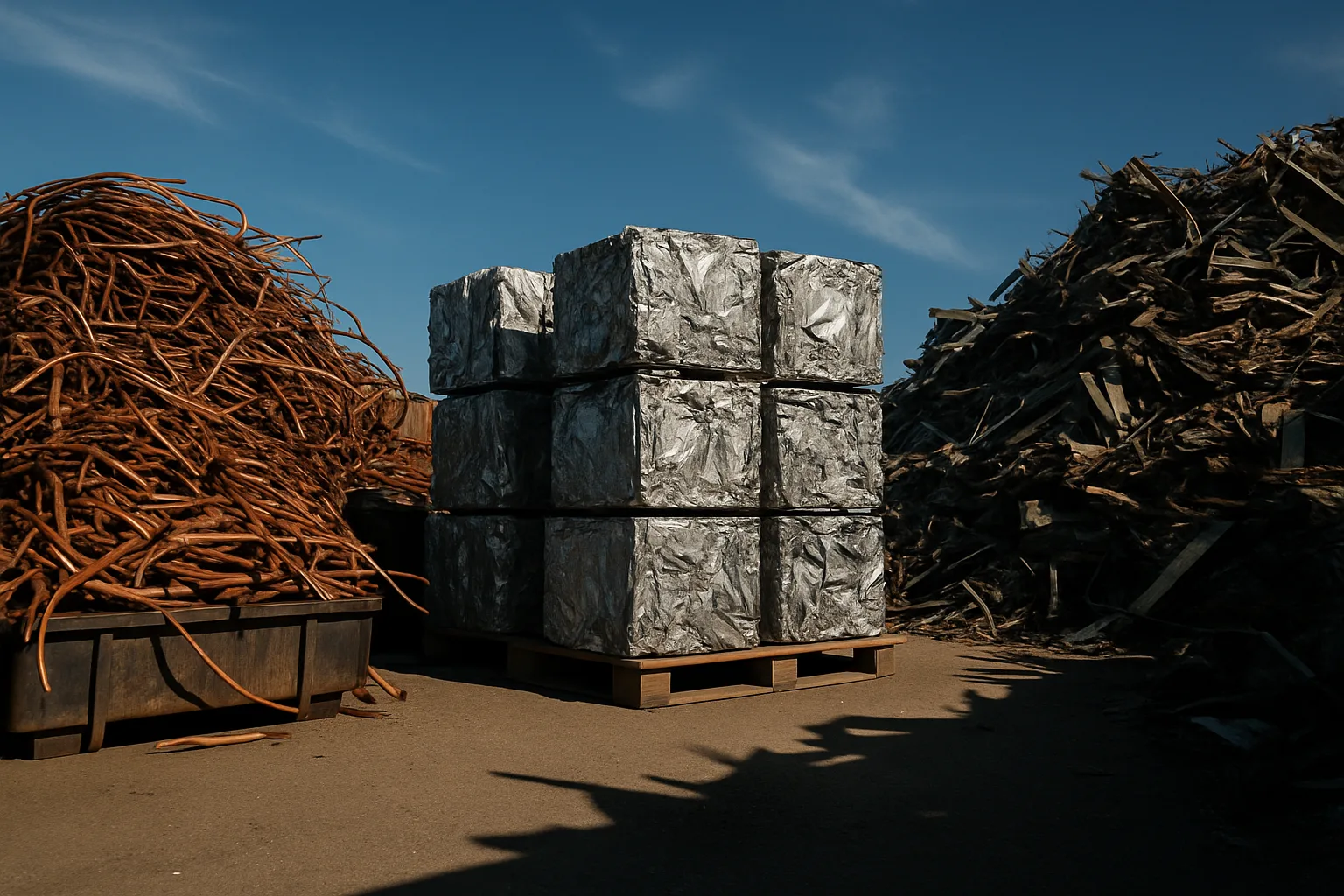
Most scrap yards pay you based on what your metal is. Not what you think it is. Knowing the difference between aluminum and zinc, or copper and brass, can mean a significant swing in your payout — and in a place like Corner Brook, where every trip to the yard counts, that knowledge is money.
This is a practical guide to identifying common scrap metals before you sell. No lab equipment. Just your eyes, a magnet, and a few simple tests anyone can do at home. Whether you're clearing out a garage, stripping a renovation, or running a small operation in Newfoundland and Labrador, getting your metals sorted correctly before you show up puts you in a stronger position.
And once you know what you've got, platforms like SMASH Recycling — where verified buyers bid on your metal make it straightforward to connect with buyers who'll compete for your load — not just quote you a take-it-or-leave-it number.
Why Metal Identification Matters Before You Sell Scrap Metal in Corner Brook
Walk into a scrap yard with a mixed, unsorted load and you'll likely get paid at the lowest rate in the pile. That's not a scam — it's just how yards protect themselves when they can't verify what they're looking at. Mixed loads get blended down. Clean, sorted, identified metal gets paid properly.
The spread between metals is real and significant. Bare bright copper, for example, pays dramatically more per pound than aluminum. Brass sits in a different tier than zinc. Stainless steel commands more than regular steel. Getting this wrong doesn't just cost you a few cents — on a meaningful load, it can cost you real dollars that stay in the yard's pocket instead of yours.
If you want to check today's Canadian scrap metal prices before you head out, doing that research alongside your identification work means you show up informed on both fronts.
The Magnet Test: Your First Tool for Sorting Scrap Metal Prices Today
Start here. A simple refrigerator magnet or a hardware-store rare earth magnet separates ferrous metals from non-ferrous metals in seconds. This single step sorts your pile into two major categories with completely different price tiers.
Ferrous metals (magnetic):
- Iron and cast iron — heavy, often rusty, used in engine blocks, pipes, old radiators
- Carbon steel — structural beams, rebar, appliance frames
- Stainless steel — mostly non-magnetic, but some grades will weakly attract; test every piece
Non-ferrous metals (non-magnetic):
- Copper — soft, reddish-orange, high value
- Aluminum — lightweight, silvery-grey, very common
- Brass — yellowish, heavier than aluminum, medium-high value
- Zinc — dull, bluish-grey, brittle, lower value
- Lead — extremely heavy for its size, very soft, dull grey
- Nickel — silvery, slightly magnetic in some alloys — test carefully
Non-ferrous metals are where the real money is. If your magnet doesn't stick, set that piece aside immediately. It's worth investigating further. If it sticks hard, it's likely steel or iron — still sellable, but in a different category and at a lower price per pound.
One important note: stainless steel can fool you. Some grades are weakly magnetic. If a piece is clean, heavy, and shows no rust despite being old, test it again and look closely. True stainless has a distinct bright, slightly reflective surface. Many people in Corner Brook pulling old kitchen equipment or marine hardware out of properties are sitting on stainless without realizing it.
Visual Identification: Aluminum Scrap Price Today and Knowing What You've Got
Once you've sorted magnetic from non-magnetic, your eyes do the next round of work. Color, weight, and surface texture tell you most of what you need to know about non-ferrous metals.
Copper is the easiest to recognize. Fresh copper is bright reddish-orange — like a new penny. Aged copper turns brown, then green (patina). It's soft enough to scratch with a key. It's heavier than aluminum but lighter than lead. Bare bright copper (clean, uncoated wire) pays the most. Insulated wire, copper pipe, and #2 copper (with some oxidation or solder) all have separate price categories — so find current Canadian scrap metal prices broken down by grade before you sort.
Aluminum is lightweight and silvery-grey. It doesn't rust — it oxidizes into a dull white powder instead. Common sources include:
- Window frames and screen doors
- Cast engine parts (wheels, transmission housings)
- Aluminum cans (low weight, low per-pound rate — volume matters)
- Sheet aluminum (roofing flashing, siding)
- Extruded aluminum (frames, extrusions from construction)
Cast aluminum feels rough and grainy. Extruded aluminum is smooth and uniform. Clean, uncoated aluminum pays better than dirty or painted pieces. If you're working with aluminum in Corner Brook, stripping paint or removing steel bolts before you sell makes a real difference in your quoted rate.
Brass is yellow-gold and noticeably heavier than aluminum. You'll find it in plumbing fittings, door hardware, valves, and musical instruments. Don't confuse it with gold — brass is harder, heavier, and has a more muted yellow tone. Scratch the surface if it's painted: if you see yellow underneath, it's likely brass.
Zinc looks dull grey and is brittle. Old die-cast parts — carburetors, old toys, decorative hardware — are often zinc. It's lighter than brass, heavier than aluminum, and breaks with a dull snap rather than bending. Worth selling, but don't confuse it with aluminum or you'll either overprice your ask or accept too little.
Lead is unmistakable once you know it. Incredibly heavy for its size. Soft enough to scratch with a fingernail. Dull grey, often with a slightly bluish tone. Old flashing, wheel weights, and certain plumbing fittings from older buildings contain lead. Handle it with gloves.
The Scratch and Bend Test: Going Beyond the Magnet
When visual ID isn't enough, a quick physical test closes the gap.
Scratch test: Use a file or sharp edge to scratch the metal's surface. The color underneath tells you a lot:
- Bright reddish-orange under a tarnished surface → copper
- Bright yellow under a dark or painted surface → brass
- Silvery-white that's light → aluminum
- Silvery-white that's very heavy → lead or tin
Bend test: Aluminum bends easily and stays bent. Copper bends easily but feels more dense. Zinc snaps or cracks — it doesn't flex without breaking. Lead bends with almost no resistance. Steel bends with effort and springs back slightly. These physical responses, combined with color and the magnet, confirm your identification with high confidence.
For anyone in Newfoundland and Labrador sorting through old fishing equipment, marine hardware, or renovation materials, these tests are especially useful — coastal environments create unusual oxidation and patina that can disguise what a metal actually is.
How Sorting Connects to Better Prices on How to Recycle Scrap Metal
Sorting isn't just about knowing what you have — it's about being able to document and communicate it to buyers. A yard or buyer who receives a well-sorted, labeled load can move faster on pricing. That confidence translates into better offers.
This is where SMASH changes the game. When you document your load — photos, metal types, weights, grades — and put it in front of multiple verified buyers, competition does the pricing work for you. One buyer quoting you blind is a guess. Multiple buyers seeing a clearly documented load of sorted copper, aluminum, and brass is price discovery. Those are two very different outcomes.
To stay current on what each metal grade is actually worth, read the latest Canadian scrap metal market updates before you finalize your sorting decisions. Markets move. What aluminum paid last month isn't necessarily what it pays today.
Common Identification Mistakes That Cost Corner Brook Sellers Money
A few errors come up repeatedly — and they're all avoidable:
- Selling mixed loads as aluminum. If your "aluminum" pile contains zinc die-cast parts, you're dragging the price down. Sort them out. Zinc and aluminum are not the same price.
- Leaving insulation on copper wire. Insulated wire pays at a lower rate than bare copper. If you have volume, stripping it pays off.
- Confusing stainless steel with chrome-plated steel. Chrome plating looks shiny and won't rust, but underneath is plain steel. Scratch through the plating and test with a magnet. Stainless stays bright; chrome-plated steel will often show a ferrous base.
- Assuming all yellow metal is brass. Gold-toned finishes and plating exist on steel and zinc too. Test weight, scratch, and magnet before you assume.
- Lumping cast aluminum with clean extruded aluminum. Many yards separate these. Know your grades and ask how your buyer categorizes them.
In Corner Brook, where trips to the yard take time and fuel, getting it right before you go saves you a renegotiation on the scale. Show up sorted and documented, and you're in a different conversation entirely.
Once your metal is identified and sorted, don't settle for one phone call to one buyer. Put it in front of a competitive market. That's what SMASH is built for — no subscriptions, no guessing, just buyers competing for your load.
Before your next trip to the yard, take five minutes to check today's Canadian scrap metal prices so you walk in knowing what your sorted load is worth. That's not just preparation — it's leverage.
Frequently Asked Questions
Q: How do I know if my metal is worth selling in Corner Brook?
If it's non-ferrous — copper, aluminum, brass, or similar metals — it's almost always worth selling. Ferrous metals like steel and iron pay less per pound but can be worth it in volume. Run the magnet test first, then check current scrap metal prices to see what each type is paying before you make the trip.
Q: What's the easiest way to tell aluminum from zinc?
Weight and brittleness. Aluminum is lightweight and bends without breaking. Zinc is noticeably heavier for its size and will crack or snap rather than flex. Both are non-magnetic and grey, so the magnet won't help you here — go by feel and physical test.
Q: Does sorting my scrap before I sell it actually change the price I get?
Yes, meaningfully so. Mixed loads get priced at the lowest-value metal in the pile, or averaged down to protect the buyer. Sorted, clean, identified loads get quoted at their actual grade. In Newfoundland and Labrador, where many sellers are clearing properties or running small operations, sorting before you go is one of the highest-return steps you can take.
Q: Can I sell scrap metal directly to buyers without going through a yard in Corner Brook?
Platforms like SMASH allow sellers to document their loads and have verified buyers bid competitively. This isn't the same as walking into a local yard, but for larger loads or specialty metals, it can open up your buyer pool significantly and support better price discovery.
Q: How often do scrap metal prices change in Canada?
Metal prices move with global commodity markets — which means they can shift daily. Copper and aluminum are especially volatile. Always check current rates before you sell, not the rates you saw last week. Checking scrap-metal-prices.ca before any significant sale is a simple habit that pays for itself.
Disclaimer: Scrap metal prices fluctuate based on global commodity markets, local yard conditions, and metal grade. Always verify current rates before selling.
Follow SMASH on LinkedIn for ongoing scrap metal market insights, industry updates, and pricing trends: SMASH on LinkedIn.