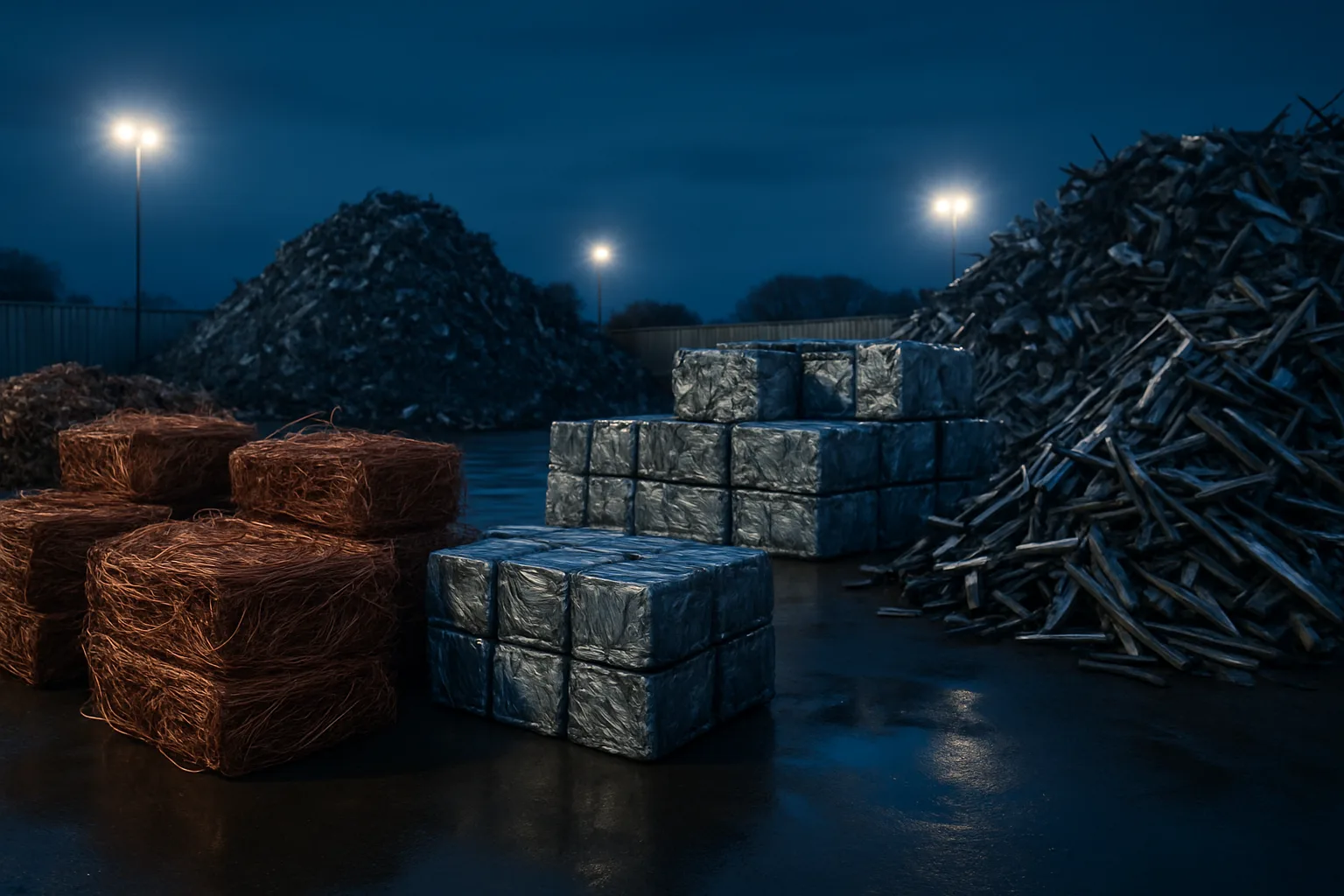
Copper is one of the most valuable metals in your scrap pile — and also one of the most misunderstood. Sellers leave real money on the table every week because they don't know the difference between a #1 and a #2 copper grade. If you're looking to sell scrap metal near me St. Catharines or anywhere else in Ontario, understanding copper grades and current price trends isn't optional. It's the difference between getting a fair price and getting lowballed.
Copper prices in Canada in 2026 continue to be shaped by global demand, energy transition infrastructure, and tightening supply from major mining regions. Electric vehicle production, grid modernization, and data centre buildouts are all copper-hungry projects. That demand pressure keeps copper among the highest-value non-ferrous metals you'll move through any yard. But none of that matters if you're selling #1 copper at #2 prices because your load isn't properly sorted or documented.
This guide breaks down copper grades, explains what drives price trends in the Canadian market right now, and shows you how to position your load to get the most competitive offer. Whether you're a yard operator in St. Catharines, a contractor stripping wire on a job site in Ontario, or a collector building up a load — this is the information you need before you sell.
---Copper Scrap Grades Explained: What Buyers Are Actually Paying For
Copper is graded by purity, cleanliness, and form. Buyers price each grade differently — sometimes significantly differently. Knowing which category your material falls into is the first step to getting paid correctly. Here's a breakdown of the main grades you'll encounter in the Canadian market.
#1 Bare Bright Copper
This is the top of the ladder. Bare bright is uncoated, unalloyed, unsoldered copper wire or bus bar — typically 1/16 inch or thicker, with no insulation, oxidation, or contamination. It's the cleanest, densest form of copper scrap, and it commands the highest price per pound. If you're stripping new wire from an electrical job and it's clean bright wire, you're likely looking at bare bright.
#1 Copper
Still high quality, but not bare bright. This includes clean copper pipe, bus bar, clippings, and wire that may have minor oxidation or a small amount of solder. No paint, insulation, or excessive fittings. Most clean residential plumbing copper falls into this category. Price sits below bare bright, but it's still a strong return.
#2 Copper
This grade covers copper that has some contamination — light coatings, paint, oxidation, small amounts of solder, or mixed copper fittings. It's still valuable, but buyers will factor in the cost of processing the material. Dirty pipe, corroded fittings, and copper with residue typically grade out here. Sort aggressively and you might save some of your load from the #2 bucket.
Insulated Copper Wire (ICW)
Wire with insulation still on it gets priced by its estimated copper recovery percentage. Low-grade wire like extension cords or Christmas light wire might be 10–15% copper recovery. High-grade industrial cable can hit 70–85%. Buyers use a wire percentage to discount from the copper price. Strip it if you can — your per-pound return goes up significantly.
Copper Alloys (Brass, Bronze)
Brass and bronze are copper alloys but get their own price categories. Yellow brass (valves, fittings, fixtures) is priced as brass, not copper. Don't mix these into your copper loads — it creates contamination issues and typically pulls the average value down. Sort them separately and sell them separately.
---What's Driving Copper Scrap Prices in Canada Right Now — July 2026
Copper scrap prices in Canada don't move in isolation. They track closely to London Metal Exchange (LME) copper futures and North American spot markets, then get adjusted for local supply, processing costs, and freight. In July 2026, a few major forces are shaping the market.
Energy transition demand remains elevated. EV production across North American assembly plants continues to drive copper consumption higher. Each EV uses significantly more copper than a combustion vehicle — wiring, motors, battery systems, and charging infrastructure all draw on the same metal. Grid expansion projects, particularly in Ontario and across the northeastern U.S., are adding further pressure on refined copper supply.
Mine supply constraints haven't eased. Several major producing regions continue to face permitting delays and operational disruptions. That keeps the structural floor under copper prices firmer than it was five years ago. When mine supply is tight, secondary (scrap) supply becomes more valuable to processors and refiners — which generally helps scrap sellers.
Currency plays a role for Canadian sellers. Copper is priced globally in USD. When the Canadian dollar is weaker against the U.S. dollar, Canadian scrap prices expressed in CAD tend to be higher, because processors receive USD-equivalent pricing when they export. This has worked in sellers' favour during periods of CAD softness in 2026.
To check today's Canadian scrap metal prices and stay current with copper rate movements, check in regularly — prices can shift week to week based on LME moves and local yard conditions.
---How to Sort and Prepare Your Copper Load to Maximize Value
Sorting copper before you sell isn't just about being organized — it's a direct line to a higher payout. Buyers price mixed or unsorted loads at the lowest grade present. One dirty pipe fitting in a box of bare bright can drag the whole load down. Here's how to prepare properly.
- Strip wire whenever practical. The time investment to strip insulation from high-grade wire typically pays off in price-per-pound terms. Use a wire stripper — don't burn wire. Burning is illegal in Canada and damages the copper surface.
- Separate by grade. Keep bare bright in its own container. Keep #1 separate from #2. Don't let fittings, valves, or brass mix into copper loads.
- Clean your material. Remove rubber, plastic end caps, excessive solder, and connectors where possible. Every pound of non-copper material in your load is a pound your buyer is discounting.
- Weigh before you go. Know what you have before you walk into a yard or submit a listing. Buyers respect sellers who know their load.
- Document with photos. If you're selling through an auction platform, clear photos of sorted material give buyers confidence — and confidence drives competitive bidding.
Platforms like SMASH let you document your copper load with photos, serial tracking where applicable, and grade descriptions before it goes to market. That documentation creates buyer confidence and opens the door to real competition on price — which is how scrap metal recycling Canada-wide sellers are getting better price discovery without relying on a single yard's offer.
---Selling Copper Scrap in St. Catharines and Ontario: What Local Sellers Need to Know
St. Catharines sits in the heart of the Niagara region — an area with active construction, manufacturing, and infrastructure work that generates real copper scrap volume. Plumbing contractors, electrical crews, demolition operators, and industrial maintenance teams all accumulate copper. The question is always where to sell it for the best return.
Local yard options in the St. Catharines area give you baseline pricing. But a single yard call isn't a market — it's one data point. The St. Catharines scrap metal services available through platforms like SMASH connect your load to a vetted buyer network across Ontario and beyond, turning that one data point into actual competition. More buyers in the room means better price discovery. That's not a promise of higher prices — it's how markets work.
Ontario sellers also benefit from a dense buyer base. The province has significant secondary metal processing capacity, and proximity to U.S. border crossings makes export-grade copper scrap attractive to cross-border buyers. If your load is clean and well-documented, you're not limited to the yard down the road.
SMASH operates as a scrap metal auction platform — no subscription fees, no guessing. You list your material, vetted buyers compete, and you decide whether to accept. For copper loads with real volume and clean grading, that auction format often surfaces offers you wouldn't have found with a single phone call. You can read the latest Canadian scrap metal market updates to stay sharp on where copper and other non-ferrous metals are trading before you list.
---Copper vs. Other Non-Ferrous Metals: How It Compares on the Price Ladder
If you're moving multiple metal types, it helps to understand where copper sits relative to aluminum, brass, and stainless steel. Copper almost always leads in price per pound among common non-ferrous scrap metals. Here's a rough comparison of the price hierarchy in the Canadian market as of mid-2026:
- Bare bright copper — top of the non-ferrous market
- #1 copper — close behind bare bright, still high value
- #2 copper — meaningful step down from #1
- Yellow brass — typically priced at a percentage of copper
- Insulated copper wire — priced by recovery percentage
- Aluminum (6061, 6063 extrusion) — solid return, far below copper
- Stainless steel — variable by grade; 304 and 316 are most sought-after
- Mixed metals / dirty loads — lowest returns
This hierarchy reinforces why sorting matters so much. Copper that gets mixed into a general non-ferrous load gets priced as a blend. That's a fast way to lose money. If copper is in your pile, separate it, grade it, and sell it as copper.
To find current Canadian scrap metal prices across all these categories, check live rates before you commit to any transaction. The gap between copper grades alone can be significant — knowing which grade you have is worth real dollars per load.
---Frequently Asked Questions
Q: Where can I sell scrap metal near me in St. Catharines?
St. Catharines has local scrap yards that accept copper and other non-ferrous metals. You can also list your load through SMASH to reach vetted buyers across Ontario and beyond — no subscription fees, and buyers compete for your material.
Q: What's the best copper grade to bring to a yard?
Bare bright copper gets the highest price per pound. If you can't reach bare bright, sort your load into #1 and #2 piles separately. Never mix grades — buyers will price the whole load at the lowest grade present.
Q: How often do copper scrap prices change in Canada?
Copper prices can move daily based on LME futures, currency movements, and local supply. Most Canadian yards update their posted rates weekly, but market moves can trigger mid-week adjustments. Check scrap-metal-prices.ca regularly for current rates.
Q: Is it worth stripping insulated wire before selling?
In most cases, yes. Stripping wire moves it from the insulated wire price category to bare copper pricing — a significant jump. The exception is very low-gauge or thin wire where stripping time outweighs the price gain. High-grade industrial cable is almost always worth stripping.
Q: How does a scrap metal auction work for copper sellers in Ontario?
On a platform like SMASH, you document your copper load — grade, weight, photos — and submit it to a vetted buyer pool. Buyers submit competitive bids. You review offers and accept or decline. No subscription, no pressure, and you're not locked into one buyer's price.
---Copper prices move fast and grade differences are real. Before your next load leaves the yard, know what you have, sort it properly, and make sure more than one buyer sees it. Check today's Canadian scrap metal prices — get current rates at scrap-metal-prices.ca before you sell.
Disclaimer: Scrap metal prices fluctuate based on market conditions. All prices referenced are general in nature. Always verify current rates with your buyer or platform before completing a transaction.
Stay current on copper trends and scrap market movements — follow SMASH on LinkedIn for regular Canadian scrap metal market insights and industry updates.