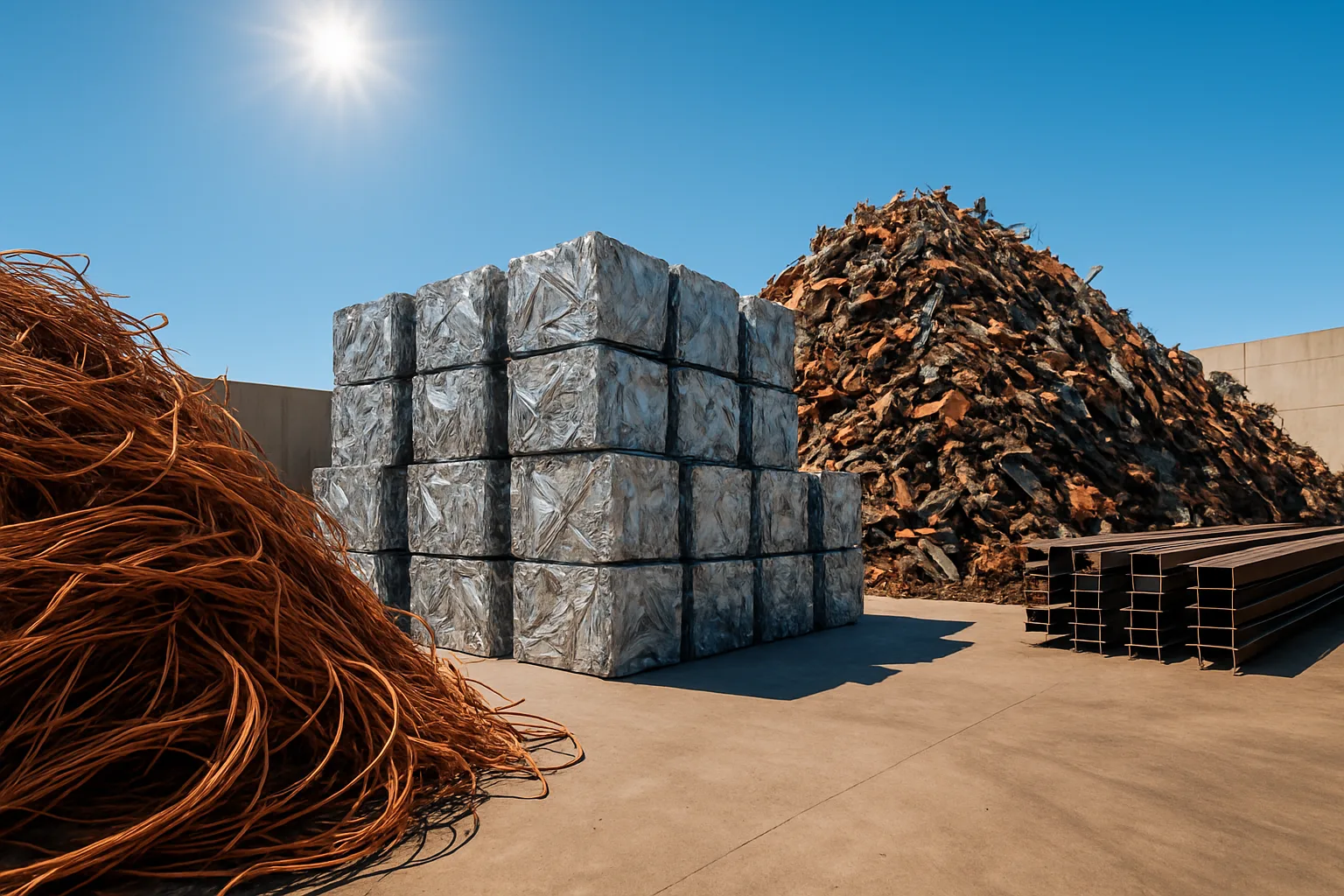
Most scrap sellers leave money on the table — not because they have bad material, but because they stop at the first buyer who answers the phone. If you've ever wondered whether you're getting the real copper scrap price today or just whatever a single yard felt like offering, you're not alone. Finding the best buyer for your scrap isn't about driving around with a truck full of copper wire and hoping for the best. It's about knowing the market, documenting what you have, and putting your load in front of more than one set of eyes.
This is especially true right now in mid-2026, when commodity markets are moving fast and the spread between a lazy offer and a competitive one can be significant. Whether you're hauling non-ferrous out of St. Catharines scrap metal services or moving a mixed load from anywhere across Ontario, the approach is the same: more buyers, better price discovery, less guesswork.
Why "Selling Scrap Metal Near Me" Is the Wrong Search
Proximity matters for logistics. It doesn't determine who pays best. The closest yard to your shop isn't automatically your best buyer — it's just the most convenient one. Convenience costs you money when copper, aluminum, or catalytic converters are involved.
The traditional model goes like this: you call one buyer, they quote you a number, you accept or walk away. If you walk away, you spend more on fuel trying somewhere else. Most sellers don't bother. That one-call model benefits buyers, not sellers. They know the material is sitting in your yard, they know you'd rather not drive an extra 40 minutes, and the offer reflects exactly that leverage.
The smarter play is to flip that dynamic. Instead of chasing buyers, put the load in front of multiple vetted buyers simultaneously and let them compete. That's not a new concept in other industries — it's just finally catching up to scrap metal. Platforms like SMASH exist specifically because the old way was designed to keep sellers in the dark.
What Drives Copper Scrap Price Today in Canada
If you're trying to time a copper sale or just understand why your number changes week to week, you need to know what's driving the market. The copper scrap price today in Canada is shaped by a combination of global and domestic forces — none of which your local yard is going to explain to you unprompted.
Here's what's moving copper prices in mid-2026:
- Global demand from energy infrastructure — Electrification projects, grid upgrades, and EV manufacturing continue to drive industrial copper consumption. High demand keeps base prices elevated.
- LME spot pricing — The London Metal Exchange sets the benchmark. Canadian scrap prices track LME copper with a spread based on grade, form, and regional demand.
- CAD/USD exchange rate — Because copper trades in USD globally, a weaker Canadian dollar generally lifts CAD-denominated scrap prices, and a stronger loonie compresses them.
- Grade and contamination level — Bare bright copper commands a premium. Insulated wire, motors, and mixed copper each carry different spreads. Know your grade before you call anyone.
- Local smelter and mill demand — Regional buyers in Ontario and across Canada have their own intake schedules and capacity, which affects how aggressively they bid at any given time.
Understanding these levers doesn't require a finance degree. It just requires paying attention to the right sources. To check today's Canadian scrap metal prices, bookmark a reliable pricing reference and check it before you pick up the phone — not after.
Scrap Metal Recycling in St. Catharines and the Ontario Market
St. Catharines sits in the Niagara Region, close enough to the Golden Horseshoe industrial corridor that scrap volumes here are real and consistent. Manufacturing facilities, automotive operations, and construction activity all generate non-ferrous and ferrous material on a regular basis. That means buyers in and around St. Catharines have appetite — but appetite doesn't equal generosity.
Scrap metal recycling in St. Catharines follows the same pattern you see across Ontario: a handful of established yards, relatively fixed relationships with industrial sellers, and limited transparency on daily pricing. If you're a smaller operation or an independent collector, you're often quoting blind. You don't know whether the number you just heard is competitive or whether the yard down the highway is paying 15 cents more per pound on #1 copper today.
Ontario has one of the highest concentrations of scrap buyers in the country, which should theoretically work in your favour. More buyers means more competition. But only if you're actually reaching them. Most sellers in the region still default to one or two contacts, leaving the rest of the market completely untapped. That's where structured competition changes the outcome. You can find the best price for your scrap in Canada when you stop limiting yourself to whoever picks up first.
How to Document Your Load Before You Approach Any Buyer
Here's what separates sellers who get sharp offers from sellers who get lowballed: documentation. Buyers price in uncertainty. If they can't see what they're buying, they protect themselves with a discount. Give them clarity upfront and you remove their excuse to hedge.
Before you approach any buyer — whether it's a local St. Catharines yard or a buyer across Ontario — have the following ready:
- Photos of the material — Multiple angles. Show the grade clearly. Don't hide contamination, but do present the material well.
- Weight estimate or certified scale ticket — If you have access to a scale, use it. Buyers hate surprises at the gate.
- Grade breakdown — Is it bare bright, #1, #2, insulated? Mixed copper? Be specific. Vague descriptions get conservative offers.
- Serial tracking for cores or cats — If you're moving catalytic converters or cores, VIN lookup and serial tracking matter. It protects you and signals to buyers that you're a credible seller.
- Bill of lading or packing list — For larger loads, document the logistics. Auto-invoicing and proper paperwork reduce friction at every stage of the transaction.
SMASH builds this documentation process into the platform. Inventory tools, photo uploads, VIN lookup, serial tracking — it's all there so buyers get full visibility and sellers get offers based on what the load actually is, not what someone assumes it might be.
Finding the Best Scrap Metal Prices Today — Stop Guessing, Start Competing
The real answer to "how do I find the best buyer?" is simple: stop looking for one buyer. Look for the process that puts multiple buyers in competition for your load.
Scrap metal prices today — whether you're checking copper, aluminum, stainless, or catalytic converters — are not a single fixed number. They're a range. Where your offer lands in that range depends almost entirely on how many buyers you're actually reaching. One buyer gives you one data point. Ten vetted buyers give you the market.
SMASH runs an auction format specifically designed for this. Vetted buyers bid on your load. You see real competition. No subscription fees — SMASH only wins when you do. That's a different business model than what most sellers are used to, and it's built specifically because the phone-call-and-guess era needed to end.
If you're curious about scrap metal prices in other markets — whether you're comparing best scrap metal prices Winnipeg today or benchmarking against rates elsewhere in Canada — the underlying principle is the same. More buyers, more transparency, better outcomes. To find current Canadian scrap metal prices across metals and regions, use a dedicated pricing reference before you commit to any offer.
What the Best Scrap Buyers Actually Look For
Understanding buyer behaviour helps you position your load better. Serious buyers — the ones paying sharp prices — are looking for specific things. They're not just assessing the metal. They're assessing you as a seller.
Here's what moves vetted buyers toward stronger offers:
- Consistency — Buyers want sellers who show up regularly with reliable material. One-off loads are fine, but repeat relationships command better pricing.
- Clean documentation — Proper BOLs, packing lists, and photo records tell a buyer you're organized and that the load is legitimate.
- Accurate grade representation — Don't oversell the material. If it's #2 copper, call it #2. Buyers who get burned on misrepresented loads stop bidding aggressively.
- Reasonable volume — Larger loads attract more competitive bids. If you can accumulate material before going to market, your position strengthens.
- No surprises at pickup — The weight, grade, and condition at pickup should match what was offered. Discrepancies destroy relationships and drive down future offers.
Building a reputation as a credible, organized seller is one of the highest-leverage things you can do to improve your long-term pricing. The platform helps, but the seller's behaviour drives the outcome.
For ongoing market context and pricing updates across Canada, read the latest Canadian scrap metal market updates — it's a practical way to stay ahead of where prices are moving before you go to market.
Make Your Next Load Count
You don't need to overhaul your entire operation to start getting better prices. You need to stop relying on one buyer, start documenting your loads properly, and put yourself in a position where the market — not a single gatekeeper — determines what your material is worth.
The copper scrap price today isn't a mystery. It's discoverable. And the gap between what you're currently getting and what the market will actually pay is often narrower than you think — if you approach it right.
Whether you're running material out of St. Catharines, moving loads across Ontario, or comparing offers from buyers in multiple provinces, the tools exist to make this process more transparent and more competitive. SMASH is built for exactly that. No subscription, no guesswork — just documented loads, vetted buyers, and real competition. Check today's Canadian scrap metal prices at scrap-metal-prices.ca and go into your next sale knowing the number before someone else sets it for you.
Disclaimer: Scrap metal prices fluctuate daily based on global commodity markets, regional demand, and material grade. Always verify current rates before selling.
Frequently Asked Questions
Q: How do I find the copper scrap price today in Canada?
Copper scrap prices in Canada change daily based on LME benchmarks, CAD/USD exchange rates, and regional buyer demand. The most reliable approach is to check a dedicated Canadian scrap pricing reference like scrap-metal-prices.ca before approaching any buyer. Having a current benchmark prevents you from accepting an offer that's below market without realizing it.
Q: Where can I sell scrap metal in St. Catharines, Ontario?
The Niagara Region and St. Catharines have established scrap buyers with appetite for non-ferrous and ferrous material. Beyond local yards, platforms like SMASH connect St. Catharines sellers with vetted buyers across Ontario and Canada, putting your load in front of multiple buyers simultaneously for better price discovery.
Q: Does the grade of copper affect the scrap price I'll receive?
Absolutely — grade is one of the biggest factors in your final price. Bare bright copper commands the highest premium, followed by #1 copper, #2, and then insulated wire or mixed copper. Misidentifying your grade going into a negotiation either costs you money or creates problems at the gate when the buyer adjusts their offer.
Q: Is it worth comparing scrap metal prices today before selling?
Yes, every time. The difference between a quick first offer and a competitive market rate can be meaningful, especially on larger loads or high-value non-ferrous like copper and aluminum. Spend five minutes checking current Canadian scrap metal prices before you commit — it's the lowest-effort way to protect your margin.
Q: What paperwork do I need when selling a large scrap metal load?
For significant loads, you'll want a bill of lading, a packing list with grade breakdown, and photo documentation of the material. If catalytic converters or cores are involved, serial tracking is important for compliance and buyer confidence. SMASH's platform includes inventory tools and auto-invoicing to handle this cleanly from the start.
Follow SMASH on LinkedIn for ongoing scrap metal market insights, industry news, and pricing updates across Canada.
```